Sicilian Sweet-and-Sour Pumpkin – U Ficatu ri Sette Cannola
 Daniele Bellia · 3 min read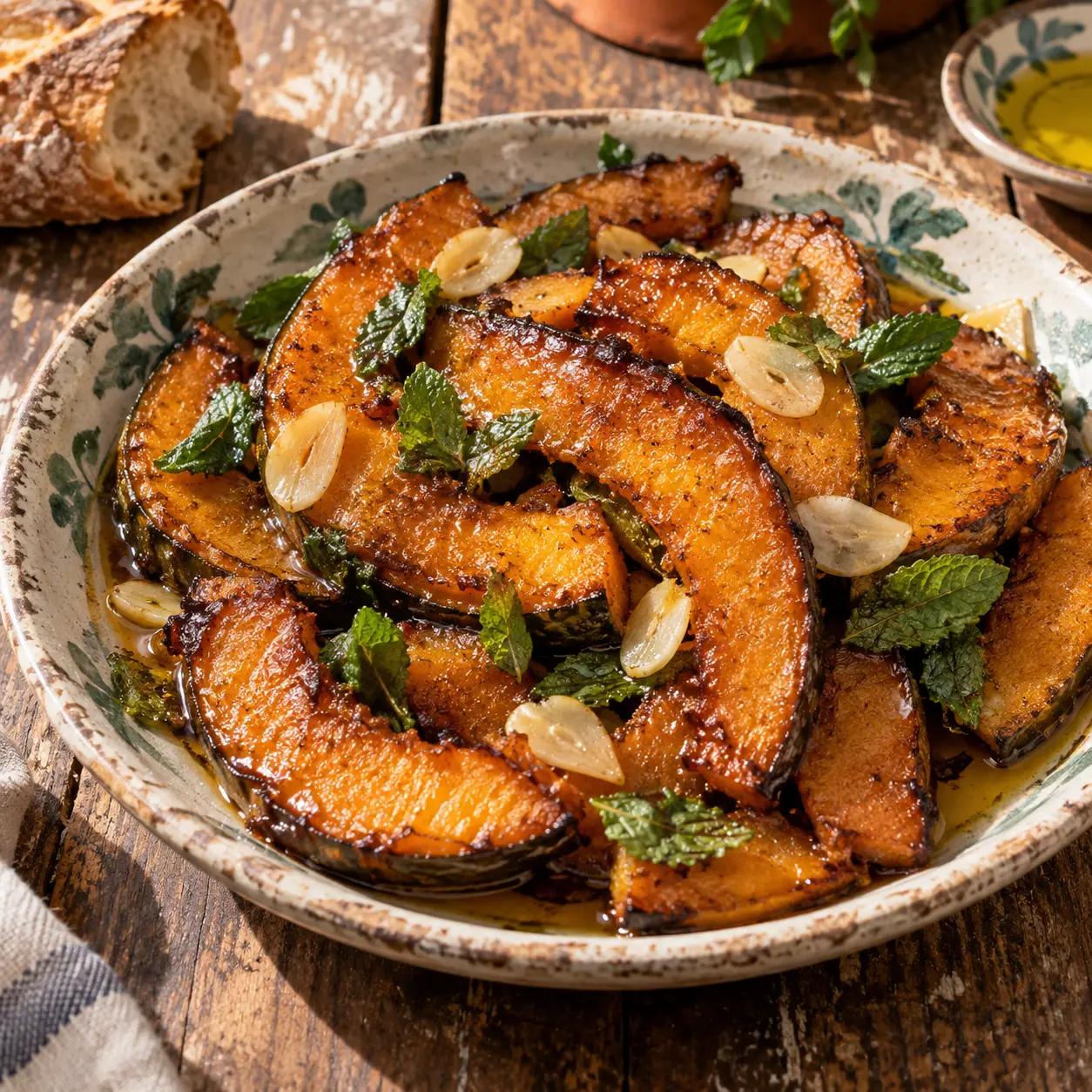
Ingredients
There is a dish in Palermo called u ficatu ri sette cannola — “the liver of the seven spouts” — and there is no liver in it. There never was. It is pumpkin, fried and dressed in vinegar and sugar, and the name is the most interesting thing on the plate.
A poor kitchen copying a rich one
In the 18th century, Palermo’s aristocratic households employed French-trained cooks, and one of the things that came out of those kitchens was liver in sweet-and-sour sauce. It was expensive and it was fashionable.
Everyone else cooked pumpkin instead. Same pan, same vinegar, same sugar, same mint — a cheap vegetable treated with the exact technique used on an expensive ingredient, until it tasted enough like the original to borrow its name.
That is the whole dish, and it is worth knowing before you eat it. It is not a vegetable side that happens to be sweet-and-sour. It is an impersonation, and a confident one.
Where the name comes from
Sette cannola means “seven spouts”. The usual explanation points at the fountain of the Garraffello, in the middle of the Vucciria market, which had seven bronze spouts. Street sellers worked around it, and they sold this by shouting “u fìcatu ri setti cannola” over the noise — the liver from the seven-spout fountain.
There is a competing account that puts the origin in Settecannoli, a district on the other side of the city. Nobody can settle it, and both stories say the same thing about the dish: it belongs to the street and the market, not the dining room it was imitating.
You can still find it at stalls in the Ballarò and the Vucciria, sold by the portion from a tray, at room temperature, in September and through the autumn.
Method
The pumpkin. Cut it thicker than you would for roasting — about a centimetre. Thin slices disintegrate when you turn them and end up as a purée in vinegar, which is a different and much worse dish.
The frying. Plenty of olive oil, medium heat, in batches. You want deep golden edges and a soft middle, which takes longer than you expect: rushing it on high heat colours the outside before the inside is done. Drain on paper and salt while hot.
The agrodolce. Warm the vinegar and sugar in a small pan for about two minutes — only until the sugar dissolves and the vinegar stops smelling raw. This is not a reduction and not a syrup. Cook it down and you get a glaze that sits on top instead of soaking in.
Layering. Pumpkin, then garlic and torn mint, then more pumpkin, then the warm agrodolce poured over the whole thing so it works its way down.
The part that is not optional
Two hours minimum at room temperature. Overnight is better.
Freshly made, this tastes like fried pumpkin with vinegar on it. After a night in the fridge — taken out an hour before eating — the vinegar and sugar have gone into the flesh and the mint has scented the oil, and it becomes the thing it is supposed to be. Every Sicilian agrodolce works this way, caponata included.
What to use outside Sicily
Here it is made with zucca rossa, the big long-necked squash sold in wedges at the market, dense and dry-fleshed and properly sweet.
Butternut squash is the honest substitute and it works. What does not work is the large watery orange pumpkin sold for carving — it has no sugar in it and it falls apart in the pan. If that is the only thing in the shop, make something else this week.
Serving
Room temperature, as an antipasto or a contorno, with bread for the glaze in the bottom of the dish. It sits well on a table with other cold things — olives, cheese, caponata — which is how it usually turns up in a Palermo house rather than as a course of its own.
More Sicilian cooking, and where these dishes come from, at sicily-insider.com — and the markets themselves are on our interactive Sicily map.
FAQ
Why is a pumpkin dish called "liver"?
Because it is imitating one. Liver in sweet-and-sour sauce was a dish of Palermo's aristocratic kitchens in the 18th century, when wealthy families employed French-trained cooks. Households that could not afford liver cooked pumpkin in exactly the same way — same vinegar, same sugar, same mint — and kept the name.
What pumpkin should I use outside Sicily?
In Sicily this is made with zucca rossa, the long-necked squash sold by the slice at the markets. Butternut squash is the closest thing in most countries and works well. Avoid the watery orange Halloween type, which collapses in the pan.
Can I roast the pumpkin instead of frying it?
You can, and it will be pleasant, but it is a different dish. Frying gives the caramelised edge that the vinegar then cuts against, and that contrast is the whole point. If you do roast it, use a hot oven and a lot less oil than the recipe suggests.
Is it vegan?
Yes, completely — pumpkin, oil, vinegar, sugar, garlic, mint and salt.
How long does it keep?
Three or four days in the fridge, and it improves for the first two. Take it out well before serving: it is meant to be eaten at room temperature, never fridge-cold.