The Ultimate Sicily Travel Guide
Sicily isn't one destination, it's several — a volcano region, a Baroque region, a Greek-ruins region, and a beach region, all on one island the size of Vermont, with driving times between them that regularly surprise first-time visitors. This page is the overview: the honest answers to the questions that come up before any Sicily trip, with a link to the full, detailed guide wherever one already exists on this site. Nothing here is a rehash of a "top 10" listicle — it's the version written by someone who actually lives here.
The quick version
- Best time to go: April–June or September–October.
- Minimum trip length: 7 days for one region properly; 10-14 for two.
- Do you need a car: yes, outside the handful of walkable cities.
- Rough daily budget: €60-80 backpacking, €120-180 mid-range.
- First-timer's pick: the east coast — Catania, Etna, Taormina, Siracusa.
When to go
April to June and September to October hit the sweet spot: pleasant 18–25°C days, noticeably thinner crowds at the big sites, and lower prices than peak summer. July and August bring 30°C+ heat that makes hiking Etna or walking around ruins genuinely uncomfortable at midday — the trade-off is the warmest sea of the year. The full breakdown, including what each month specifically looks like for crowds, festivals, and weather, is in the seasonal guide.
How many days you actually need
A week is enough to cover one region properly without rushing — most people start with the east coast, since Catania, Mount Etna, Taormina, and Siracusa sit close enough together to see without long drives. Ten days to two weeks lets you add the west (Palermo, Trapani, Agrigento) without every day turning into a transfer day. A detailed day-by-day structure for the one-week version is in the 7-day itinerary.
Getting there and around
Catania (CTA) and Palermo (PMO) are the two main airports, both with direct flights from most major European cities. Once on the ground, a rental car is genuinely the difference between seeing the island and seeing three cities connected by bus stations — public transport between the big towns is workable, but beaches, hill towns, and archaeological sites are mostly built for cars. What to actually know before renting (ZTL zones, insurance, tolls, parking colors) is covered in the car rental guide; if you're going carless, the public transport guide covers which routes genuinely work without one.
Where to stay
Where you base yourself changes the whole trip: a historic-center apartment in Ortigia or Palermo's Kalsa puts you inside the atmosphere but often means dragging a suitcase over cobblestones, while a coastal town like Cefalù or Giardini Naxos trades some of that atmosphere for parking and beach access. The full comparison, by region and travel style, is in where to stay in Sicily.
What it actually costs
Sicily runs noticeably cheaper than northern Italy for food and lodging, and roughly average for car rental and fuel. A backpacker keeping to hostels and market food can get by on €60-80/day outside August; a comfortable mid-range trip with a rental car and sit-down dinners lands around €120-180/day. Full itemized numbers — actual restaurant bills, museum tickets, fuel prices — are in the trip cost breakdown.
The regions, honestly summarized
Sicily splits into distinct areas that each reward a different kind of trip. Here's the real shape of each one, with a link to the full regional guide:
- Catania & Etna: the most common entry point — black lava-stone streets, Europe's tallest active volcano right behind the city, and easy day trips to Taormina or the coast.
- Taormina: the postcard hill town, a Greek theater with Etna as backdrop, and the most touristy, most expensive stop on the island.
- Siracusa: the island of Ortigia, layers of Greek and Baroque history, a genuinely different atmosphere from Taormina's crowds.
- Palermo: the chaotic historic capital — the best street food and market culture on the island, plus the Arab-Norman UNESCO sites.
- Trapani & the West: salt pans, the Egadi Islands, Greek ruins at Segesta and Selinunte, and San Vito Lo Capo's beach.
- Agrigento: the Valle dei Templi, one of the best-preserved Greek temple complexes anywhere outside Greece itself.
- Ragusa & Modica: Baroque hill towns rebuilt after the 1693 earthquake, and the source of Modica's grainy chocolate.
- Noto: the single showpiece Baroque town, UNESCO-listed, an easy day trip from Siracusa.
- Cefalù: a laid-back beach town with a Norman cathedral, an easy day trip or overnight from Palermo.
- Piazza Armerina: home to the Villa Romana del Casale and its extraordinarily preserved Roman mosaics.
- Aeolian Islands: a volcanic archipelago (Stromboli, Vulcano, Lipari, Salina), ferry-only, a genuinely separate trip.
- Nebrodi: Sicily's least-visited mountain range — real countryside, wild horses, almost no other tourists.
- Messina: the ferry gateway from mainland Italy, with views across the strait and an underrated cathedral.
Food: what to actually eat
Sicilian food changes by city more than most visitors expect — Palermo's street food (panelle, arancine), Catania's pasta alla Norma, Trapani's couscous influenced by nearby Tunisia, and Modica's chocolate are all genuinely regional, not interchangeable "Sicilian cuisine." City by city recommendations are in the restaurant guide, and if you want to cook any of it yourself, the recipe collection has the real techniques, not shortcuts.
What trips people out
The most common mistakes aren't dramatic — unofficial parking attendants demanding cash near popular sites, taxi meters that "malfunction" on the airport route, tourist-menu markups a block from any landmark. None of it is dangerous, all of it is avoidable once you know the pattern, covered in the tourist scams guide.
Practical extras
A few more pages worth knowing about before you go: what to actually pack for Sicily's climate and terrain (packing list), which festivals might line up with your dates (festivals calendar), when things are actually open (opening hours guide), and a handful of Sicilian dialect phrases that go further than standard Italian (Sicilian phrases).
See it all on the map
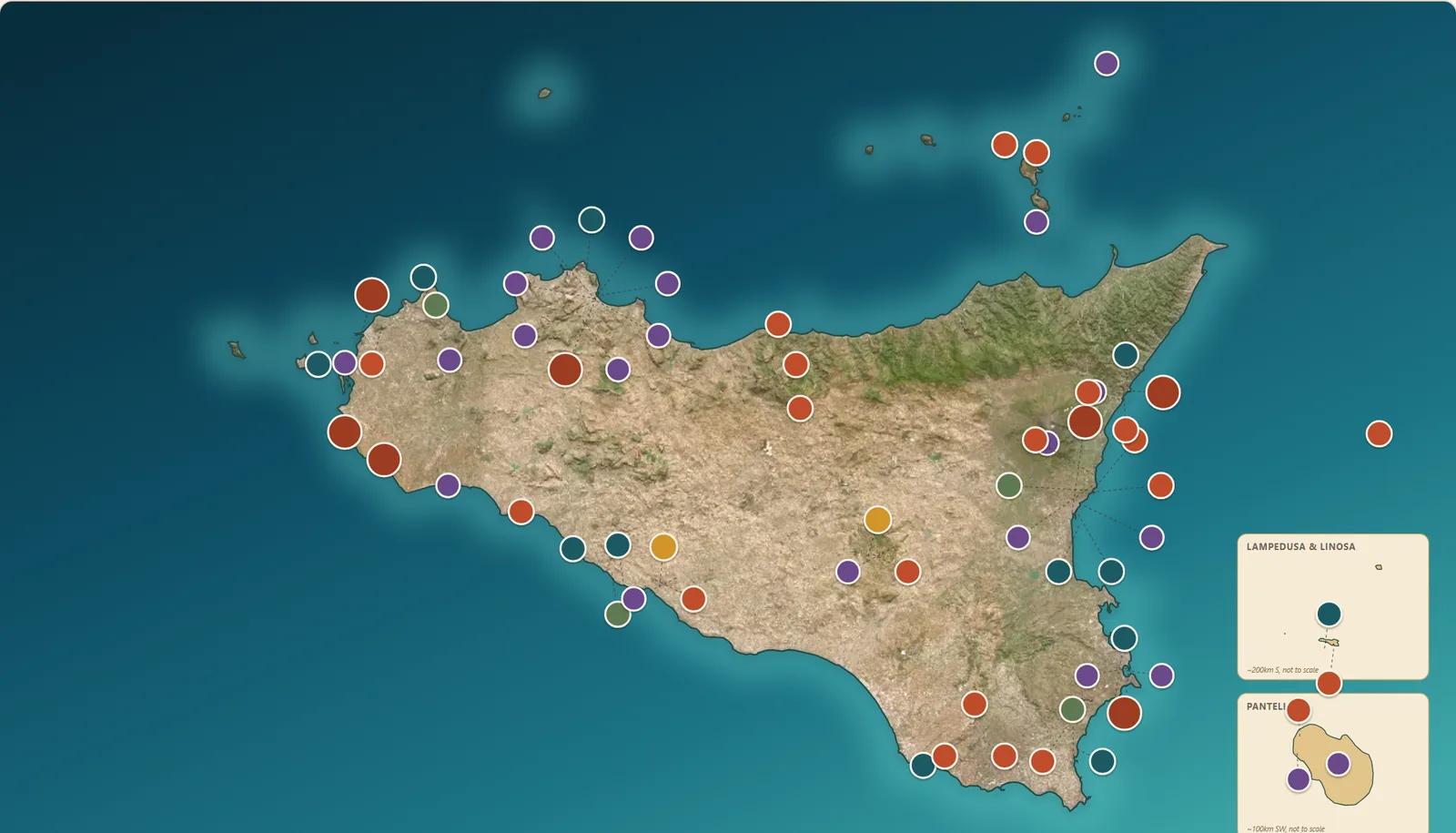
Every place mentioned across this site — beaches, ruins, hill towns, hidden spots — is plotted on the interactive Sicily map, with the real reason each one is worth the detour and a link to the full guide where one exists.
My honest verdict
Most "ultimate guides" try to cram the whole island into one itinerary and end up covering none of it properly. The better approach is picking one real region for this trip — the east coast if it's your first time — and doing it right, rather than driving past everything at high speed to say you saw it all. Sicily rewards a second and third visit more than almost anywhere else in Italy; there's no need to force it all into one.
Continue planning your trip
Frequently Asked Questions
How many days do you need in Sicily?
A week covers one region properly (say, the east coast between Catania, Taormina and Siracusa). Ten days to two weeks lets you add the west (Palermo, Trapani, Agrigento) without it turning into a driving marathon.
Do you need a rental car in Sicily?
For most of the island, yes — trains and buses connect the big cities but rarely reach beaches, smaller hill towns, or archaeological sites well. Palermo, Catania, and Taormina are walkable and fine without one.
What's the best time of year to visit?
April to June and September to October: 18–25°C, thinner crowds, lower prices. July and August are the hottest and most crowded, though also when the sea is warmest.
Is Sicily expensive?
Noticeably cheaper than northern Italy for food and lodging, closer to average for car rental and fuel. Budget travelers can get by on €60-80/day outside peak season; a comfortable mid-range trip runs €120-180/day.
Which region should first-timers pick?
The east coast (Catania, Taormina, Siracusa, Mount Etna) packs the most variety into the shortest drives, which is why it's the most common first trip. The west (Palermo, Trapani, Agrigento) rewards a second visit once you know you want more.