Frittedda – Sicily's Spring Vegetable Stew
 Daniele Bellia · 3 min read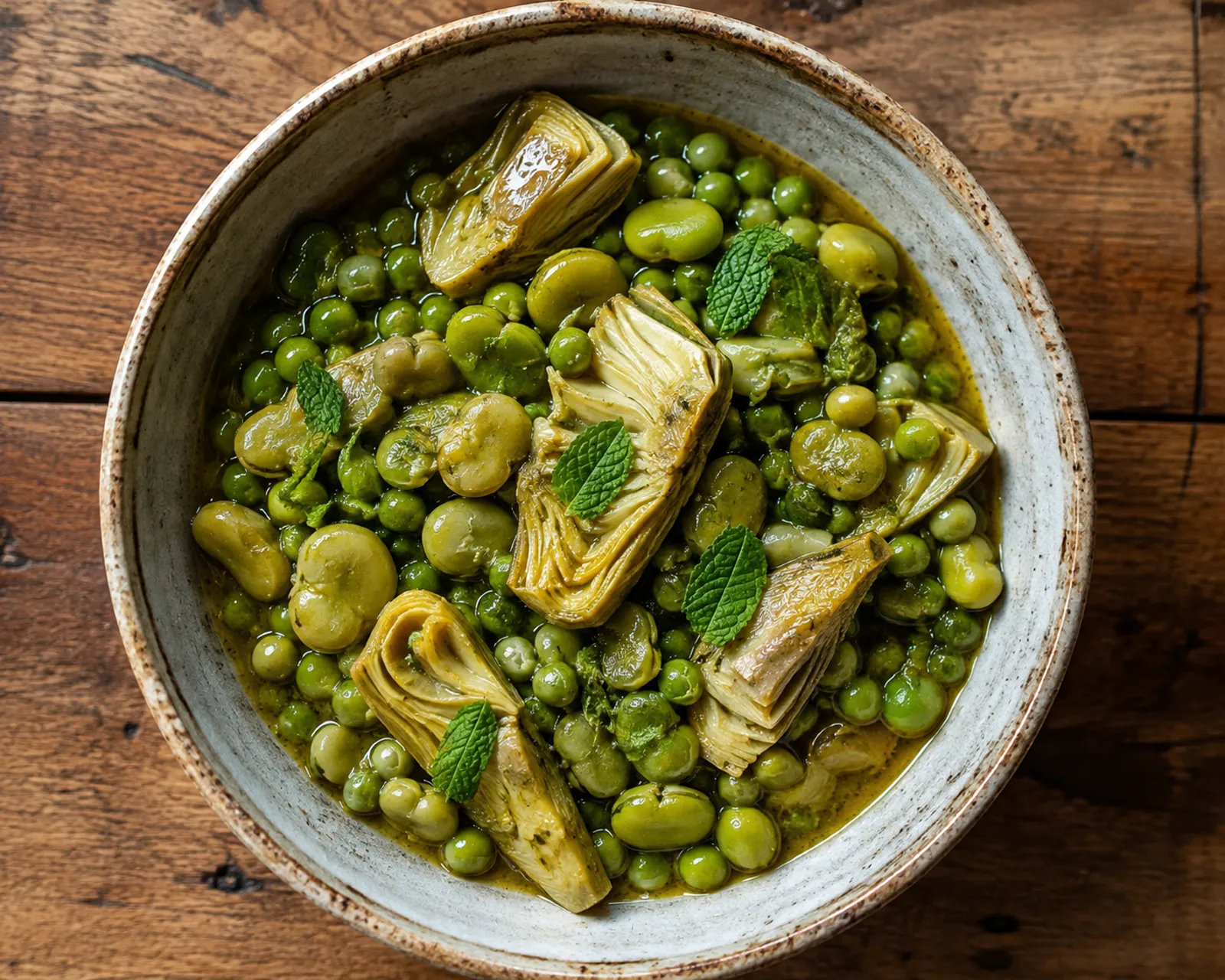
Ingredients
Frittedda is Sicily’s spring vegetable stew, and despite the name — which sounds like it should mean “fried” — nothing here gets fried at all. It’s fava beans, peas and artichokes braised together, finished with a light sweet-and-sour touch, and it’s the dish that genuinely marks the start of spring in Palermo, traditionally made for the first time each year around the Feast of San Giuseppe on March 19, exactly when all three vegetables come into season at once.
It’s naturally vegetarian and, without the optional caciocavallo cheese sometimes served alongside it, vegan too — no substitutions needed, this is simply how the dish has always been made.
Why fresh, seasonal vegetables actually matter here
Frittedda has almost nowhere to hide — there’s no sauce, no long list of spices, just three vegetables and a light agrodolce finish. That means the quality of the fava beans, peas and artichokes is the entire dish. Frozen versions work fine as a practical substitute (see the FAQ), but if you can get genuinely fresh, young spring vegetables, this is the recipe where it actually shows.
Method
The artichokes: Remove the tough outer leaves, trim the top, and cut each artichoke into wedges. Scrape out the fuzzy choke in the center and drop the wedges straight into water with lemon juice — artichokes brown almost immediately once cut, and the acidulated water stops that.
Building the base: Sauté the sliced spring onion gently in olive oil until soft, without letting it take on any color. Add the drained artichoke wedges and let them cook for a few minutes on their own first.
Braising: Add the shelled fava beans and peas, season with salt, and add a splash of water. Cover the pan and let everything braise gently until tender — 15 to 20 minutes, checking occasionally and adding a little more water if the pan looks dry.
The agrodolce finish: Once the vegetables are tender, add the sugar and vinegar together, raise the heat briefly, and let the vinegar cook off so what’s left is the sweet-sour flavor, not the sharp smell of raw vinegar. This step should take under a minute — the point is balance, not a heavy glaze.
Finishing: A crack of black pepper and a few torn mint or wild fennel leaves at the end, if you’re using them. Frittedda is traditionally served warm or at room temperature, never piping hot straight off the stove.
How it’s actually eaten
Frittedda works as a side dish, but in Sicily it’s just as often eaten on its own as a light meal, sometimes alongside a slice of caciocavallo cheese. It also keeps well and tastes just as good, if not better, the next day once the flavors have had time to settle.
What to drink with it
A light Sicilian white suits Frittedda’s fresh, slightly sweet-sour character — a Grillo or an Inzolia, both easy-drinking enough not to fight with the vinegar’s edge.
More on Palermo and the surrounding region on our interactive Sicily map.
FAQ
Can I use frozen fava beans and peas?
Yes, if fresh ones aren't in season — frozen shelled fava beans and peas work fine and cut the prep time down significantly, since fresh fava beans need shelling twice (from the pod, then out of their individual skins if you want the fully traditional texture).
Do I really need to peel the individual fava beans too?
Traditionally yes — beyond shelling them from the pod, each bean has a tougher outer skin that's peeled off for a more tender result. It's genuinely tedious with a large batch; some home cooks skip this step for younger, more tender beans in early spring.
What's the point of the sugar and vinegar?
That sweet-sour (agrodolce) finish is a signature of Sicilian cooking going back to the island's Arab period, the same technique behind caponata. It's meant to be subtle here, not dominant — just enough to round out the vegetables' natural bitterness.
When is Frittedda traditionally eaten?
Around the Feast of San Giuseppe on March 19, which lines up with when fava beans, peas and artichokes all genuinely come into season together in Sicily — it's less a fixed holiday recipe than a dish that marks the actual start of spring produce.