Syracuse & Ortigia: What You Actually Need to See (and What You Can Skip)
 Daniele Bellia · 5 min read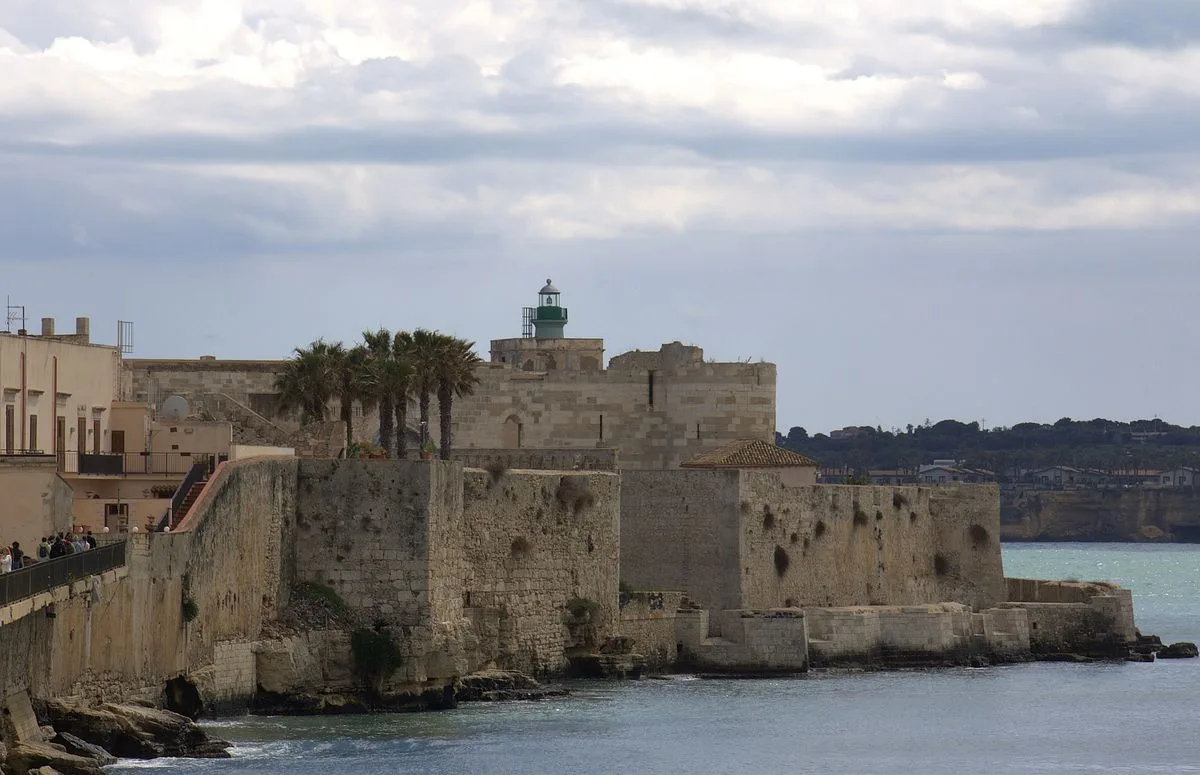
First bit of confusion I run into again and again: Syracuse and Ortigia aren’t the same thing. Syracuse is the modern city, Ortigia is the small island old town right in front of it, connected by two short bridges — and that’s the part most people actually come for. If you only have one day, you can skip the modern city entirely.
A little history, so the stones mean more
Ortigia is the actual founding core: in 734 BC, Corinthian settlers led by the nobleman Archias landed on the island and founded Syracuse. The city became powerful enough that during the Peloponnesian War, in 415–413 BC, it completely destroyed a massive Athenian invasion fleet — one of Athens’ worst defeats ever. Archimedes was born here too; legend says he died in 212 BC when the Romans took the city, killed by a soldier while supposedly absorbed in a geometry drawing in the sand. That’s why his name shows up on every other street corner in Syracuse today.
Ortigia: the old town on the island
Ortigia is made for wandering and getting a little lost — narrow lanes, baroque façades, and the sea showing up around every corner. These stops are non-negotiable:
The Duomo sits on Piazza Duomo, one of the most beautiful squares in Sicily, and is literally built around an ancient Greek temple to Athena — the original temple’s Doric columns are still visible embedded in the outer wall. Entry: €2.
The Fonte Aretusa, a freshwater spring right by the sea, full of papyrus plants, is free to visit and is the perfect spot for a sunset walk.
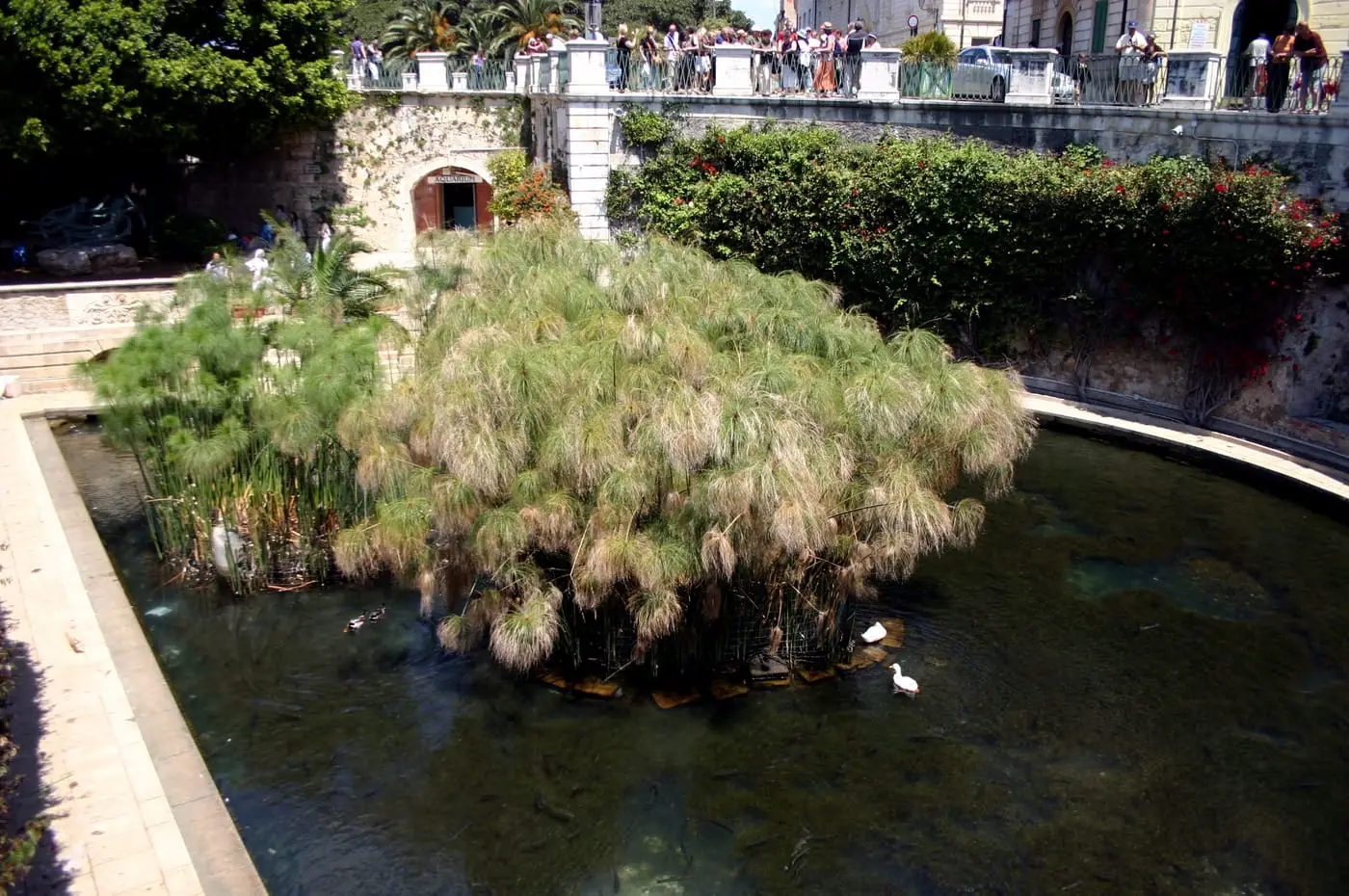 Photo: Giovanni Dall'Orto, via Wikimedia Commons
The Castello Maniace, the fortress at the island’s southern tip (see the header photo), rounds off the loop.
The Mercato di Ortigia (weekday mornings, on Via Trento) is worth a detour even if you’re not buying anything: whole swordfish, sea urchins in open crates, red shrimp from Mazara del Vallo, and vendors shouting their prices in thick Sicilian dialect. Best spot to grab an arancino or a scaccia before lunch.
A hidden gem most guidebooks skip: in the Giudecca, Ortigia’s former Jewish quarter, a miqweh (Jewish ritual bath) sits 18 meters below street level — dating to the 6th century AD, discovered only in 1991 during renovation work on a private home, and now one of the best-preserved of its kind in Europe. You can visit it in the basement of the “Alla Giudecca” residence (small entry fee, a guided tour is worth it).
The Neapolis: theater, quarries, the Ear of Dionysius
On the mainland, a short distance from Ortigia, is the Neapolis Archaeological Park. The ticket (€10, discount for ages 18–25, free under 18, free on the first Sunday of every month) covers the whole site: the Greek theater, the Roman amphitheater, the Latomie (ancient stone quarries), and the famous Ear of Dionysius — an artificial cave over 20 meters high, named for its ear shape and the legend that the tyrant Dionysius used it to eavesdrop on prisoners, since the acoustics amplify every whisper. Right next to it is the Latomia del Paradiso, a former quarry that’s now a lush citrus and laurel garden — a welcome shady break after the harsh heat of the theater’s stone seats.
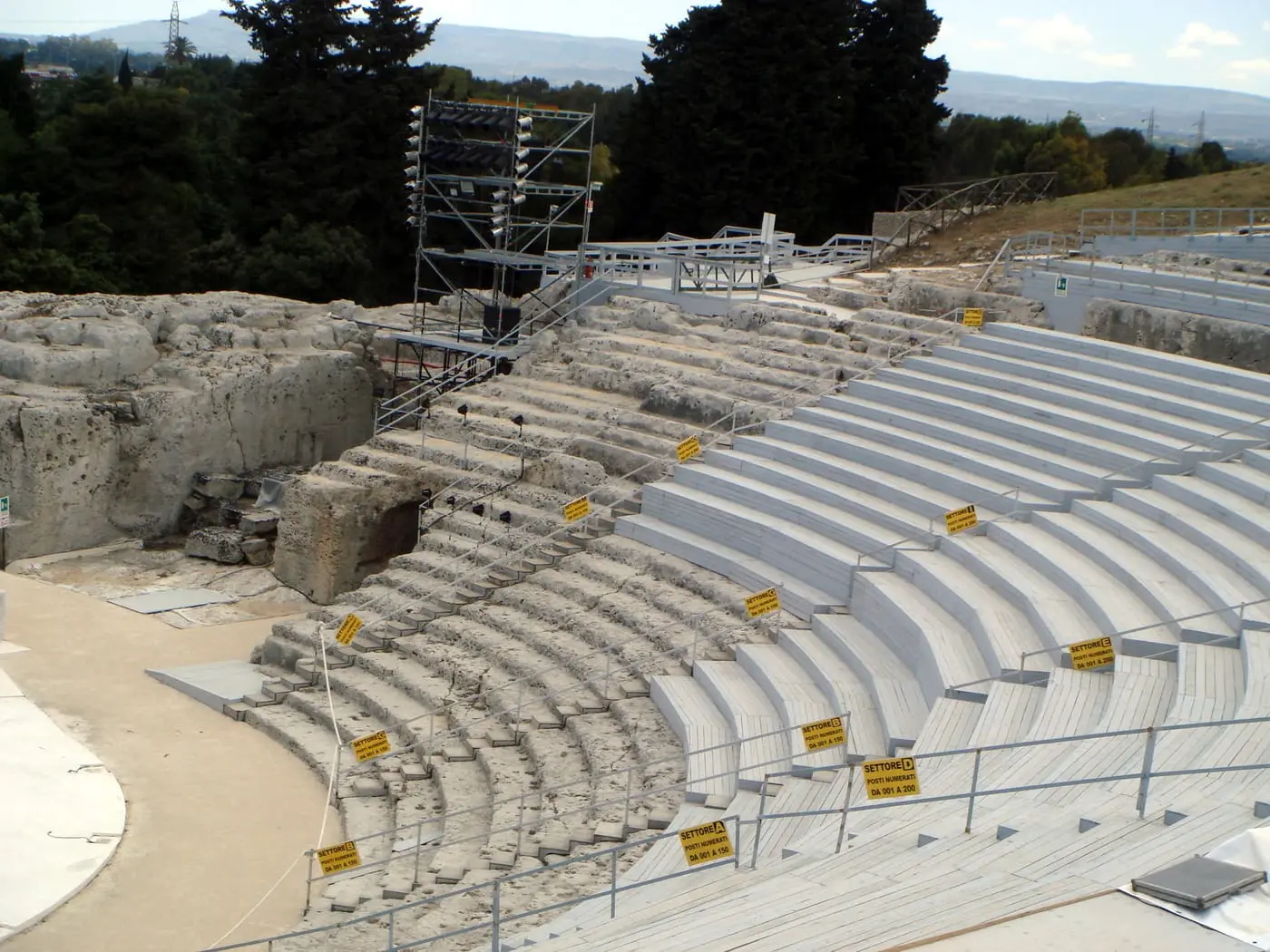 Photo: Giovanni Dall'Orto, via Wikimedia Commons (CC BY-SA 2.5)
Museo Paolo Orsi: essential on a rainy day or for history buffs
If you want more than ruins, head to the Museo Archeologico Regionale Paolo Orsi near Villa Landolina — one of the most important archaeological museums in Europe, with over 27,000 artifacts spanning the Paleolithic through the early Christian era. Less crowded than the Neapolis, fully air-conditioned, and a solid plan B on eastern Sicily’s rare rainy days.
Swimming after the ruins: Fontane Bianche
If you want the sea after temples and catacombs, drive about 16km south to Fontane Bianche: roughly 3km of fine white sand and shallow, turquoise water — named after the freshwater springs that feed into the sea here. About 20–25 minutes from Ortigia by bus or car; packed on summer weekends, much quieter on weekdays.
Getting there from Catania without a car
Syracuse is about 49km from Catania. Both the bus (Interbus, from around €5–6, roughly 1h15–1h30) and the train (from around €9, similar travel time) run direct services several times a day — you genuinely don’t need a car here, unlike the Nebrodi or some Etna routes. More on getting around without a rental car in our car-free guide from Catania.
How much time to plan for
If you want to weigh these ticket prices against the rest of your trip budget, check our trip cost guide. A full day covers Ortigia plus the Neapolis if you start early — the quarries and the theater get hot and crowded with tour groups by midday. With two days, add the Museo Paolo Orsi and an afternoon at the beach, plus a relaxed evening at the Fonte Aretusa once the day-trippers are back on their buses to Catania and the lanes empty out.
What you can skip
If time is tight: modern Syracuse outside Ortigia doesn’t offer much for visitors — better to spend that saved time on a second coffee by the Fonte Aretusa instead.
See every stop in this guide, plus nearby beaches and day trips, on our interactive Sicily map.