Visiting Segesta: Is the Temple Worth It Without Agrigento?
 Daniele Bellia · 5 min read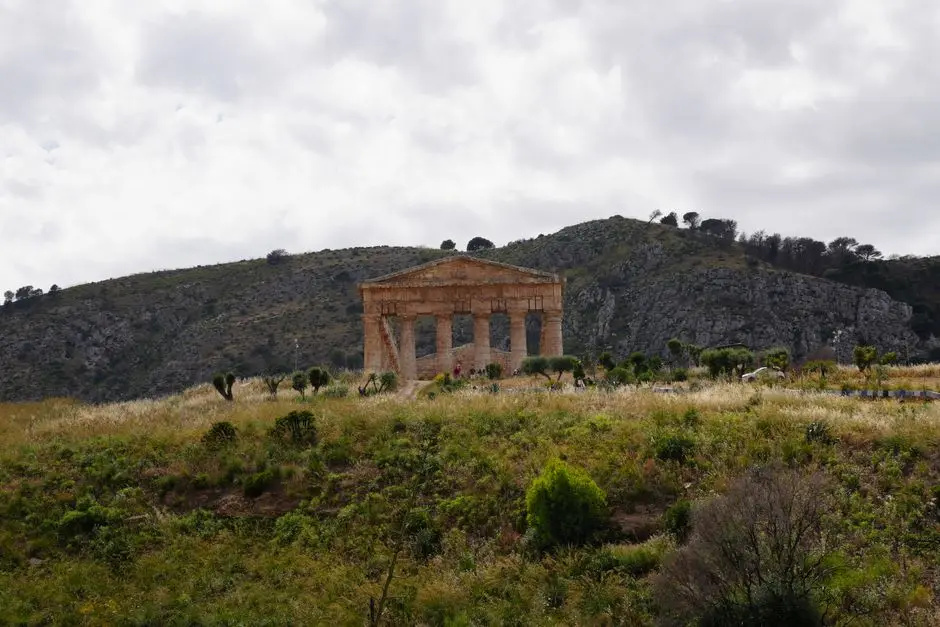
When people ask me which temple they should see in Sicily, I’ve started answering almost automatically: Segesta, not Agrigento. Not because the Valley of the Temples is bad — I’ve written about it at length already — but because Segesta has something Agrigento, with its coach loads and crowds, simply can’t offer anymore: silence. A single, almost perfectly preserved Doric temple stands completely alone on a hilltop, surrounded by nothing but wind, wild broom, and grazing sheep. No souvenir stall right in front of it, no crowd blocking your view. That’s become rare on this island.
What makes Segesta so special?
The temple was built between 430 and 420 BC and never finished. That’s not just a nice line for the brochures — you can actually see it if you look closely: the columns, roughly 10 metres tall, still lack the typical fluting to this day, and the base blocks were never finely dressed, still showing the bosses used for transporting them. Nobody knows exactly why construction stopped — probably because Segesta fell under Carthaginian rule, which would have made a tribute to Athens rather inappropriate. What fascinates me about the building is precisely this incompleteness: no roof, no cella, no cult statue — and yet it’s one of the best-preserved Doric structures I know of.
The people who lived here weren’t Greek, but Elymian. Segesta was one of the most important cities of the Elymians, a people of Italic origin who arrived in Sicily after their war against the Oenotrians. That’s exactly what makes the place so intriguing: a non-Greek people building one of the purest Greek temples on the island — likely as a political statement aimed at their despised neighbour, Selinunte.
Up on Monte Barbaro, a good twenty-minute walk or a short bus ride from the temple, lies the second highlight: the ancient theatre. Above the temple sits Segesta’s ancient theatre, carved directly into the hillside and built in the Hellenistic period. The view from the seating tiers is one of the best I know in Sicily: you can see all the way to the Gulf of Castellammare, and on clear days out to the sea itself. In summer, performances are still staged here — the Segesta Teatro Festival brings theatre, music, and dance to the ancient stage, usually between July and August.
Opening hours and admission
The archaeological park is open daily from 9:00 am to 7:30 pm, with last entry at 6:30 pm — at least during the summer months; in winter the park closes considerably earlier, often already in the early afternoon. It’s worth a quick check on the official site, parcodisegesta.com, before you go, since hours can shift depending on the season and events like the Teatro Festival.
Admission costs 6 euros for adults, 3 euros for young adults aged 18 to 25, and entry is free for minors — a price that feels almost laughably low compared to Agrigento or Piazza Armerina, given what you get here. The walk from the entrance to the temple is short, under ten minutes along an easy path. To reach the theatre up on the hill, you have two options: on foot via a steeper but rewarding path with panoramic views, or by shuttle bus, which costs an extra one to two euros depending on the source — budget around 2 euros each way. I usually take the bus uphill only and walk back down, so I get the view to myself on the way back.
Getting there: how do you reach Segesta without a car?
This is where a lot of travellers hesitate, and honestly — fair enough. Segesta sits fairly isolated between Trapani and Palermo, deep in the countryside near Calatafimi-Segesta, and getting there by public transport is no walk in the park.
By car it’s the easiest option: it takes about 25 minutes from Trapani, and the exit off the A29 motorway towards Segesta is well signposted. If you’ve opted for our car rental guide, Segesta is well worth combining with a trip inland or a stop on the drive from Trapani to Palermo.
By bus, things get trickier. There’s no direct line that conveniently drops you right at the park entrance from central Trapani — no, there is no direct bus from Trapani station to Segesta. The Tarantola bus company runs the Trapani–Calatafimi-Segesta route a handful of times a day, mostly in the morning and early afternoon, not hourly. In practice, that means: check the timetable carefully beforehand, plan for a possible transfer, and leave yourself enough buffer for the return trip in case the last bus leaves earlier than expected.
Honestly, I’d only recommend Segesta if you have a car or are on an organised tour — if you’ve already rented a car for the Trapani, salt pans, and ferry to Favignana route, just build in half a day for the detour to Segesta. It’s worth it, and the detour via the A29 is no big deal.
When’s the best time to go?
Segesta sits entirely without shade in open countryside, the terrain is hilly, and in summer it genuinely gets hot here — noticeably hotter than you’d expect coming from the coast, since you’re several kilometres inland. My favourite time to go is early morning, shortly after opening, when the light on the temple turns golden and no one else is around yet. The late afternoon works well too, once the day-trippers have already left. I wouldn’t recommend hiking up there at midday in the blazing July heat without a hat and plenty of water.
Visiting in spring or autumn makes the climb up to the theatre much more pleasant — it’s worth checking our guide to the best time to visit Sicily before planning your route.
My honest verdict
Segesta isn’t a place for a quick stop, a phone photo, and off you go. You need at least an hour and a half to two hours to see both the temple and the theatre properly, plus the journey there, which is far from trivial. But that’s exactly what keeps the coach loads away that now define Agrigento. If you’re looking for a genuine, almost untouched ancient site where you can still stand alone among 2,500-year-old stones, this is where you’ll find it — and nowhere else in Sicily quite so easily.
More on the area in the Trapani region guide.