Messina Ferry from Calabria: What to See in a Few Hours
 Daniele Bellia · 5 min read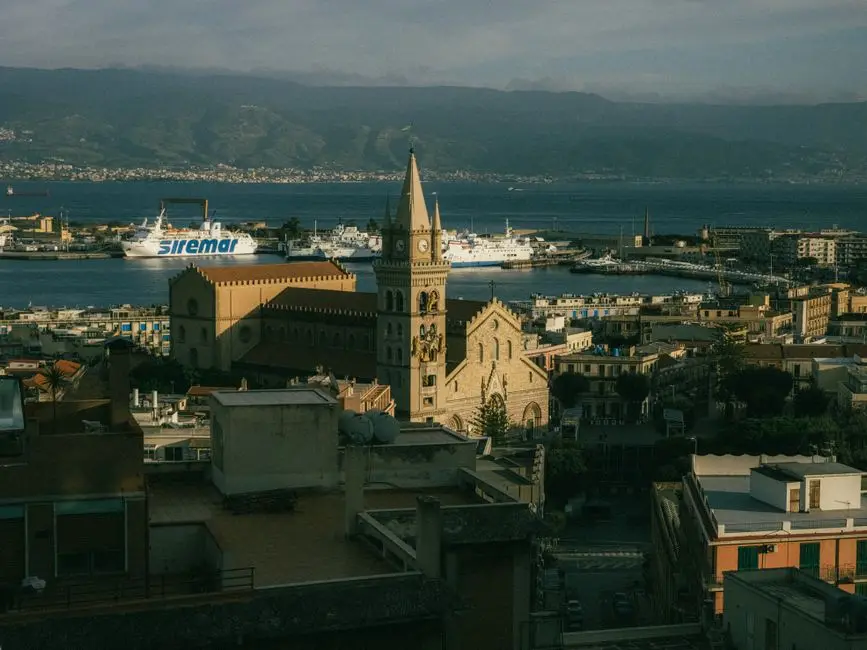
Most people who arrive in Messina don’t actually want to be here. They’re headed to Taormina, Catania, Syracuse – Messina is just the point where the mainland ends and Sicily begins. That’s fine, I’m not going to tell you to spend three days here. But if you’re crossing over by ferry from Villa San Giovanni or Reggio Calabria and have a few hours to kill before your train or onward journey, there’s more worth doing than most people realize. Here’s what’s actually worth your time – and what you can safely skip.
The crossing itself: what you need to know
The ferry from Villa San Giovanni to Messina isn’t a big production – the crossing over the Strait of Messina takes about 20 minutes, with regular and frequent departures. It runs year-round and efficiently connects Calabria with Sicily. As a foot passenger, you’re looking at a price in the low double digits – prices can range between €16 and €20 depending on how you’re traveling and what you book. Several ferry companies operate the route, including Bluferries and Caronte & Tourist – and this is where it’s worth paying attention to which port you’ll actually land at, since this is where a lot of people get confused.
One important thing many people only find out at the ticket counter: not every ferry docks in central Messina. One of the operators actually lands a few kilometers south, in Tremestieri, not in the city center. So if you’re aiming for the center and want to explore on foot for a few hours, pay attention when buying your ticket to which company takes you where – Tremestieri means a bus or taxi into the center before anything else can even begin.
Arriving and getting your bearings: where you end up
If you arrive by ferry in the city center, the good news is you won’t have far to walk. The city center is easily reachable on foot, with taxis and excursion buses waiting at the pier, and Messina Centrale train station is also just a short distance away. In other words: whether you want to hop straight on a train or have a few hours to spare, the port isn’t on the outskirts – it’s right in the middle of things. That’s not something you can take for granted in Sicily; in Palermo or Catania, you’d be dealing with very different logistics.
For orientation: it’s really just a few minutes’ walk from the port to the cathedral square, no exaggeration. That changes the math completely – with two or three hours, you can actually see something without rushing or constantly checking your watch because your train is waiting.
What’s actually worth doing in a few hours
Here’s the part that matters: what’s worth it if you don’t have a full day?
The cathedral and bell tower – but time it right. The Duomo itself isn’t, frankly, going to blow you away architecturally – Messina’s major architectural monuments were reconstructed after the destruction of World War II, and only the high-Gothic portal and colorful marble decorations on the façade survive from the original. The real highlight is the bell tower next to it. If your few hours allow for it, plan to be there at noon: every day at 12pm, the scenes are set into motion, featuring a mechanical lion that roars, along with the figures of Dina and Clarenza, two women of Messina who, during the Sicilian Vespers, warned the city by ringing the bells before the arrival of Charles of Anjou’s troops. It doesn’t take forever – the 12-minute show is one of Messina’s biggest attractions – but it’s genuinely worth seeing, not just a tourist gimmick, because there’s real city history behind it.
So if your ferry arrives around 11am, that’s actually perfect timing. Arrive at 2pm and you’ll miss the show – and it’s not worth waiting around for it if you’re only passing through for a few hours.
The rest of the center – short and honest. The cathedral square with the Orion Fountain is worth a glance, but you don’t need to plan a whole hour for it. Something many travel blogs leave out: Messina feels architecturally quite young as a city, because almost everything was rebuilt after the devastating 1908 earthquake. The earthquake in December 1908 killed up to 110,000 people in Messina and Reggio Calabria – that’s why you won’t find a medieval old town here like in Ortigia or Cefalù, but wide, almost grid-like streets instead. That’s not a letdown, just a different kind of city – and knowing that beforehand means you won’t be caught off guard.
What to skip if you only have a few hours
I’ll say it straight: the Regional Museum is interesting content-wise, but for a short stopover it’s usually not worth the time – you’d have to walk there, go through the exhibition, and walk back, which takes closer to half a day than two hours. The same goes for side trips toward Taormina or Mount Etna from here – those are their own day trips, not stopover activities. If your destination for the day is still somewhere else, it’s better to spend your limited time right in the center rather than squeezing in a side trip that ends up turning into a mad dash.
Practical matters: luggage and onward travel
If you’re traveling with luggage and don’t want to lug it around the center, Messina Centrale train station offers luggage storage – worth it if you actually want to use your few hours on foot instead of rattling a rolling suitcase over cobblestones. And if you’re continuing on by train toward Taormina, Catania, or Syracuse: the station is practically at the port, so you won’t have to cross the whole city to make your connection.
In the end, Messina isn’t a place you’d go out of your way for – but if you’re passing through anyway, as is the case with the ferry from Calabria, it’s not wasted time either. An espresso at the cathedral square, the roaring lion at noon, a quick look back at the strait you just crossed – that’s enough for an honest first impression of Sicily before the real journey begins.
More on the area in the Messina region guide, and see it plotted on our interactive Sicily map.