Etna: Cable Car or Hike – What's Really Worth It?
 Daniele Bellia · 6 min read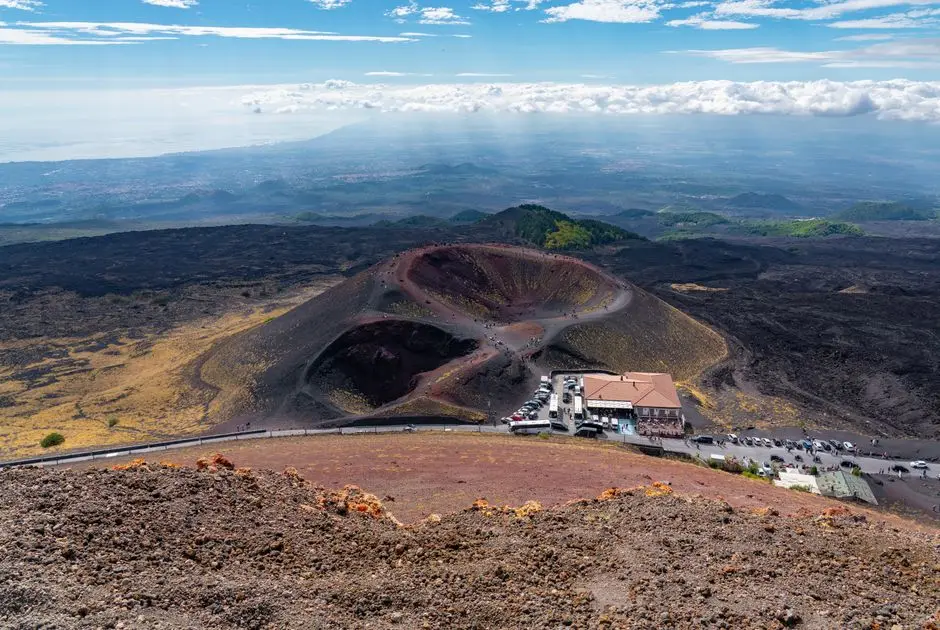
It’s the question everyone asks the moment they arrive at Rifugio Sapienza and spot the price board for the Funivia: take the cable car, or hike up yourself? I’ll say it upfront, since a lot of blogs gloss over this: there’s no clear “better” or “worse” option here — it all comes down to how much time, fitness, and money you’re working with, and what you actually want to see at the end of the day.
What the cable car actually gets you (and what it doesn’t)
The Funivia dell’Etna departs from Rifugio Sapienza on the south side. The station sits at around 1,920 meters, right next to the refuge, and takes you noticeably higher in just a few minutes. Here’s something worth clearing up, since there’s constant confusion about it: the cable car alone does not take you to the summit. The ride itself starts at about 1,923 meters and tops out at 2,500 meters.
If you want to go higher, you’ll need to either continue on foot from the upper station or book a spot on a 4x4 vehicle. On the guided tour, you’re driven from the cable car’s upper station at 2,500 m up to 2,750 m in an off-road vehicle, and from there the guided trekking portion continues up to 3,300 m — roughly 7 km of hiking and 580 meters of elevation gain. This is the classic combo that most organized tours offer, and honestly, it’s the real reason most people book the cable car in the first place: not for those first 600 meters of elevation, but because above 2,750 m you can’t continue without a guide anyway.
What the cable car costs: Prices shift seasonally, but as a rough guide, a round-trip ticket runs about €52 for adults, €30 for children under 10, and is free for kids under 4. The full package with the off-road vehicle and guide up to 2,900 m costs considerably more — around €80 for adults and €50 for children. That’s not exactly pocket change for a family, but compared to other European mountain cable cars, the Funivia dell’Etna is actually on the more affordable end of alpine lift systems, and kids under 4 ride free. If you want the cable car, 4x4, and certified guide bundled into one booking instead of arranging each piece separately, this is the guided crater tour I’d book (affiliate link — booking through it costs you nothing extra and helps support this site).
The hiking route: more doable than most people think
Something a lot of visitors don’t realize: you don’t have to take the cable car to experience something on Etna. Right from Rifugio Sapienza, there are hiking trails you can tackle on your own, as long as you’re not trying to reach the restricted summit zones.
A popular, straightforward loop covers about 5 km with roughly 500 meters of elevation gain. The trail isn’t considered dangerous or exposed, but it does call for a decent baseline level of fitness. This is the route to the Silvestri Craters and onward toward Torre del Filosofo — manageable for most reasonably fit people in normal hiking boots over the course of a morning, no ticket required.
If you want to skip the cable car and vehicles entirely and cover the whole distance on foot, you’ll need to set aside significantly more time. Hiking the entire way up to the summit area without the cable car or off-road vehicle takes roughly 4-5 hours for the ascent alone, and altogether you’re looking at 7-9 hours round trip, compared to 4-6 hours if you use the cable car and off-road vehicle. That’s a full day out, not a quick morning excursion — and on volcanic scree, with wind and thin air above 2,500 m, it’s noticeably tougher than the distance alone would suggest.
Who should choose what
The cable car makes sense if: you’re short on time (say, a day trip from Catania or Taormina), you’re traveling with kids or older family members, or you’re heading up to the summit region anyway — since you’ll need a guide up there regardless, whether you walk or ride those first 600 meters of elevation makes little difference to the actual experience once you’re up top.
The hike makes sense if: you’re already into hiking and elevation gain doesn’t put you off, you want to save money (the difference between a cable car ticket and a free hike to the Silvestri Craters is real), or you simply want the satisfaction of experiencing the volcano under your own power rather than from inside a cabin. The shorter loop from Rifugio Sapienza is plenty for that — you don’t need to go for the full marathon version to feel like you’ve “really” hiked it.
A combination is often the smartest move, especially if your time is limited: take the cable car up, and walk back down instead of riding it again. This is actually advice you’ll hear from experienced local mountain guides — for the way down, it’s worth skipping the cable car and descending on foot through the volcanic ash instead: it’s quick, cheap, and genuinely fun. You save on the return fare and still get the easy ride up.
A few practical things to know before deciding
One thing many people only realize once they’re there: free access to the upper areas depends heavily on current volcanic activity. The line between zones you can explore freely and areas that require a guide isn’t fixed — it shifts based on volcanic activity and current regulations set by the local municipalities, mainly Nicolosi on the south side. In practical terms, that means a trail that’s open this month could be closed next month. So check current conditions shortly before you go, rather than trusting a blog post from two years ago — our guides to Etna closed by rain and Etna in winter cover the other ways access can change on short notice.
Whatever you choose, wear sturdy shoes (see our Sicily packing list) — the volcanic scree is loose and sharp-edged, and sandals or smooth soles are a bad idea no matter which route you pick. And pack a jacket even in peak summer: up at 2,500 m there’s usually a cold wind blowing that you’d never guess existed down at Rifugio Sapienza.
In the end, this isn’t really a choice between “adventure” and “comfort” — it’s an honest assessment of how much time and fitness you’re bringing. Both routes lead to the same extraordinary place; it’s just the effort of getting there that differs enormously.
Check conditions before you go on our Etna live webcam, and see the rest of the Catania & Etna region on our interactive Sicily map.