Acireale: The Baroque Town Most People Drive Past on the Way to Taormina
 Daniele Bellia · 4 min read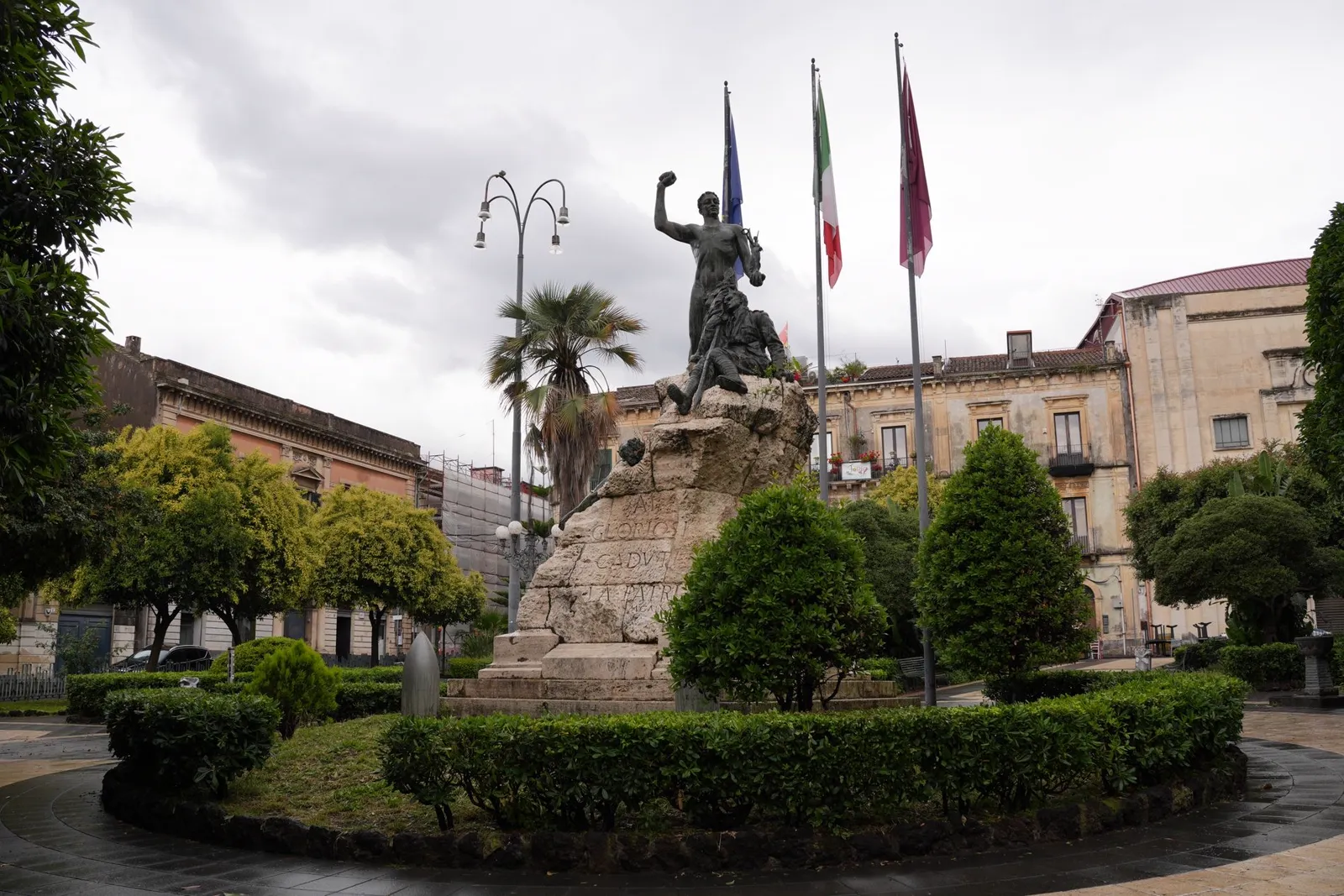
- Location: Acireale, ~13 km / 20 min north of Catania
- Cost: Free to walk the center; Carnevale parade days run about €6-10, thermal baths separately priced
- Best time: Late January to mid-February for Carnevale; any time for the Baroque center and the Timpa
- Getting there: Train from Catania Centrale (~10 min, from €4) or AST bus
- Good for: Half a day
Acireale sits on the coast road between Catania and Taormina, which is exactly why most visitors never actually stop — it reads as a pass-through, something between the airport and the postcard view further north. That’s backwards. This is a full Baroque town with its own cathedral square, one of Italy’s oldest and most elaborate carnivals, a working thermal spa with Greek and Roman roots, and a lava cliff reserve dropping straight into the sea — all in a town quiet enough that none of it feels like a production for tourists.
Piazza Duomo and the two churches facing each other
The center of town is Piazza Duomo, paved in Comiso stone and black lava, with two Baroque churches facing off across it. The Cattedrale di Maria Santissima Annunziata carries a 19th-century facade by architect Giovan Battista Basile and, inside, a marble meridian line on the transept floor tracing the twelve zodiac signs — the work of Danish astronomer Christian Peters. Directly opposite, the Basilica dei Santi Pietro e Paolo has an asymmetrical 17th-century facade, built with only one bell tower instead of the expected two, construction running from 1613 to roughly 1635. Neither building tries to out-do the other; standing between them in the square is the whole point.
Where the name actually comes from
Acireale’s “Aci” isn’t decoration — it’s the same name behind Aci Trezza and Aci Castello down the coast, and it comes from a different myth than the one attached to the Faraglioni rocks there. In Ovid’s version, the shepherd Acis fell for the sea nymph Galatea; the Cyclops Polyphemus, in love with Galatea himself, crushed Acis under a boulder out of jealousy, and a river said to spring from the shepherd’s blood took his name — the Aci. It’s the same Polyphemus as the Odyssey’s rock-throwing Cyclops at Aci Trezza, but a separate story, and worth keeping straight: one is Homer, this one is Ovid.
One of Italy’s oldest carnivals
Acireale’s Carnevale is documented back to the 16th century, and today it’s built around enormous papier-mâché floats (carri infiorati and carri allegorici) that move down Corso Umberto lit up at night — genuinely one of the most elaborate carnival traditions in Italy, not a small-town imitation of Venice’s. It runs in the weeks before Lent, typically late January into mid-February, with some parade days requiring a paid ticket for the fenced viewing areas or grandstand seats, and other days and hours open and free. If your trip lines up with it, it’s worth building the day around; if not, the town works perfectly well without it.
Thermal water the Greeks found first
The sulfur springs at what’s now Terme di Acireale go back further than the town itself — the Greeks built the first structures here to use Etna’s sulfurous water, and the Romans followed with a bath complex still visible today at Santa Venera al Pozzo. The site was largely abandoned through the medieval period and only properly rebuilt in 1873, when the current Terme di Santa Venera opened with its park and grand bathhouse. It’s still an active spa today, treating respiratory and other conditions with sulfurous-saline-bromine-iodine water, and open to visitors year-round, not just as a historical footnote.
The Timpa: a 150-meter lava cliff, not a beach
South of the center, the coast turns into the Riserva Naturale Orientata della Timpa, a protected escarpment over 150 meters high, formed by a major fault system moving Etna’s volcanic rock over time. It’s not a swimming spot — this is a cliff reserve, not a cove — but the lava-rock coastline below it, striped with basalt columns similar to the ones at the Alcantara Gorge, and the citrus terraces above make it a genuinely different kind of Sicilian coastal landscape from the beaches further south.
Practical tips
- When to go: Carnevale season (late January–mid-February) for the floats, or any warm month for the town and the Timpa without the crowds or ticket lines.
- Consider it as a base, not just a stop — Acireale is 10 minutes by train from Catania and noticeably cheaper to sleep in, which makes it a genuine alternative if Catania’s old-town prices or night noise put you off. During Carnevale, book months ahead — the town fills completely.
- Getting there: the train from Catania Centrale is the easiest option, about 10 minutes and from €4; buses run more often but take longer.
- Time needed: an hour or two for Piazza Duomo and the historic center; add more for the Timpa or the Terme.
- Combine it with: Aci Trezza and Aci Castello are both just down the coast — see our guides to the Faraglioni at Aci Trezza and the Norman castle at Aci Castello.
More on the area in the Catania & Etna region guide.