Aci Trezza: The Sea Stacks Homer Blamed on a Blind Cyclops
 Daniele Bellia · 5 min read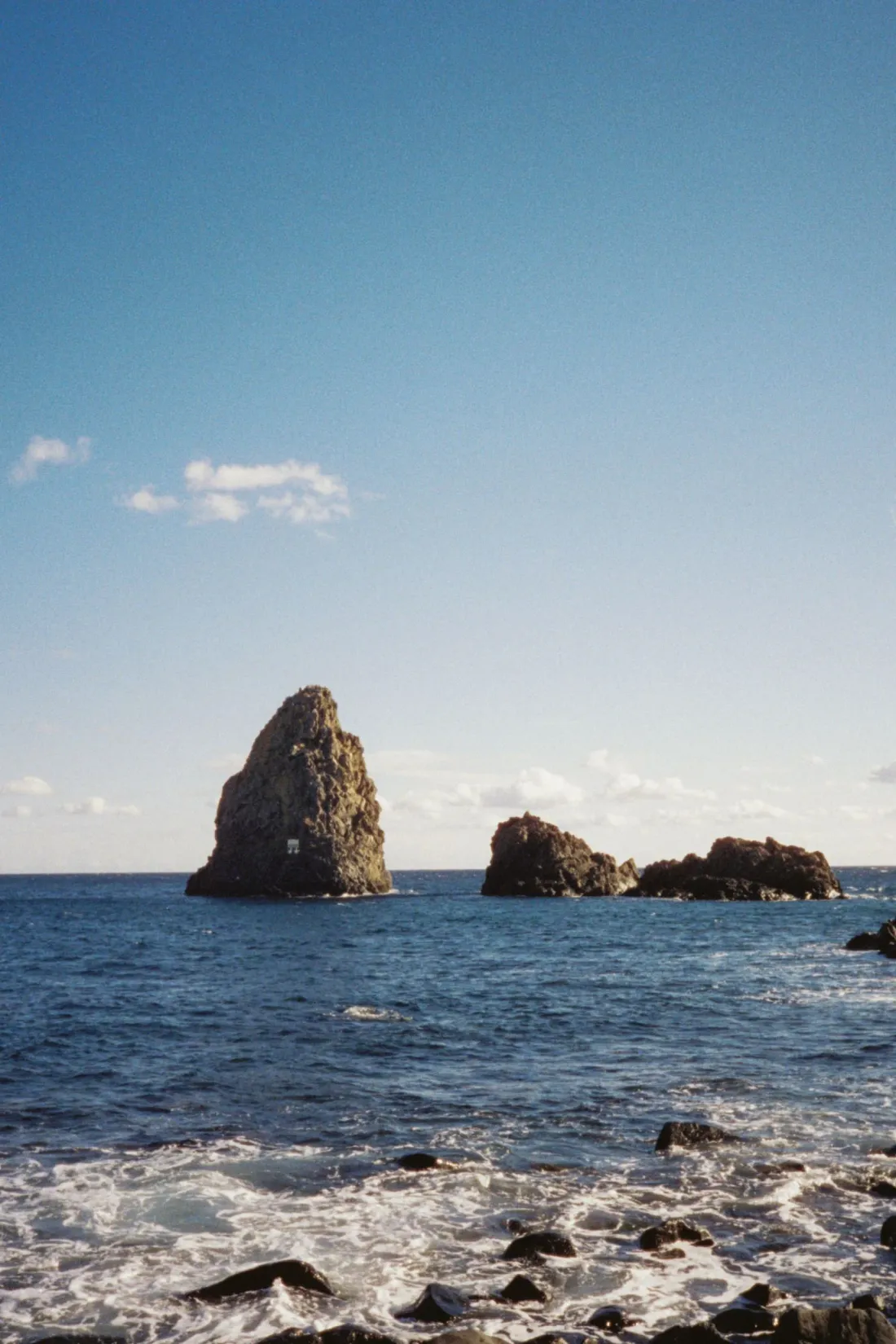
- Location: Aci Trezza, ~15 km / 25 min north of Catania
- Cost: Free to view from shore; boat tours from about €10, kayak rental from €5/hour
- Best time: Sunset, and May–June or September to skip the summer crowds
- Getting there: AMT bus 534 from Catania’s Piazza Borsellino, or a ~15-minute drive
- Good for: A half-day trip, not a full day
Catania’s fish market and Etna get most of the attention, and Aci Trezza — a fifteen-minute drive up the coast — gets treated as an afterthought, usually a sunset stop tacked onto something else. That undersells it. The Faraglioni dei Ciclopi are genuinely striking rock stacks sitting just offshore, they carry a real piece of the Odyssey with them, and the village around them is a real fishing harbor, not a resort built for the view.
The rocks, and the myth attached to them
The Faraglioni dei Ciclopi are a small cluster of basalt sea stacks and islets just off Aci Trezza’s harbor, the two main ones being Isola Lachea (the largest) and the Faraglione Grande. In the Odyssey, Polyphemus — the Cyclops that Odysseus blinded to escape his cave — hurls boulders at the fleeing Greek ships as they pull away from Sicily. These are the boulders local tradition says he threw. Homer never actually names Aci Trezza, but the association is old and, standing on the harbor wall looking at these stacks, it’s not hard to see why the story stuck.
The geology is the part most visitors never hear: this basalt is roughly 500,000 years old, from volcanic activity that predates Etna itself — among the oldest rock in the entire Etna volcanic complex, not a product of the mountain looming behind it today.
It’s a protected nature reserve, with real rules
Since 1998, Isola Lachea and the Faraglioni have been a full nature reserve (Riserva Naturale Integrale “Isola Lachea e Faraglioni dei Ciclopi”), managed by the University of Catania’s CUTGANA research center, inside a larger marine protected area with actual zoning:
- Zone A (strict reserve, marked by yellow buoys around Lachea and the Faraglione Grande): swimming only in specific stretches within 30 m of the rock.
- Zone B: free swimming, with boating, sport fishing, and diving regulated.
- Zone C (includes the harbor itself): boat motors capped at 10 knots.
None of this stops you from seeing the rocks up close — it just means you can’t tie up a boat and climb onto Lachea whenever you feel like it, which honestly keeps the place from turning into exactly the kind of spot it would otherwise become.
Getting there, and the one real catch
From Catania it’s about 15 km by road. AMT’s bus line 534 runs from Piazza Borsellino roughly hourly on weekdays (about €1), less often on Sundays and holidays; the train covers it in around 57 minutes if the bus timing doesn’t line up with your day.
My honest take: don’t drive here without a backup plan. Parking in Aci Trezza is genuinely tight — part of the seafront is metered blue-zone, the rest is free but full, and in summer it’s hard to find a spot even at six in the evening. If you’re set on driving, arrive well before sunset or be ready to park a few streets back and walk in.
Seeing the rocks properly: boat or kayak
The view from the harbor wall is free and worth it on its own, especially at sunset, but a short boat trip gets you right alongside the stacks and usually comes with the Cyclops legend retold by whoever’s driving the boat — operators like Navigando per Trezza or Sicilian Sail Catania run these from around €10 — or book this boat tour with food and swimming stops around the Faraglioni (affiliate link — booking through it costs you nothing extra and helps support this site) ahead of time. If you’d rather move at your own pace, kayak rental runs about €5/hour for a single, €8/hour for a double, which is enough time to circle the main stacks and come back without rushing.
The village has its own story, too
Aci Trezza is also where Giovanni Verga set I Malavoglia, the 19th-century novel that’s still assigned reading in Italian schools — the Toscano family, nicknamed “i Malavoglia,” live in what the book calls the Casa del Nespolo (now a small museum in the village center) and own a boat called the Provvidenza, whose wreck drives the whole plot. It’s a nice bit of context to have walking around a harbor that still looks like a working fishing village, because it still is one.
For food, Il Covo Marino on the seafront has a direct view of the Faraglioni and a solid reputation for seafood; Gente di Mare, tucked on Via Dietro la Chiesa, is the more old-school, historic option at around €25 a head.
Practical tips
- When to go: May, June, and September give you good weather without the July–August crush, when the seafront gets genuinely packed in the evening.
- Parking: assume it’ll be difficult in summer and plan around that rather than hoping for the best.
- Time needed: an hour or two is enough for the harbor and viewpoint; add 30–45 minutes if you’re doing a boat trip or kayak.
- Combine it with: Aci Castello, one stop further down the coast, has its own Norman castle on a lava outcrop and pairs naturally with a half-day trip.
More on the area in the Catania & Etna region guide.