Maccu di Fave – Sicily's Ancient Fava Bean Puree
 Daniele Bellia · 4 min read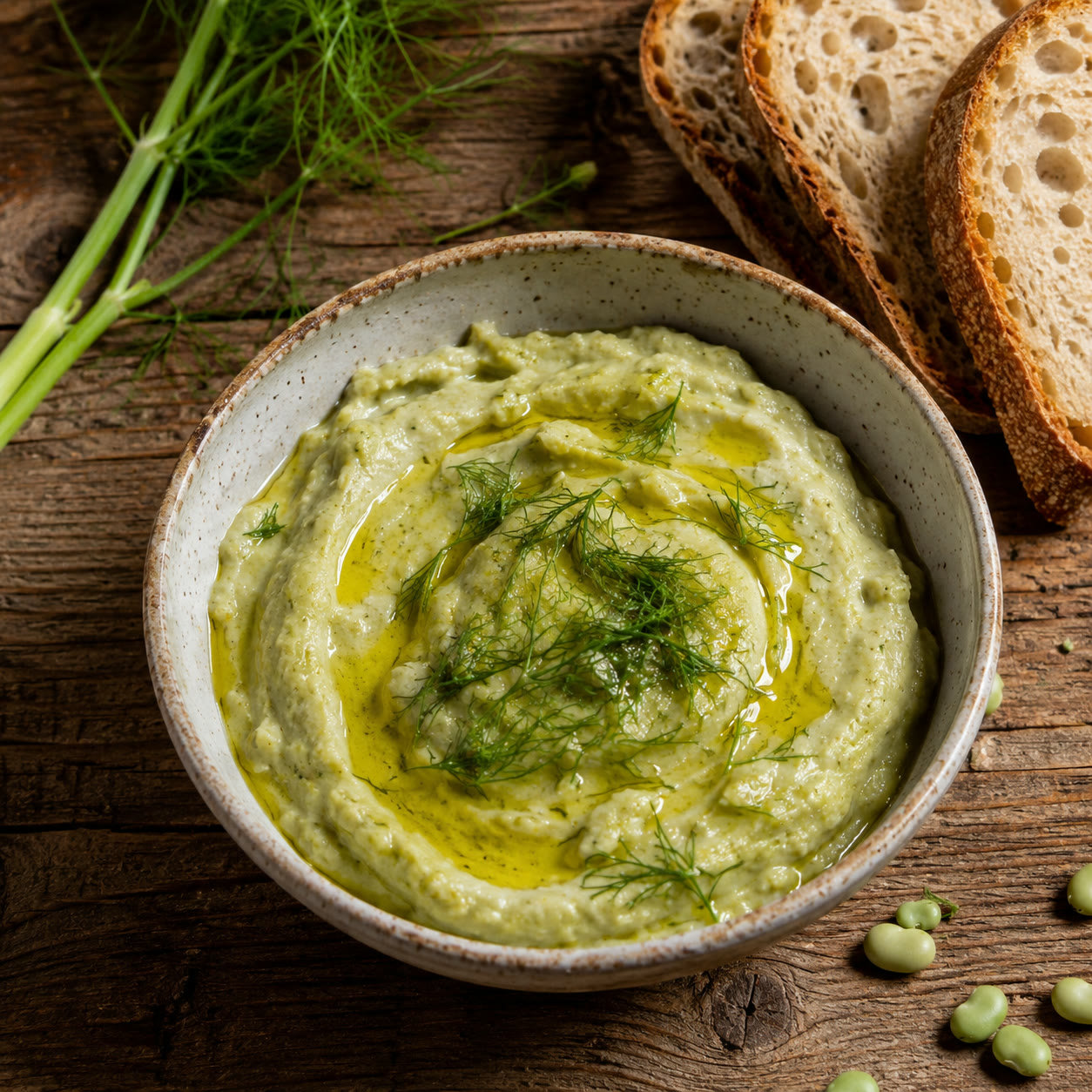
Ingredients
Maccu di fave is about as far from a trendy recipe as Sicilian cooking gets, and that’s exactly the point. It’s dried fava beans, water, wild fennel, and time — nothing else required — and it’s been feeding people on this island since long before “Sicilian cuisine” was something anyone wrote cookbooks about. The Greek playwright Aristophanes mentioned a crushed-fava dish eaten for strength in his comedy The Frogs, written around 450 BC. Whether that’s the direct ancestor of what Sicilian grandmothers still make every March is impossible to prove, but the basic idea — mash dried beans into something that fills you up on almost nothing — clearly hasn’t needed reinventing in twenty-five centuries.
It’s naturally vegan, no substitutions or workarounds needed — this is simply how the dish has always been made.
Farm food, not festival food, originally
For most of its history, maccu wasn’t a special-occasion dish at all. It was what agricultural day laborers across Sicily actually ate: a bowl of it was often the entire meal handed out during long, hard days working the fields, because dried fava beans are cheap, keep for months, and pack real protein, fiber and minerals into a dish that costs almost nothing to make. The name itself comes from the Latin maccare — “to crush” or “to reduce to a pulp” — a description, not a flourish. This is peasant food in the most literal, unromantic sense, and it earned its place in Sicilian cooking by keeping people fed through winters and long shifts, not by being impressive.
Why it’s eaten on March 19
Maccu is strongly associated today with the Feast of San Giuseppe, celebrated across Sicily on March 19. The connection makes sense once you know what the dish actually is: Saint Joseph is honored partly for his humility as a working carpenter, and a dish built entirely around the cheapest, most humble ingredients a Sicilian pantry could offer fits that symbolism directly. Many families still cook it specifically for that date, sometimes turning it into pasta ca’ maccu by tossing cooked pasta straight into the pot (see the FAQ) rather than serving it as a soup on its own.
The one ingredient that actually matters
Dried fava beans and water alone would still taste like something, but finocchietto selvatico — wild fennel — is what makes maccu unmistakably Sicilian rather than just a bean soup. It grows freely along roadsides and field edges across the island, with a sharper, more assertive anise flavor than the fronds you’d trim off a cultivated fennel bulb at the supermarket. If you can’t get the real wild version, bulb fennel fronds are a reasonable stand-in — just expect a milder result, and consider adding a pinch of crushed fennel seed to bring some of that missing intensity back.
Method notes worth knowing before you start
The whole recipe hinges on two things: patience and unsalted water. Fava beans need real time over low heat — rushing it with high heat just toughens the outside before the inside softens — and salting the pot too early is a classic mistake that leaves the skins tough no matter how long you cook them afterward. Salt only once the beans have already collapsed into a soft mass. Traditionally, the mashing was done entirely by hand with a wooden spoon against the side of the pot; a stick blender gets you a smoother, more restaurant-style puree in seconds; either way is authentic, they’re just different textures from different eras of the same kitchen.
How it’s served
A bowl of maccu, finished with a generous pour of raw olive oil and a scatter of fresh fennel fronds, with crusty bread for dipping, is the whole meal — nothing else is expected on the table with it. If you want to stretch it further or turn it into more of a main course, folding in cooked short pasta (rigatoni or ditali work well) turns the same pot into pasta ca’ maccu, a genuinely common Sicilian variation rather than a modern twist.
What to drink with it
A rustic Sicilian red suits maccu’s earthiness better than a white — a Nero d’Avola or a simple Frappato, something with enough body to stand up to the beans without competing with the fennel.
More on Agrigento, where maccu is said to have originated in the town of Raffadali, on our interactive Sicily map.
FAQ
Is maccu di fave the same as frittedda?
No, and they get mixed up because both involve fava beans and both show up around the Feast of San Giuseppe. Frittedda is a fresh spring vegetable stew — fava beans, peas and artichokes braised together, still holding their shape. Maccu is made from dried fava beans, cooked for hours until they collapse into a smooth puree — an entirely different texture, season, and history.
What is wild fennel, and can I substitute something?
Finocchietto selvatico is wild fennel — the feathery green fronds of a plant that grows freely across the Sicilian countryside, with a stronger, more anise-forward flavor than the fronds of a cultivated fennel bulb. Bulb fennel fronds work as a substitute and won't ruin the dish, but the flavor will be noticeably milder; a small pinch of crushed fennel seed added to the pot helps close the gap.
Can I turn this into pasta ca' maccu?
Yes — tossing cooked short pasta directly into the finished maccu, loosened with a little pasta cooking water, is a real and common variation, especially in and around Catania. It turns the same pot of beans into a more substantial main course rather than a soup course on its own.
Why is it traditionally eaten on March 19?
The Feast of San Giuseppe (Saint Joseph) on March 19 is traditionally marked with dishes tied to poverty and humility, in honor of the saint's own modest origins as a carpenter. Maccu — cheap, filling, made from dried beans that keep all winter — fits that symbolism directly, which is why many Sicilian families still cook it specifically on that date rather than as everyday food.