Sicilian Orange and Fennel Salad (Insalata di Arance e Finocchi)
 Daniele Bellia · 4 min read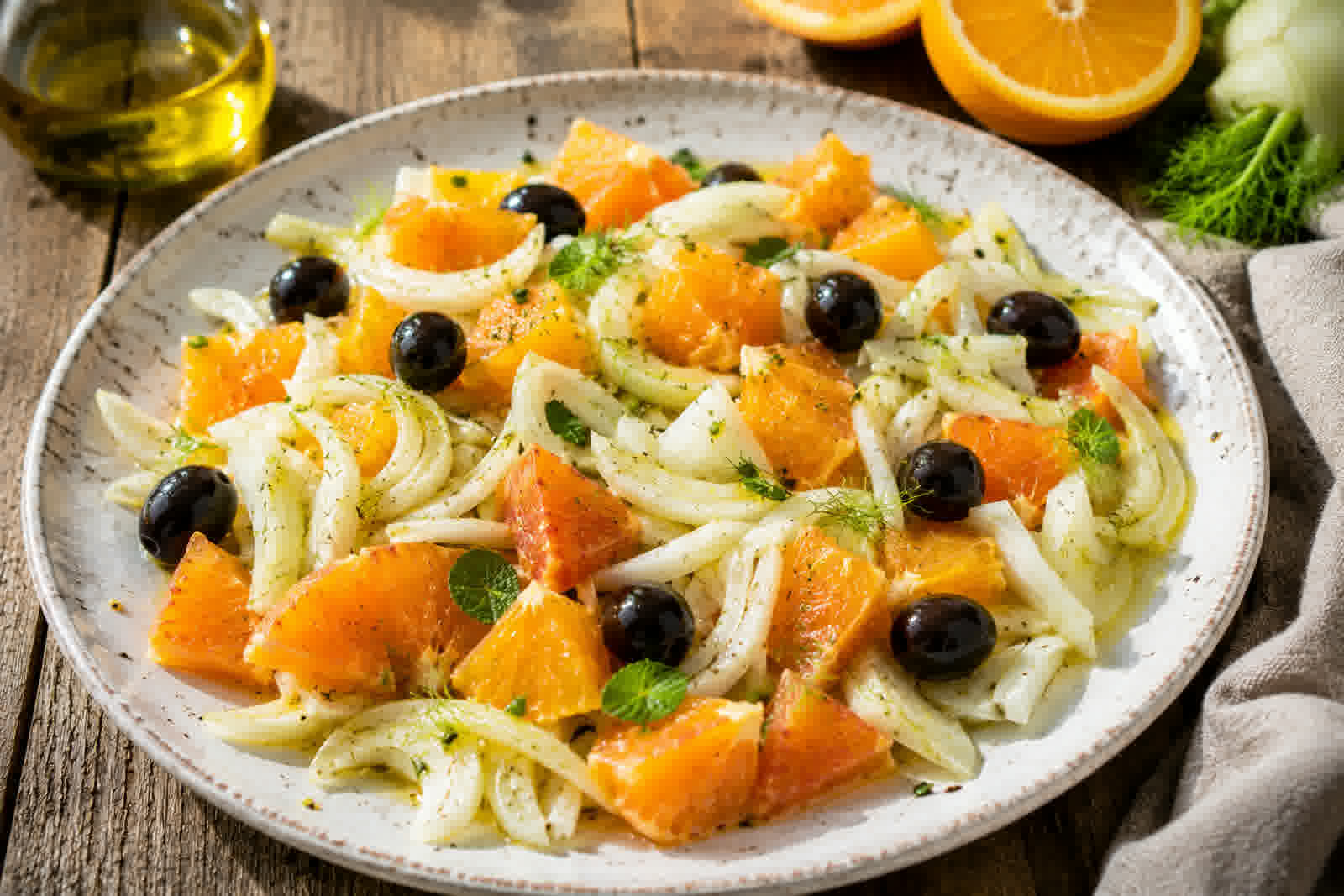
Ingredients
This one surprises people who assume Sicilian food is all pasta, fried things, and tomato sauce: a raw salad of sliced blood oranges and fennel, dressed with nothing more than good olive oil, salt and pepper. It’s genuinely traditional, it’s on the table in most Sicilian households through the winter, and — unlike a lot of the island’s greatest hits — it needs no adapting to be vegetarian. This is simply what the dish is.
Where it actually comes from
Food historians trace the combination of fruit and vegetables in one dish back to Sicily’s period of Arab rule, which introduced both the technique of pairing sweet and savory ingredients and, eventually, the orange itself — brought to the Mediterranean from Southeast Asia and established in Sicily by the 15th century. The specific pairing of citrus with raw fennel became a fixture of Sicilian winter cooking for a practical reason as much as a culinary one: both ingredients are in season at exactly the same time, from December through early spring, when little else fresh is growing on the island.
The oranges that actually make this dish
If you can get them, Sicilian blood oranges are worth the extra effort. The Arancia Rossa di Sicilia carries EU-protected IGP status and comes in three varieties — Tarocco (orange flesh streaked with red, the mildest of the three), Moro (intensely wine-red, almost black inside), and Sanguinello (similar to Tarocco but with a deeper, more widespread ruby color). All three grow in the volcanic soil around the base of Etna, in the provinces of Catania, Siracusa and Enna — the sharp day-to-night temperature swings there are exactly what triggers the anthocyanin pigments responsible for the red color, the same phenomenon that colors autumn leaves. Tarocco is harvested December to May, Moro December to March, Sanguinello February to April, so depending on when you’re making this, one variety or another is more likely to actually be in season.
Regular navel or Valencia oranges make a completely legitimate version of this salad too — plenty of Sicilian households make it with whatever oranges are in the kitchen, and outside Sicily the blood orange season is short enough that most people cooking this abroad will use standard oranges most of the year anyway.
Method
The oranges: Cut both ends off, then slice away the peel and the white pith beneath it with a knife, following the curve of the fruit — you want no white left, since the pith is what makes citrus taste bitter rather than clean. Slice into thin rounds over a bowl to catch the juice; that juice becomes part of the dressing.
The fennel: Trim off the tough outer layer and any bruised parts, then slice as thin as you can manage — a mandoline gives the most even result, but a sharp knife and a steady hand work fine. Thinner is better here: thick fennel slices read as raw and fibrous, thin ones read as crisp.
Assembly: Layer the orange and fennel slices rather than tossing them into a heap — this is traditionally plated, not mixed into a bowl salad, and it looks like what it is: a composed winter dish, not a thrown-together side. Scatter the olives over the top, add the red onion if you’re using it, then dress with olive oil and the reserved orange juice, salt, pepper, and torn mint if you like it. Let it sit five to ten minutes before serving, no longer — dressed too far ahead, the fennel loses the crunch that makes the whole dish work.
The variant nobody outside Sicily expects
In parts of the island, especially around Christmas, the same salad gets a few pieces of smoked herring or chopped anchovy folded in — a salty, savory contrast against the sweet citrus that some families consider essential and others skip entirely. It’s worth knowing this variant exists so you’re not caught off guard if you see it on a menu labeled the same way, but the plain version isn’t a simplified or modern one — it’s just as authentically Sicilian, and the one more commonly served as a side rather than a starter.
Serving
This is a side dish, not a main — it sits well next to roasted or grilled dishes, where the acidity and crunch cut through richer flavors, which is likely why it survives on so many Sicilian Christmas tables next to heavier roasted meats and fish. It doesn’t keep well once dressed, so treat it as a make-shortly-before-serving dish rather than something to prep a day ahead.
More Sicilian recipes on our recipes page, or see where Sicily’s citrus-growing region sits on our interactive Sicily map.
FAQ
Is this salad vegan?
Yes, entirely, in its most common form — oranges, fennel, olives and olive oil, nothing animal-derived. Some regional versions add pieces of smoked herring or anchovy, but the plain version is just as traditional, not a modern substitution.
Do I need Sicilian blood oranges specifically?
They're worth seeking out for the color and the slightly sharper, almost berry-like flavor, but regular navel oranges make a completely legitimate version too — blood oranges are only in season roughly December to April outside Sicily, so plenty of Sicilian families make this with whatever oranges are on hand the rest of the year.
What's the herring or anchovy version about?
In parts of Sicily, especially around Christmas, the same salad gets a few pieces of smoked herring (aringa affumicata) or a couple of chopped anchovies mixed in — it adds a salty, savory edge against the sweet citrus. Worth trying if you eat fish, but it's a variant, not a required step.
Can I make it ahead?
Prep the fennel and oranges up to a few hours ahead and keep them separate, covered, in the fridge — but only dress and combine the salad shortly before serving, since fennel softens and the orange juice pools once it's dressed.