Gelo di Melone – Sicilian Watermelon Pudding
 Daniele Bellia · 2 min read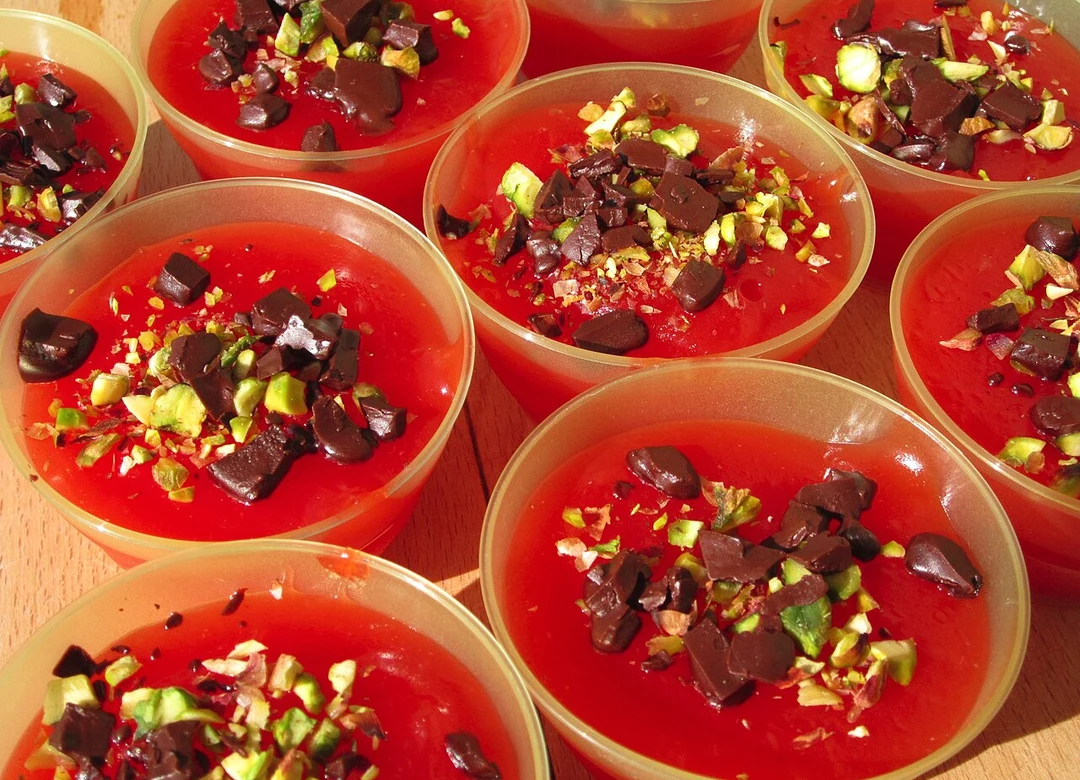
Ingredients
The first time you see “gelo di melone” on a menu in Palermo, you’d be forgiven for expecting cantaloupe. You’d be wrong: “mellone” is Sicilian dialect for watermelon, not the melon you’re picturing. What you actually get is a firm, pudding-like dessert in deep red, tasting of nothing but pure, chilled watermelon — exactly what you want on a hot July day in Palermo.
Where it comes from
Gelo di melone is mostly a Palermo thing, and it’s traditionally tied to the Festino di Santa Rosalia, the city’s big mid-July festival honoring its patron saint. During the festivities, street stalls all over town sell portions cut from large round molds. Food historians disagree on its exact origin: some trace it to Arab rule over Sicily, when chilled fruit desserts first arrived on the island; others credit the Arbëreshë, the Albanian-descended communities in Palermo’s hinterland. What’s certain is that it’s been part of Palermo’s summer for generations, as much a ritual as granita at breakfast.
Only three base ingredients — but the details matter
Watermelon juice, sugar, starch — that’s the whole base. The difference between a good gelo di melone and a mediocre one comes down to two things: a properly filtered juice (no fibers, no seeds) and cooking it just long enough to turn glossy and thick without overcooking. Undercook it and it won’t set properly; overcook it and it turns rubbery.
Method
The juice: Blend the watermelon flesh and strain it through a fine sieve or muslin cloth — this matters, or you’ll end up with fibers in the finished pudding.
The thickener: Whisk part of the juice with the cornstarch until smooth, warm the rest with the sugar, then combine.
The cooking: Simmer, stirring constantly, for 8-10 minutes until it thickens and briefly comes to a boil.
The chilling: Pour into molds or bowls and refrigerate for at least 6-8 hours, ideally overnight.
The garnish isn’t decoration — it’s part of the recipe
Roughly chopped dark chocolate and pistachios aren’t just for looks on gelo di melone — they’re built into the flavor, with the bitter chocolate crunch balancing the watermelon’s sweetness. If you can get Sicilian pistachios from Bronte, use them: greener and more aromatic than most standard varieties. In Palermo, jasmine flowers and sometimes zuccata (candied winter squash) traditionally join the mix too — both hard to find outside Sicily, but not essential to the result.
More on Palermo on our interactive Sicily map.
FAQ
Is "gelo di melone" the same as cantaloupe pudding?
No — this is the most common mix-up with this dessert. "Mellone" is Sicilian dialect for watermelon (anguria), not cantaloupe or honeydew melon. The dessert tastes exactly like chilled watermelon, not melon.
How do I get the clearest juice?
Blend the flesh, then strain it through a fine sieve or, even better, a muslin/cheesecloth, pressing well. Skip the straining and you'll get a duller result with little fibers throughout.
Can I make it without jasmine flowers?
Yes, easily. The flowers are a traditional aromatic touch that's hard to find outside Sicily anyway. Chocolate and pistachios are the garnish that actually matters.
How long does gelo di melone keep?
Covered in the fridge, 2-3 days. Since it needs several hours to set anyway, it's naturally a good make-ahead dessert.