Cassata Siciliana – The Cake Every Sicilian Grew Up With
 Daniele Bellia · 2 min read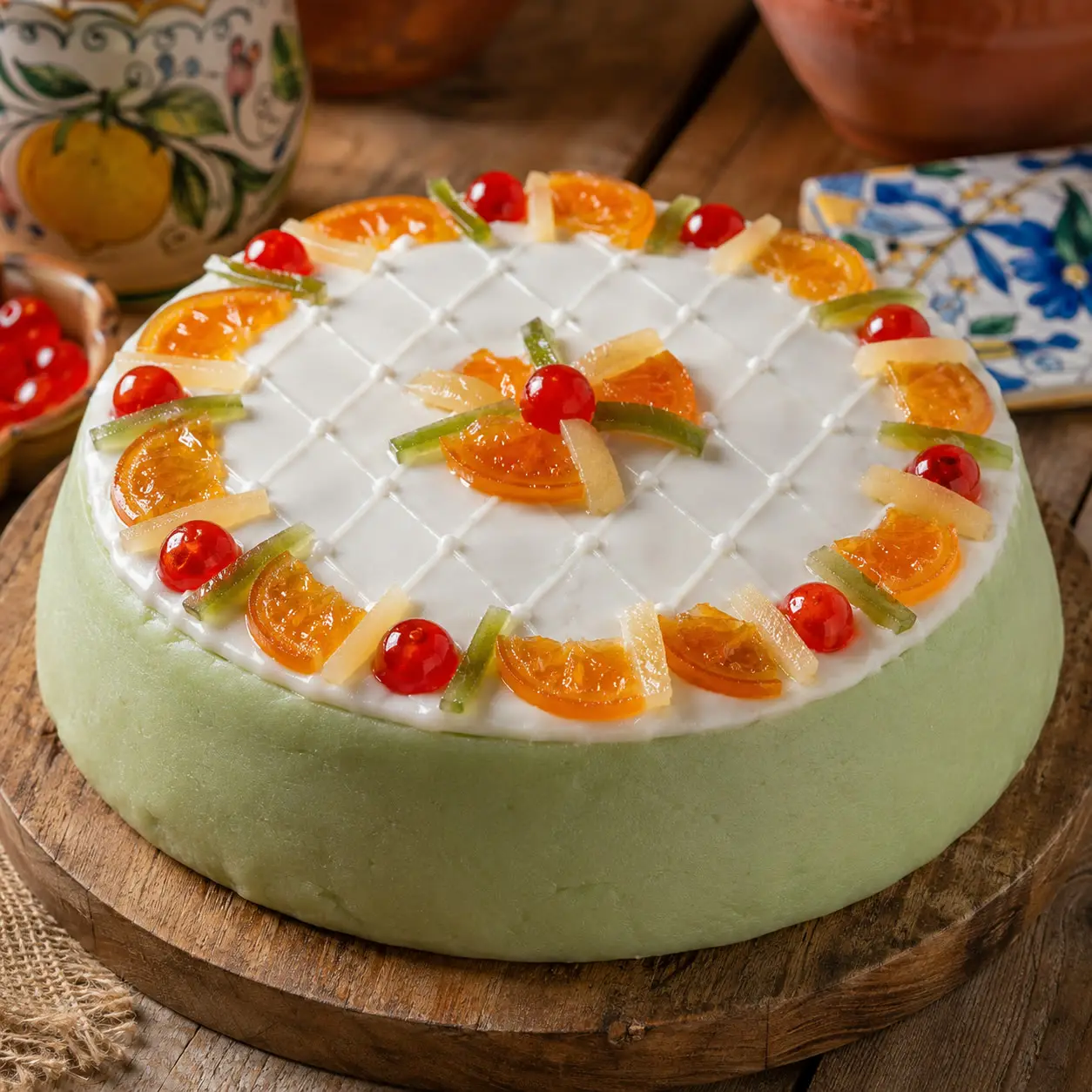
Ingredients
Cassata is the dessert every Sicilian grew up eating at Easter, long before it became something bakeries sell year-round. It traces back to Arab-Norman Palermo and the convent kitchens that later refined it — the nuns of Palermo’s monasteries have as much claim to this recipe’s development as anyone. What ends up on the plate today is layered sponge cake, sweetened ricotta, a shell of green marzipan, and a glaze crowned with candied fruit arranged like a proper celebration cake, because that’s exactly what it is.
It’s not a quick bake. Between the sponge, the ricotta filling, the marzipan shell, and the chilling time to make it hold together, this is a project, not a weeknight dessert. But almost none of the individual steps are actually difficult — the recipe rewards patience more than skill.
The one step that actually matters
Forget the marzipan and the decoration for a moment: the ricotta has to be properly drained, full stop. This is the step that decides whether the cake holds its shape or turns into a wet, collapsing mess once you unmold it. Sheep’s ricotta is traditional specifically because it’s already drier and richer than cow’s ricotta, but even that needs real time in a sieve or a cloth-lined colander — don’t rush it.
Building it in a bowl, not a tin
Cassata is assembled upside down, in a bowl or springform, which is why the marzipan ends up lining the sides rather than sitting on top like you’d expect from looking at the finished cake. Sponge strips soaked in syrup go against the marzipan, the ricotta filling goes in the middle, and a final sponge disc caps it off — everything gets unmolded and flipped only at the very end, right before glazing.
The glaze and the fruit go on last, not before
The white glaze and the ring of candied fruit are a finishing touch, not something to plan a day in advance — glaze softens and fruit shifts if it sits too long before serving. Make the cake itself the day before, then glaze and decorate the morning you’re actually serving it.
Not the same as cassata gelato
If you’ve had “cassata” as a gelato flavor and are expecting something similar, know that they share a name and a filling concept but very little else — the gelato version borrows the ricotta-and-candied-fruit idea without the sponge, marzipan, or assembly. The cake is the original; the gelato came later, borrowing the name.
More on Palermo on our interactive Sicily map.
FAQ
Why did my filling turn watery?
Almost always under-drained ricotta. Sheep's ricotta is traditional because it's naturally drier and richer than cow's — but even that needs a proper couple of hours in a sieve or lined colander before it goes anywhere near the sugar.
Does it have to be green marzipan?
Traditionally yes, though it's worth knowing the green dye is a relatively recent addition — older versions used plain, uncolored almond paste. Either way, marzipan itself is non-negotiable; without it, it isn't really a cassata anymore.
Can I make it without alcohol?
Yes — orange flower water in the soaking syrup does the job on its own. Rosolio (the traditional rose or citrus liqueur) adds a different note, but it's not what makes the cake taste like cassata.
Can I prepare it a day ahead?
You should, really — the filling needs at least 4 hours to set, and the flavors settle better overnight. Add the glaze and candied fruit on the day you're serving it, not before.