Sicilian Cannoli – the Original with Ricotta
 Daniele Bellia · 2 min read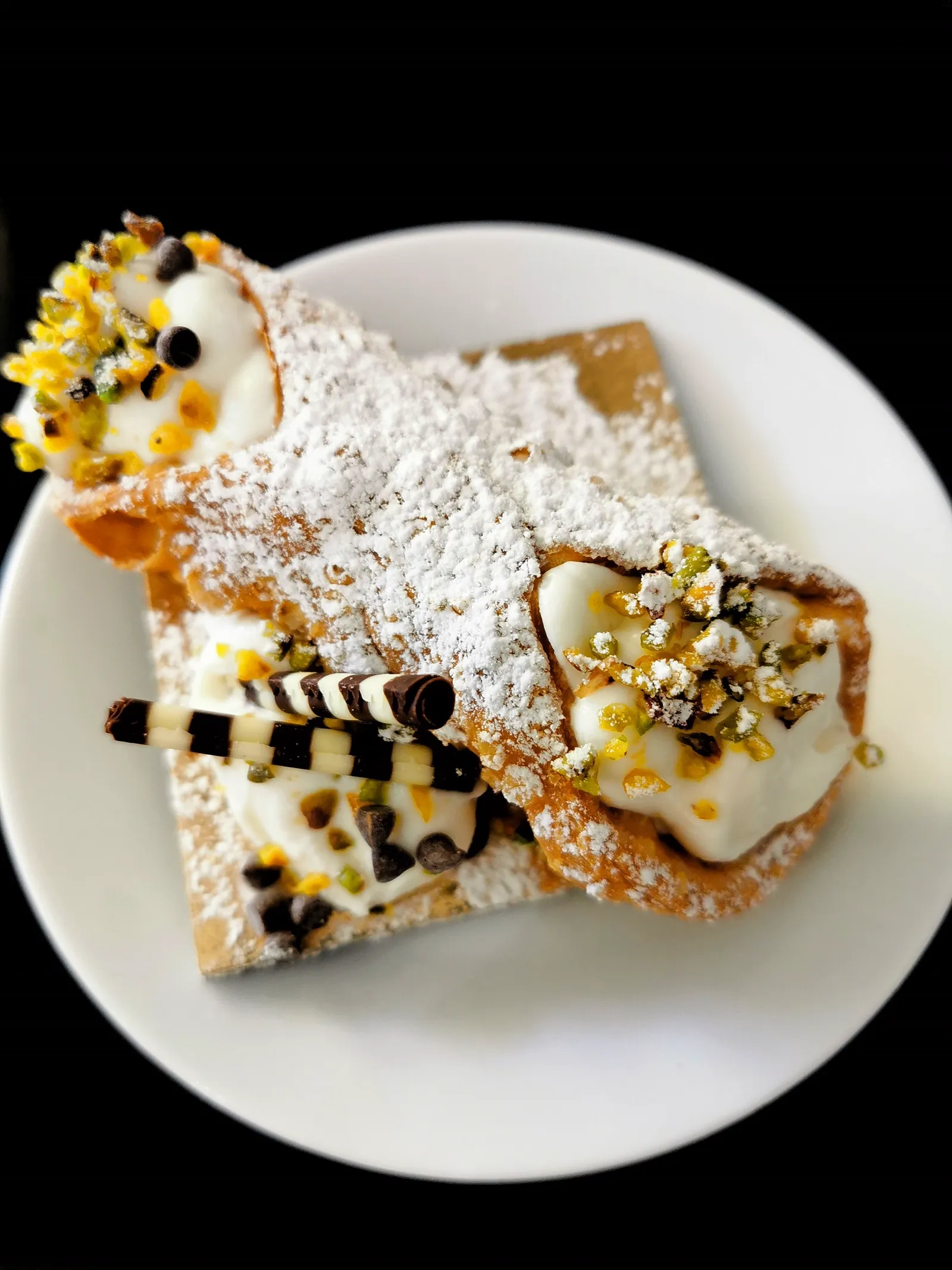
Ingredients
Cannoli are arguably Sicily’s most famous dessert — and also one of the most frequently botched outside the island. Their roots trace back to the Arab rule of Sicily (9th–11th century), likely originating around Caltanissetta. One well-known legend says they were first made in the women’s quarters of an emir’s harem; another credits Sicilian nuns, who baked them during carnival season as a phallic fertility symbol — an association baked right into the name itself, since “cannolo” simply means “small tube.”
Here’s what a lot of people don’t realize: a good cannolo is really two separate preparations that only come together at the very last moment. That’s exactly where most versions made outside Sicily go wrong.
The shell
The dough is traditionally made with lard (often swapped for butter today) and a splash of Marsala or red wine — the alcohol makes the shell especially crisp and blistered as it fries. In some regions, cocoa powder goes into the dough, giving the shell the characteristic dark color you see on a lot of Sicilian cannoli. It’s rolled out paper-thin, wrapped around metal tubes, and deep-fried in plenty of hot oil until golden and blistered.
The filling
The heart of it is fresh ricotta di pecora — sheep’s milk ricotta, creamier and less watery than the cow’s milk version. It’s passed through a fine sieve, beaten smooth with powdered sugar, and folded together with chocolate shavings. Palermo often adds candied orange peel, while Catania and Bronte lean instead on the region’s famous green pistachio.
The most important trick: fill only right before serving
This is why cannoli taste so different at a real Sicilian pasticceria than the soggy version off a supermarket shelf: the shell is filled only immediately before serving. The moment the moist ricotta touches the crisp shell, it starts to soften — after 20–30 minutes, the crunch is completely gone. Any decent pasticceria in Palermo fills cannoli the moment they cross the counter, never before.
Where “leave the gun, take the cannoli” comes from
The famous line from “The Godfather” made the cannolo world-famous, even though it has nothing to do with the plot itself — it’s really just an inside joke about Sicilian-American culture, where a dessert is never underestimated on an occasion of honor. In Sicily itself, the cannolo doesn’t need a movie reference to be a status symbol: at carnival, Easter, and weddings, they’re practically mandatory in every pastry shop.
A side note that matters to me personally: cannoli are naturally vegetarian — no meat, no fish, simply because that’s how the original is composed.
More on Palermo on our interactive Sicily map.
FAQ
Why is the shell made with Marsala instead of water?
The alcohol evaporates faster than water during frying, which makes the shell especially crisp and blistered. Without any alcohol, the dough turns out chewier.
Can I prep cannoli ahead of time?
The unfilled shells keep for several days in an airtight container. The filling, though, should really happen right before serving — otherwise the shell goes soft within minutes.
Does it have to be sheep's milk ricotta?
Traditionally, yes — it's creamier and less watery than cow's milk ricotta. If you can't find it, drain regular ricotta in a cloth for a few hours first, or the filling will turn out too runny.
What's the difference between the Palermo and the Catania/Bronte version?
Palermo traditionally adds candied orange peel to the filling, while Catania and Bronte lean on pistachio instead. Both are authentic — you can also combine the two.