Cioccolato di Modica – Cold-Worked Chocolate the IGP Way
 Daniele Bellia · 3 min read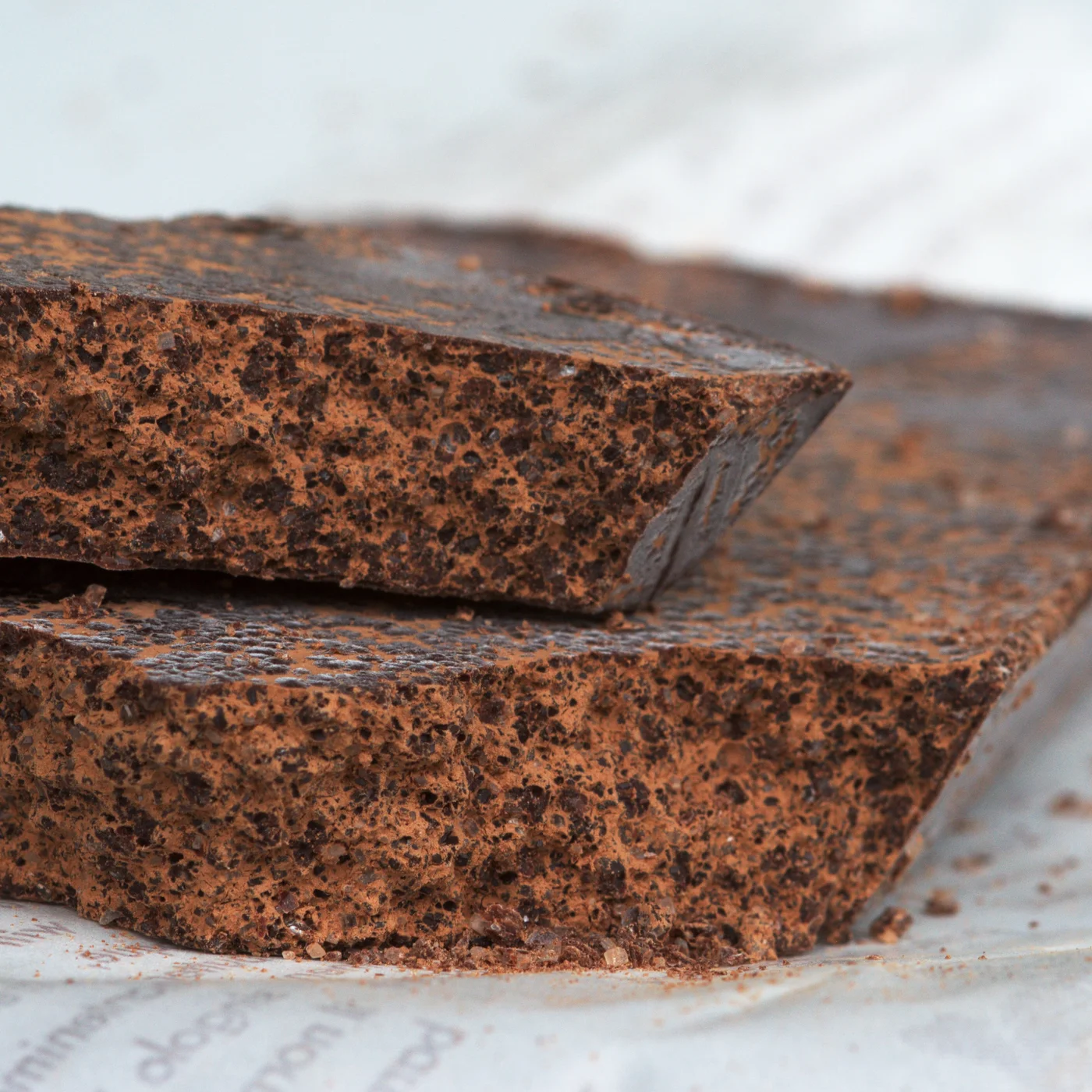
Ingredients
The first time you try a piece of Cioccolato di Modica, you’re usually expecting the smooth, melting texture of a normal chocolate bar — and you’re surprised that it actually crunches as you chew. That’s not a production flaw, it’s the entire principle: Modica chocolate is cold-worked, never heated above about 40°C, so the sugar never fully dissolves. The technique traces back to the Aztecs, who cold-processed cacao on a flat stone (the “metate”) with chili and spices into a bitter drink — in the 16th century, the Spanish, who ruled Sicily at the time, brought this knowledge to Modica, where sugar, cinnamon, and vanilla got added. Since 2018, Cioccolato di Modica has held the EU’s PGI (Protected Geographical Indication) seal — the first chocolate in Europe to get one.
A side note that fits this blog well: the original ingredient list is naturally vegan — just cocoa butter, cocoa powder, sugar, and spices, no milk, no egg. No adapting required.
Why the temperature is everything
The core difference from every other chocolate is simple but decisive: normal chocolate gets heated to 45–60°C during production (“conching”), which melts sugar and cocoa butter into a smooth, homogeneous mass. Modica chocolate stays consistently under 40°C. That’s enough to keep the cocoa butter liquid, but not enough to fully dissolve the sugar — the result is noticeable crystals instead of a creamy texture. Let the mixture get too hot, and you end up with completely normal chocolate, not Cioccolato di Modica.
Method
The base: Melt the cocoa butter over a double boiler at low heat, watching a kitchen thermometer closely — 45°C is the ceiling; go above it and you lose the whole effect. Stir in the cocoa powder until you get a smooth, dark mass.
Sugar and spices: Remove from the heat. Only now do the sugar, cinnamon (or vanilla), and a pinch of salt go in — stir just briefly, enough to distribute the sugar without dissolving it. This is the part that takes practice: stir too long, and the warmth from your own hand plus friction melts the sugar anyway.
Molding and setting: Pour the mixture quickly into bar molds (silicone molds work best) before it firms up too much to spread. Let it set for at least two hours at room temperature or in the fridge. A properly finished bar breaks with a characteristically matte, slightly rough fracture — if it’s glossy like normal chocolate, the mixture ran too warm.
The most common mistake
A lot of copycat recipes outside Sicily just melt a bar of finished dark chocolate and stir in sugar. The problem: finished chocolate has already been conched and tempered, and its crystal structure can’t be reset to the original gritty state just by reheating it. For the real result, you need pure cocoa butter and cocoa powder as your starting point, not melted bar chocolate.
Where to try the original
If you get the chance: in Modica itself, Antica Dolceria Bonajuto, founded in 1880, is Sicily’s oldest chocolate workshop and still makes it by the traditional method today. More on the two Baroque towns of Ragusa and Modica, where the chocolate shops line the old town, in our guide to Ragusa and Modica, or see them on our interactive Sicily map.
FAQ
Why is the chocolate gritty — is that a mistake?
No, that's the entire point. Because the mixture never goes above about 40°C, the sugar never fully dissolves and stays as noticeable crystals — that's what sets Cioccolato di Modica apart from any normally tempered chocolate.
Can I just melt regular chocolate and stir in sugar?
No, that gives you a different texture. The original starts from pure cocoa butter and cocoa powder, not from finished, already-tempered chocolate — that's the only way to keep the mixture cool enough for the sugar to stay gritty.
What are the traditional flavors?
Cinnamon and vanilla are the classic versions; chili is the spicier one, historically closer to the Aztec roots. Modern Modica chocolatiers also experiment with citrus zest, sea salt, or pistachio.
How long does it keep?
Stored cool and dry, several weeks — though the texture gets more crumbly over time. It tastes best fresh.