Ragusa and Modica: Baroque and Chocolate — the Val di Noto Day Most People Plan Wrong
 Daniele Bellia · 6 min read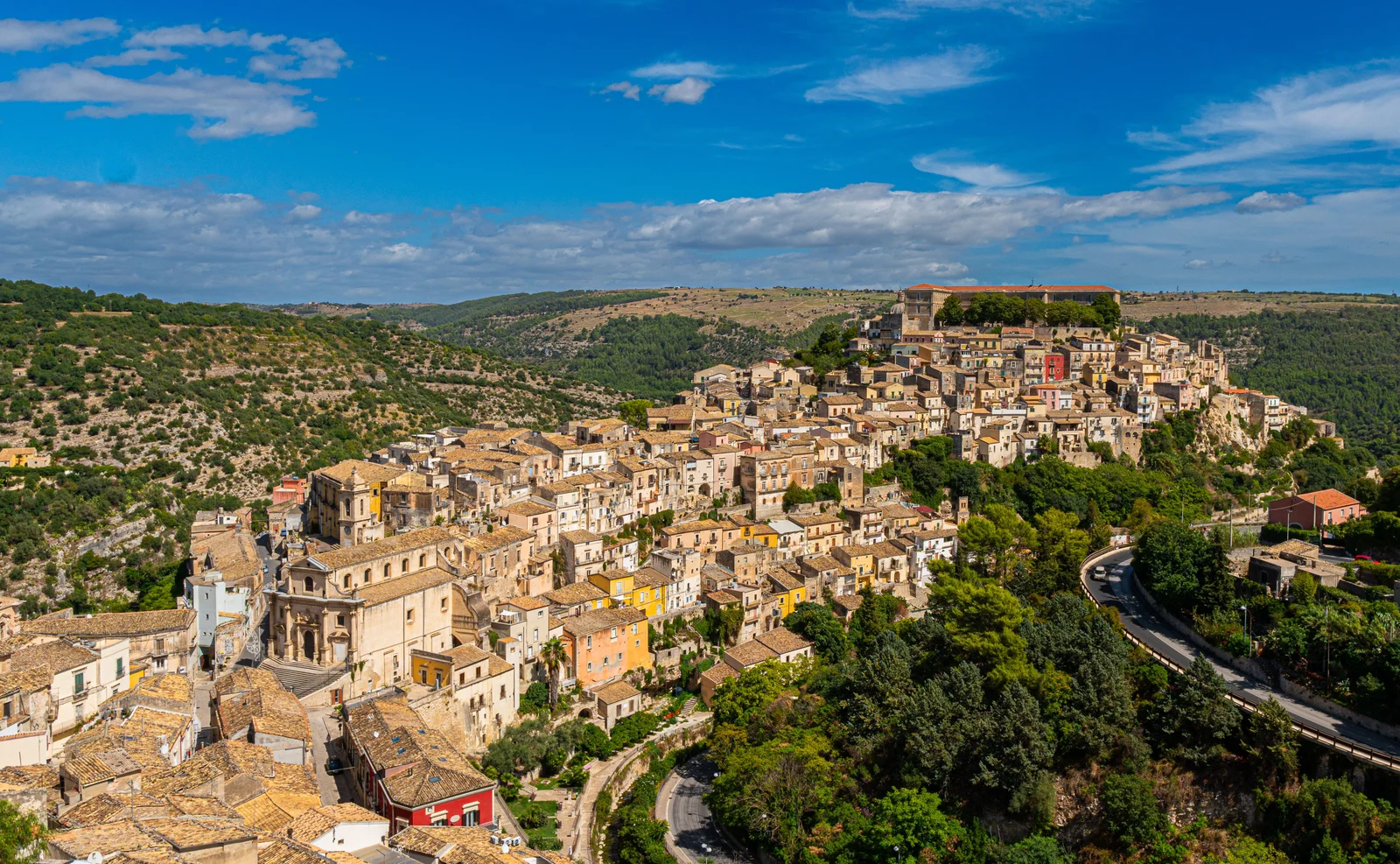
When friends from Germany tell me they’re making a “quick stop in Modica for the chocolate,” I always ask: and you’re skipping Ragusa Ibla? The answer is almost always yes, because most travel blogs give Modica the starring role and mention Ragusa as an afterthought on the way. That’s backwards. Both towns are part of the same Val di Noto UNESCO World Heritage listing, both were rebuilt in the same late-Baroque style after the devastating 1693 earthquake, and both deserve an actual visit, not just a photo stop. Here’s what I tell anyone trying to see both in a day — or better, two.
Ragusa Ibla and Ragusa Superiore: two towns that just happen to share a name
The biggest misunderstanding first: Ragusa isn’t one old town, it’s two completely separate districts that were only officially merged in 1927. After the 1693 earthquake nearly flattened Ibla, the population split over where to rebuild. The aristocratic faction, loyal to Saint George, wanted to rebuild on the original ruins down in the valley. The rising merchant class, loyal to John the Baptist, wanted a fresh start up on the hill. Neither side backed down, so two towns grew up side by side, separated by the Valle dei Ponti ravine.
Ragusa Superiore, up top, is the “modern” town — a grid layout, administrative buildings, and the train station. For visitors it’s mostly a pass-through. Ragusa Ibla, down below, is the actual destination: a maze of narrow lanes, Baroque palazzi, and the Cathedral of San Giorgio on Piazza Duomo, whose three-tiered façade was built by architect Rosario Gagliardi between 1738 and 1775. On foot, the two halves are connected by the Salita Commendatore, a staircase of more than 240 steps winding past the church of Santa Maria delle Scale — budget around 30 minutes depending on your pace. If you’d rather skip the stairs, a small shuttle bus (line 3/33) runs between Ragusa Superiore and Ibla for around €1.20.
Practical tip: if you’ve got a rental car, don’t try to park in Ibla itself — the lanes are too narrow and spots are scarce. Park up in Ragusa Superiore instead and walk or take the shuttle down.
Modica: two cathedrals named San Giorgio, endless confusion
The second thing that trips almost everyone up: Modica also has a Duomo di San Giorgio, constantly confused with the one in Ragusa Ibla even though they’re two entirely different buildings. Both are dedicated to Saint George, both have Norman roots dating to the 12th century, both were rebuilt in the same style after 1693 — hence the mix-up. Modica’s cathedral came out of a 1760 design competition won by Francesco Paolo Labisi, with Rosario Gagliardi — the same architect behind Ragusa’s version — later brought in to oversee the build. The result is an even more theatrical façade, fronted by 250 steps framing the view from Corso Umberto I like a stage set.
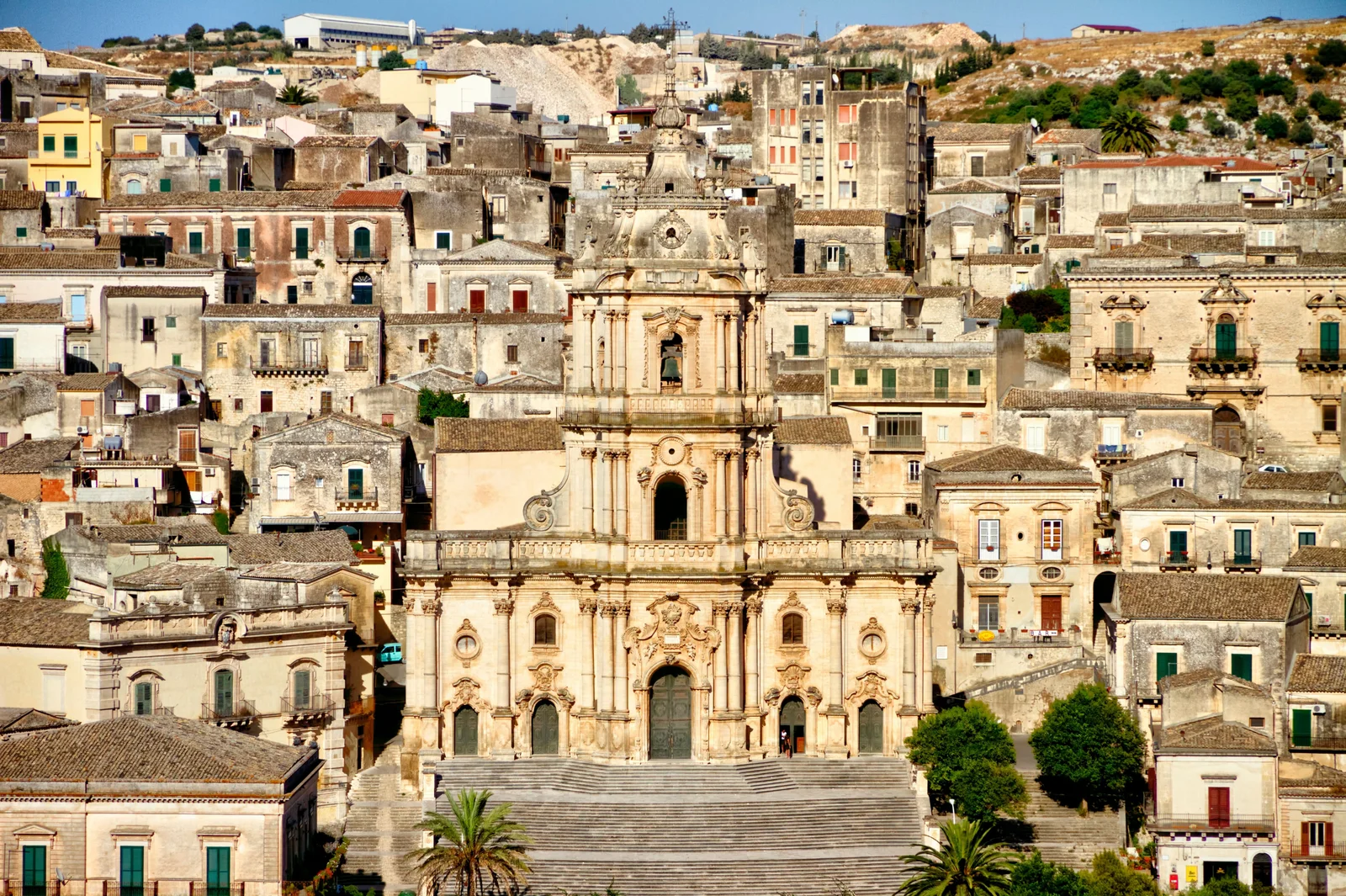 Photo: Gildo Cancelli, via Pexels
Unlike Ragusa, Modica isn’t split into two separate districts — it’s one continuous town stretched along a narrow river valley. The two main axes, Corso Umberto I down below and the old-town lanes climbing up toward the Pizzo viewpoint, follow the old riverbed, which was built over after severe 20th-century flooding.
The chocolate that isn’t really “chocolate” as you know it
Now for the reason most people actually show up: Cioccolato di Modica, granted IGP (protected geographical indication) status in 2018. What most visitors don’t realize is that, technically, it’s barely “chocolate” in the modern sense. The technique originates with the Aztecs and arrived in Sicily in the 16th century via Spanish rule — while the rest of Europe moved on to industrial conching with heat and added cocoa butter, Modica kept the old cold-processing method. The cocoa mass is worked at no more than 40°C, so the sugar never fully dissolves — hence the grainy, almost crumbly texture where you can still feel individual sugar crystals. No added cocoa butter, no milk, no emulsifiers.
To taste it properly, head to Antica Dolceria Bonajuto on Corso Umberto I, founded in 1880 and Sicily’s oldest still-operating chocolate maker. Alongside the classic vanilla bar, they still make old recipes flavored with chili, cinnamon, or even salt — flavors tracing back to the original Aztec recipe, not European chocolate-making. Break off a piece and let it melt on your tongue rather than chewing it: you’ll get the cocoa first, then the sugar crystals, then the spice. For more Sicilian sweets to try at home, see our recipe collection.
How to get there without a car
Skip the train from Catania — the Catania–Ragusa rail connection takes anywhere from 3.5 to 5 hours because the line loops a long way around via Syracuse or Gela. Take the bus instead: AST and Interbus/Etna Trasporti run direct services from Catania (both the city and Fontanarossa Airport) to Ragusa, journey times roughly 1 hour 50 minutes to 2 hours 20 minutes depending on the route, fares from around €9–11 one way. Several services stop in Modica along the way, so you can break the trip there.
Between Ragusa and Modica themselves, the regional train is surprisingly convenient: just 20–23 minutes, several times a day, from about €3 one way — often the more relaxed option compared to the bus (AST line 663, also around 30 minutes, several times daily except Saturdays). Within each town you can walk everywhere; you’ll only need a car if you’re heading further out to the beaches near Marina di Ragusa or over to Scicli.
One day is enough — but only if you prioritize
Realistically, Ragusa Ibla alone needs 2 to 3 hours for the cathedral, the Giardino Ibleo, and a proper wander through the lanes. Modica needs another 2 to 3 hours for its cathedral, Corso Umberto, and a chocolate tasting. Add the trip out from Catania and the transfer between towns, and that easily fills a full day. For a more relaxed pace with an actual sit-down lunch, I’d plan two days instead, with one night in Ragusa Ibla — that way you also see Ibla after dark, once the day-trippers have left and the façades are lit up. If you’re already in the area, both towns pair well with a side trip to the Siracusa region, about an hour’s drive away.
What the trip costs depends heavily on your accommodation choices and pace — for a rough sense of budgeting across Sicily, see our trip cost guide. My final piece of advice: if you had to choose between Ragusa Ibla and Modica (which you shouldn’t), pick Ragusa Ibla. The architecture is denser, the view from the belvedere is better, and you can always track down Modica chocolate later at a Sicilian deli or online. The Duomo di San Giorgio in Ibla lit up at sunset, on the other hand, you can only get in person.