Visiting Scicli: Is the Third Baroque Town Worth It?
 Daniele Bellia · 5 min read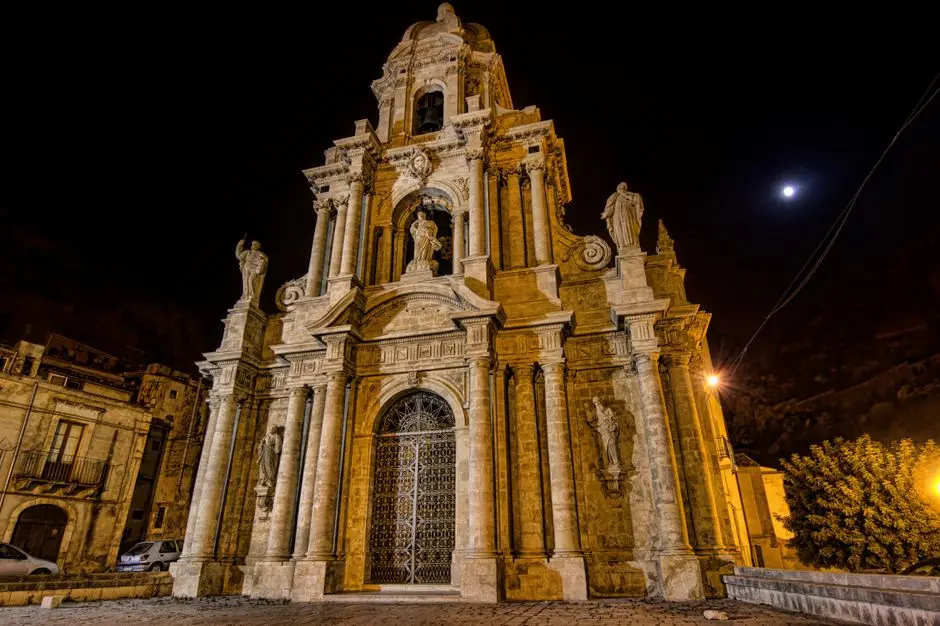
When people ask me what to see in southeastern Sicily, the same trio comes up almost every time: Ragusa, Modica, Noto. Scicli barely makes it onto most itineraries, even though it belongs to the UNESCO World Heritage site of Val di Noto just as much as its more famous neighbors. It’s not even out of the way — Scicli is a twenty-minute drive from Ragusa, and even closer to Modica. It just gets skipped because after three towns full of churches in one day, fatigue inevitably sets in. Which is exactly why it’s worth planning Scicli as a deliberate stop rather than an afterthought.
Why Scicli feels different from Ragusa or Modica
Ragusa Ibla and Modica are spectacular, no question — but both have also become fairly well-trodden by now, with tour groups, parking hunts, and souvenir shops crowding the best corners. Scicli hasn’t reached that point yet. The town sits in a gorge hemmed in by hills, 25 km from Ragusa, and it’s precisely this setting — wedged between three valleys rather than perched on a single ridge — that gives it a different atmosphere. There’s no single viewpoint from which to photograph the whole town; instead, you actually have to walk through it to understand how it fits together.
Beyond its manageable size, what sets Scicli apart from the other Val di Noto towns is its position right at the meeting point of three valleys carved deep into the land — Modica, Santa Maria La Nova, and San Bartolomeo. These three gorges are why arriving in Scicli feels almost like stepping into an amphitheater: houses climb the slopes, staircases replace streets, and the actual town center sits in the hollow between them.
What’s actually worth seeing
Via Francesco Mormino Penna is the main axis of town and, honestly, the best argument against the idea that Scicli is some second-tier detour. Around Piazza Italia and along Via Mormino Penna, one baroque palazzo follows another. The most photographed of them is Palazzo Beneventano, with its gargoyles and wrought-iron balconies — I’ve yet to meet anyone who doesn’t stop for a moment in front of it. You won’t see the inside, though; the palace is privately owned and not open to visitors.
If your legs are still up for it, the climb to Chiesa di San Matteo is worth the effort. The church sits on a ridge above town, on the site once occupied by the historic castle and the old town center, and likely marks the location of Scicli’s earliest place of worship. The view from up there, stretching across the valley floor to the sea, is the moment you understand exactly why the town was built where it was.
Down in the gorge, at the end of one of the three valley roads, stands Chiesa di Santa Maria La Nova — the largest church in town, with a neoclassical façade that slots into the valley wall like a stage backdrop. It’s a practical stop, but not always open: closed in the mornings except during religious services, it opens again in the afternoon from 5 to 7 pm. So if you wander through Scicli at midday and find the door locked, just come back in the late afternoon — or pair the visit with an aperitivo beforehand.
The Montalbano factor, even if you’re not a fan
Scicli became far better known thanks to the TV series “Il Commissario Montalbano” than it ever would have been otherwise. The town hall on Piazza Municipio served as the Vigàta police station across several seasons — the town’s city hall, on Via Mormino Penna, built in the early 20th century, is a grand building that turned out to be perfectly suited for housing the police station, as one description of the filming locations puts it. Worth knowing: architecturally, the town hall is Neo-Renaissance, not the Sicilian Baroque found throughout the rest of town — a small stylistic break that stands out precisely because of that. You don’t need to have watched a single episode to find the building interesting, but fans will recognize the set instantly.
Getting there: a car is honestly the only practical option
I won’t pretend public transport is better than it actually is here. Scicli does have its own train station on the line toward Ragusa and Modica, but service frequency in the Val di Noto is sparse and unreliable for a spontaneous day trip. Local bus companies connect the towns, but schedules are irregular and shift depending on the day of the week. If you want the flexibility to hop between Ragusa, Modica, and Scicli in one day, a rental car will get you through it far more smoothly — you’ll find everything you need in our rental car guide for Sicily. Parking in Scicli itself is straightforward: there are lots at the edge of the old town, just a few minutes’ walk from Via Mormino Penna.
How to best fit Scicli into your trip
The mistake most people make is the same one I described in our article on Ragusa and Modica: trying to cram three Baroque towns into a single day and ending up with just an hour in each. Scicli is small enough that two to three hours are enough to see it properly — but that’s exactly why it’s usually the first thing cut when the day runs short.
My suggestion: spend the morning in Modica, have lunch there, then make the short drive to Scicli for the late afternoon, when the light on Via Mormino Penna is at its best and the churches reopen. Ragusa Ibla deserves a day of its own, not just whatever time is left over in the evening.
If you’re planning your whole route through the southeast, it’s also worth checking our guide to public transport in Sicily to get a realistic sense of where a rental car is genuinely necessary and where it isn’t. For Scicli, the honest answer is: almost always.
Scicli will never reach the postcard fame of Noto, and that’s probably for the best. It remains the one place in the Val di Noto where you can still wander empty lanes without dodging a selfie stick every few steps. That’s exactly what makes it one of the few genuine hidden gems in a region where that word gets thrown around far too often.
More on the area in the Ragusa & Modica region guide.