Scala dei Turchi in 2026: The Rules Changed Again, and Most Guides Are Wrong
 Daniele Bellia · 7 min read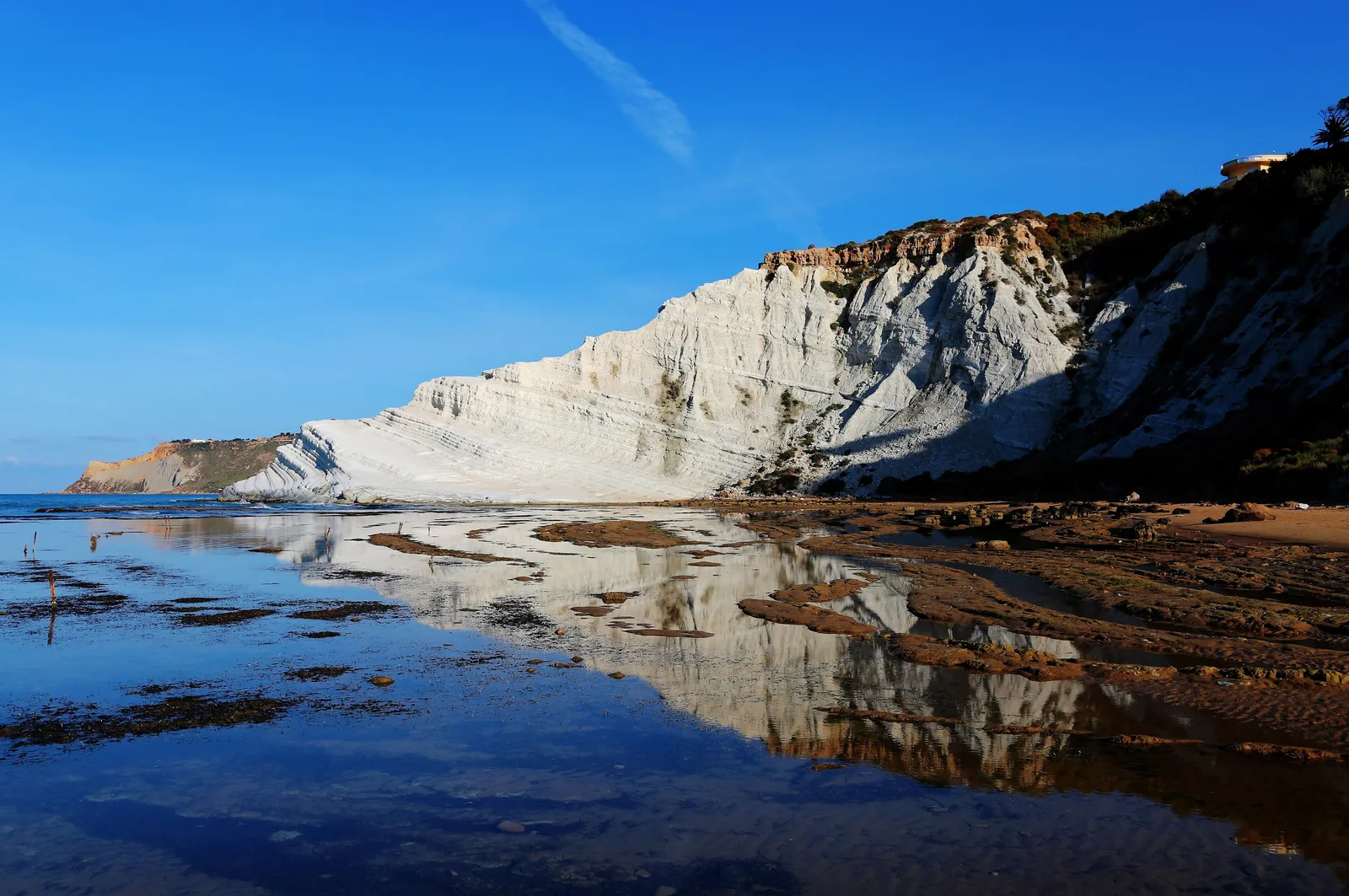
- Location: Realmonte, about 15 minutes west of Agrigento
- Ticket: €6, bought on site only, by card or phone — no cash, no online booking
- Hours: 08:00 to 19:40 (last entry), daily
- Daily cap: 1,800 visitors, admitted in groups of 50 every 20 minutes
- Can you walk on the white rock? No — that has been banned since 2020
- Before you drive over: check the Comune di Realmonte’s own channels, because it closes at short notice
Scala dei Turchi is the most photographed rock in Sicily and, right now, the one most travel articles get wrong. Search it and you will find pages confidently telling you to book online, pages telling you it is permanently closed, and pages telling you it is free. In August 2026, all three are wrong.
Here is what actually applies.
What changed in 2026
The cliff reopened to visitors in early April 2026 under a new access regime, and the headline change caught out even people who had visited before: the online booking system was scrapped.
For a while you reserved a slot on a website. Not any more. The ticket now costs €6 and can only be bought on site, and only by electronic payment — card or phone. Turning up with a twenty-euro note will not help you. The price also includes accident cover for the duration of the visit, which tells you something about how the site is now managed.
Access is capped at 1,800 visitors per day, released in groups of 50 every twenty minutes. In practice that is a queue at the entrance rather than a scramble on the rock, and it is why the place no longer looks like the crowd photos from 2019.
Opening hours run 08:00 to 19:40, that last figure being the final admission rather than closing time.
The rule nobody mentions until you arrive
You cannot walk on the white rock.
Direct access to the marl has been banned since 2020 and a barrier keeps visitors at a set distance. Every dreamy photograph you have seen of somebody lying on those white terraces predates the ban, or was taken illegally.
This is the single biggest cause of disappointment here, so it is worth being blunt: you are coming to look at the cliff, not to climb it. A modular glass panel fence is planned to replace the current metal mesh, on the reasoning that it will sit less badly in the landscape — but the restriction itself is not going away. The rock is eroding, and foot traffic was accelerating it.
Why it is closed more often than you would expect
Even with a valid ticket and open gates, entry is conditional on weather, sea state, temperature and general safety. If conditions are judged wrong, the site simply does not open that day.
This is not theoretical. The cliff has been closed by mayoral ordinance more than once in recent years, sometimes for extended periods, on erosion and safety grounds. It has also been the subject of vandalism and legal wrangling.
So the practical advice is the same one I would give for Etna and Catania airport: check the operator’s own channel the morning you go, not a travel blog and not a news article from last week. The Comune di Realmonte publishes the current status, and a dedicated app was in testing during 2026. A forty-minute drive from Agrigento to a closed gate is an avoidable way to lose a morning.
Why the rock is that colour
The cliff is marl — a soft sedimentary rock, part limestone and part clay, laid down on an ancient seabed. It is the same evaporite geology that produces the pale, furrowed cliffs along this whole stretch of the southern coast, including the ones at Torre Salsa just down the road.
What makes Scala dei Turchi extraordinary is the shape. Wind and sea have cut the soft rock into a series of broad, rounded terraces that genuinely do resemble an enormous staircase running down into the water. Wet, it turns almost luminous. In low sun it goes faintly pink.
It is also why the restrictions exist: marl is soft enough to scratch with a fingernail. Hundreds of thousands of feet a year did measurable damage.
The name has nothing to do with Turkey
“Stair of the Turks” comes from the Saracen and Barbary corsairs who, in local tradition, sheltered in the bay below and used the natural terraces to climb ashore and raid the villages inland. “Turks” was the catch-all term for those raiders in Sicilian usage, regardless of where they actually came from.
The staircase, in other words, is named for the people who used it as one — which is a better story than the geology alone.
Seeing it from the water
Since you can no longer stand on the terraces, the honest answer to “how do I actually see this thing properly” is: from the sea.
From the water you get the full scale of the cliff face and the stepped profile that the clifftop viewpoint flattens out. Boat trips run along this coast from Agrigento and San Leone, and most combine the cliff with swimming stops in the bays either side. This boat tour of the cliffs with swim stops is the straightforward version, currently around €70 and rated 4.6. We may earn a small commission if you book through this link, at no extra cost to you.
I would not normally push a boat trip at a roadside viewpoint. Here it is genuinely the better product, because the thing you came to see is now behind a fence from the land.
When to go
Late afternoon into sunset is the shot, and it is not close. The cliff faces roughly south-west, so evening light rakes across the terraces and picks out every ridge; at midday the white rock flares out and photographs as a flat sheet.
The counterweight is that everyone knows this, so the last admission slots are the busiest. If you would rather have space than perfect light, first thing after opening at 08:00 is by far the quietest, and the low morning light is not bad either.
Avoid the middle of the day in July and August altogether. There is no shade anywhere on the site.
Practical tips before you go
- Bring a card, not cash. Tickets are electronic payment only, on site. This catches people out constantly.
- Do not plan around booking online. That system no longer exists, whatever an older article tells you.
- Check the status that morning. Weather, sea and safety conditions can close it with no notice, and it has had long closures before.
- Shoes, not flip-flops. The approach is uneven, and the rock is genuinely slippery when damp.
- No shade, no facilities on the rock. Bring water. In August this matters more than it sounds.
- Pair it properly. It is a one-hour stop, not a day. The natural combination is the Valley of the Temples and Agrigento’s old town, with Torre Salsa for a genuinely wild beach afterwards.
- The beach beside it is the consolation prize. The sandy strip below the cliff is pleasant and free to use, and gives you the classic view from below.
My honest verdict
Scala dei Turchi is still worth stopping for. It is a genuinely strange and beautiful piece of coastline, and there is nothing else quite like it in Sicily.
But manage the expectation. You are buying a ticket to a viewpoint, with a time slot and a fence, at a place that spent years being loved into damage. If you arrive picturing the Instagram photographs of people stretched out on white terraces, you will feel short-changed — those pictures are from a Sicily that no longer permits itself.
Go late, go with a card, check it is open, and give it an hour. Then go see the temples.
Planning the south coast? Our interactive map of Sicily has Scala dei Turchi pinned with Torre Salsa, the Valley of the Temples and the rest of the Agrigento coast — more at sicily-insider.com.