Linosa: the Black Volcanic Island Most People Never Reach
 Daniele Bellia · 6 min read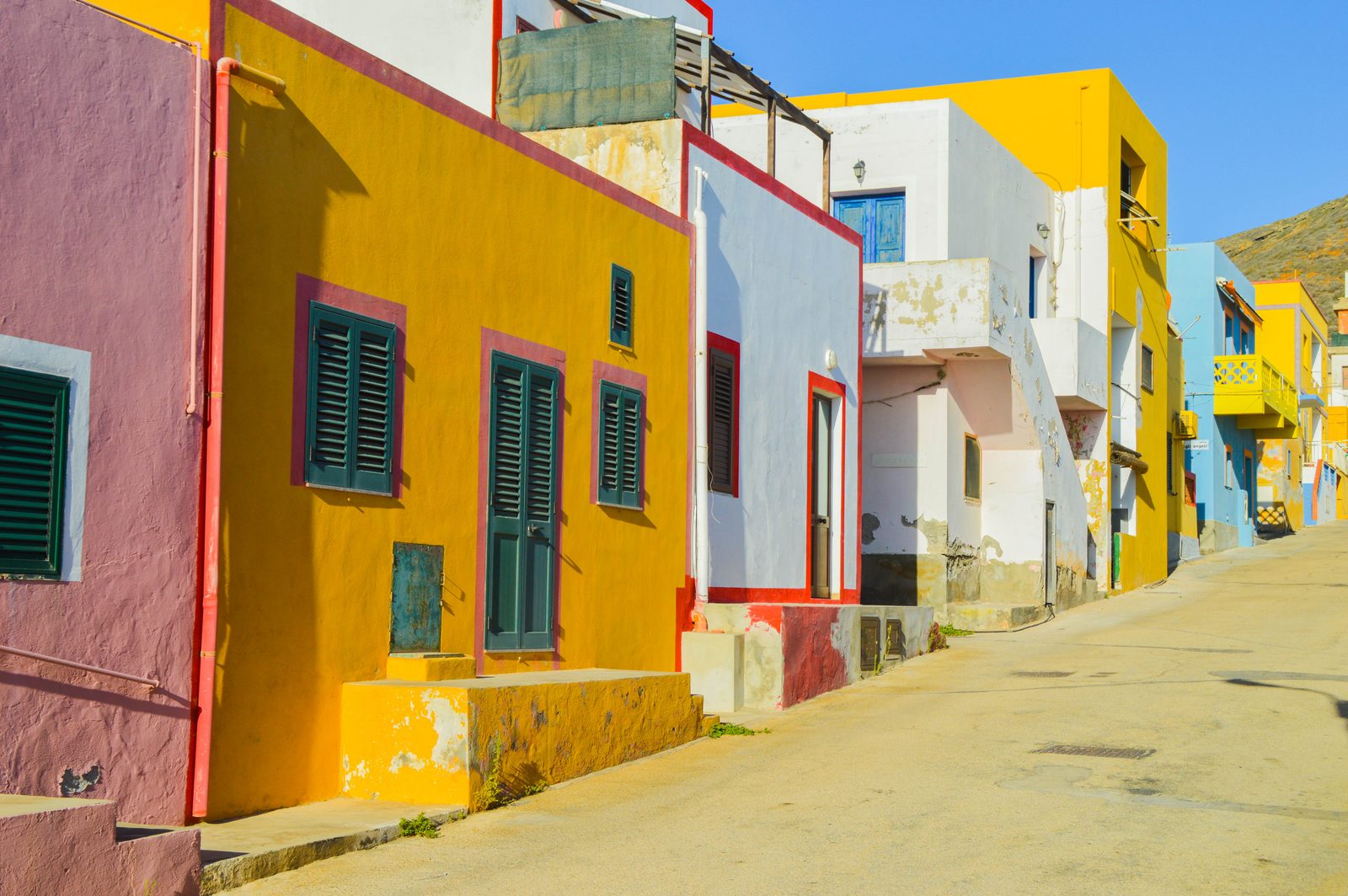
- Location: Pelagie Islands, reachable only via Lampedusa — no direct connection to mainland Sicily
- Getting there: ferry/hydrofoil from Lampedusa, roughly 1 hour, from about €12-18 one way
- Getting around: on foot or by rented bike/scooter — the whole village is walkable
- Good for: a quiet multi-day add-on to a Lampedusa trip, not a standalone destination
- Don’t miss: the only sandy beach, Pozzolana di Ponente, is black volcanic sand and an active sea turtle nesting site
Linosa is often mentioned as Lampedusa’s quieter sister island, but that undersells how different it actually feels. Where Lampedusa is flat, pale limestone and North African in tone, Linosa is a genuinely volcanic island — black rock, four extinct craters, and a village of cube houses painted in colors bright enough to look almost Caribbean against the dark terrain. Around 430 people live here year-round, working mostly in fishing, small-scale farming, and tourism. It’s also considerably harder to reach than Lampedusa, which is exactly why it stays this quiet.
The colors aren’t for tourists
The heart of Linosa is a small village of low, cubic houses painted in pink, yellow, sky blue, and orange — a tradition that predates any tourism marketing and has more practical roots, like most colorful fishing villages in the Mediterranean, tied to families distinguishing their homes and boats from a distance at sea. Walking the village’s narrow streets, with the black volcanic hillside visible behind the saturated facades, is reason enough on its own to make the crossing from Lampedusa.
Four craters, and the fields grow in them
Linosa’s volcanic character isn’t subtle: the island has four extinct craters — Monte Vulcano (195m, the island’s highest point), Monte Rosso (186m), Monte Nero (107m), and a smaller vent roughly 50m high at Monte Nero’s base. The main crater, Fossa del Cappellano, has well-marked trails leading up to the Monte Vulcano summit, and the dark, mineral-rich soil inside the extinct craters turns out to be extraordinarily fertile — prickly pears, capers, and Linosa’s own variety of lentils are all grown directly in what used to be the volcano’s throat.
A lentil most of Italy has never tasted
The lenticchie di Linosa are a genuine local specialty, grown in small quantities in the volcanic soil and rarely exported off the island in bulk — the kind of product you’re more likely to find on a Linosa dinner table than in a mainland supermarket. Paired with the equally local capers and prickly pears, plus a fishing tradition that still lands fresh swordfish and tuna at the small harbor, it’s a food identity shaped entirely by what grows in cooled lava and what comes off the boats, not anything imported.
Some of the clearest diving in the Mediterranean
Linosa, together with Lampedusa and the tiny islet of Lampione, sits inside the Pelagie Islands Marine Protected Area, and its volcanic seabed makes for a genuinely different dive profile than the sandier sites around Lampedusa — steep drop-offs, underwater crevices, and volcanic rock colors instead of open sand. The best-known site, Secchitella, has a wall that plunges to around 65m on one side and a gentler 28m slope on the other, with schools of pelagic fish passing through water that’s consistently rated among the clearest in the Mediterranean. Several small local operators run guided dives and snorkeling trips from the harbor — worth booking a day or two ahead in peak summer rather than assuming a walk-in slot.
The one sandy beach, and who else uses it
Nearly all of Linosa’s coastline is rock and cliff rather than sand — the exception is Pozzolana di Ponente, about a kilometer from the village and a short walk from the harbor. Its sand is genuinely black and coarse-grained, a direct result of the island’s volcanic origin rather than a marketing description. Every summer, loggerhead sea turtles (Caretta caretta) choose this same beach to nest, and during nesting season (roughly June-July) Legambiente volunteers monitor the site — a real, current conservation effort, not a static plaque.
Faraglioni without the crowds
A marked trail leads from the crater area toward Linosa’s faraglioni on the island’s east coast — dramatic volcanic sea stacks rising straight out of the water, similar in spirit to Aci Trezza’s Homeric stacks off Catania but reached on foot rather than by parked tour buses. Given how few visitors make it to Linosa at all, this is one of the rare “famous view, actually empty” spots left in Sicily’s wider orbit.
What a Linosa trip actually costs
Linosa isn’t a budget add-on, mostly because of how remote it is rather than anything on the island itself. The ferry or hydrofoil from Lampedusa starts around €12-18 one way with Liberty Lines (about 1 hour) or the slower Siremar ferry (about 2 hours), with children aged 4-11 getting a 50% discount and under-3s traveling free. Accommodation runs higher than you’d expect for how small the island is — B&Bs and guesthouses average roughly €147 a night across the year, climbing to around €200+ a night in August, the island’s busiest and most expensive month by a clear margin. Bike and scooter rental is available in the village through a couple of small local operators (Il Tedeschello and Summer Bike among them) for reaching the trailheads and Pozzolana di Ponente faster, though exact daily rates are worth confirming directly since they change season to season. Factor in that every trip also includes the cost of reaching Lampedusa first — flight or ferry — since Linosa has no direct connection of its own to the mainland.
Getting there: through Lampedusa, not around it
There’s no way to reach Linosa directly from mainland Sicily — every route goes through Lampedusa first, by ferry or hydrofoil, with frequent daily departures in summer (Liberty Lines and Siremar combined run 48+ weekly crossings in peak season). Linosa has no airport of its own, so factor the full Lampedusa journey (flight or the longer ferry from Porto Empedocle) into any Linosa trip, not just the short hop between the two islands.
How long to stay, and getting around once there
Most of Linosa can be covered on foot, and the village rents bikes and scooters for reaching the trailheads and Pozzolana di Ponente faster. Given the extra crossing required just to get here, a day trip from Lampedusa is possible but rushed — an overnight or two lets you actually hike to Monte Vulcano, dive or snorkel Secchitella, see the faraglioni, and spend an evening in the village without racing the last ferry back.
Seeing Linosa without arranging your own crossing
If you’d rather not coordinate ferry times yourself, this boat excursion from Lampedusa (around €150 per person) covers Linosa’s coastline with a sunset return (affiliate link — booking through it costs you nothing extra and helps support this site).
More on the Agrigento region, and see Linosa alongside Lampedusa and the rest of Sicily’s islands on our interactive map. For the practicalities of the bigger island first, see our Lampedusa guide.