Torre Salsa: The Wild Reserve Between Sicily's Two Most Photographed Beaches
 Daniele Bellia · 6 min read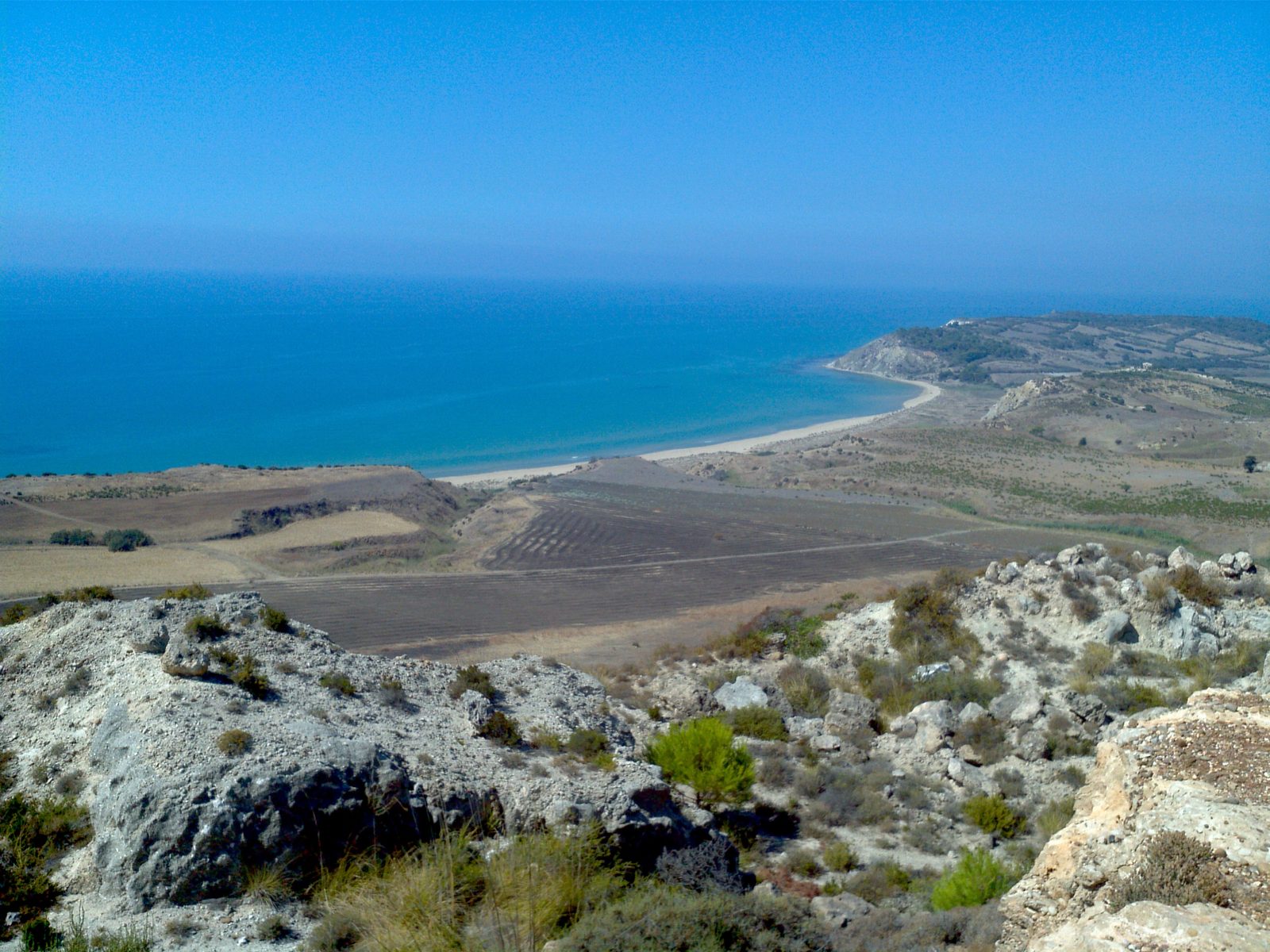
- Location: Siculiana, Agrigento province — between Scala dei Turchi and Eraclea Minoa
- Getting there: car needed; the final stretch to most entrances is unpaved
- Cost: free, year-round
- Hours: 8am-8pm (summer), 8am-5pm (rest of the year)
- Good for: a quiet half-day beach and nature walk, not a quick photo stop
Everyone who drives the Agrigento coast stops at Scala dei Turchi for the white cliffs, and plenty push on south to Eraclea Minoa for the Greek theater above the sea. Between the two, for about six kilometers, sits a stretch of coastline that most of that same traffic never turns off for: the Riserva Naturale Torre Salsa, a WWF-managed reserve of clay cliffs, dunes, and a genuinely empty beach, named after a crumbling 16th-century watchtower that most visitors won’t even notice from the sand.
Why this stretch never got developed
Torre Salsa covers about 761 hectares along roughly 6km of coast running from Siculiana Marina down to Eraclea Minoa. Unlike the beaches on either side of it, none of that coastline has ever been built up — no lidos, no beach bars, no rows of paid umbrellas. The reason isn’t an accident of taste: the Sicilian Region formally protected the area in 2000 and handed its management to WWF Italia, and the reserve status is exactly what’s kept the developers out since. The terrain itself doesn’t make development easy either — steep clay cliffs, shifting dunes, and a coastal strip that’s genuinely difficult to build a road through, which is precisely why it still looks the way it does.
The tower the reserve is named after
The Torre Salsa itself sits in ruins on a clay promontory partway along the reserve, a 16th-century Spanish-era watchtower built for the same reason as dozens of others scattered along Sicily’s coast: to watch for Barbary pirate raids and give inland communities time to react. It doubled as a lookout point and a store for salt harvested nearby — hence the name. It’s not a restored monument you buy a ticket to visit; it’s a weathered structure standing over the water, visible from various points along the reserve’s coastal path, and one more reason this stretch has a very different character from the manicured archaeological sites elsewhere in Agrigento province.
Clay cliffs, dunes, and where the “calanchi” come from
Geologically, Torre Salsa sits on evaporite rock — the gypsum-and-sulfur sedimentary layers common along this part of Sicily’s southern coast — which erodes into the pale, furrowed clay cliffs locals call calanchi. It’s the same badland-style erosion pattern you’ll see (more famously) at Scala dei Turchi, but here it runs for kilometers rather than forming one photogenic staircase, backing onto sand dunes that are still allowed to shift and rebuild naturally instead of being flattened for beach access. Walking the reserve means moving between these two landscapes — soft dune trail, then hard clay terrace — with the coastline changing character every few hundred meters.
What actually lives here
Torre Salsa’s real claim to fame among naturalists isn’t the scenery, it’s the biodiversity: over 600 recorded plant species along this one stretch of coast, including sea lily (Pancratium maritimum) rooted directly in the dune sand and dwarf palm (Chamaerops humilis), Europe’s only native palm species, growing wild on the clay terraces. The reserve’s beaches are also an active nesting site for loggerhead sea turtles (Caretta caretta) — WWF and the sea turtle conservation group Archelon run volunteer camps here most summers to monitor and protect the nests, which is part of why some stretches of sand get roped off with signage during nesting season rather than because anyone’s trying to keep you out.
Which entrance to use
Torre Salsa has four official access points. Centro Visite F. Galia, Cannicella, and Eremita all sit along the SP75 provincial road and are the most straightforward if you’re coming from Siculiana or the Scala dei Turchi side. Pantano is reached from the state road via the Montallegro exit, and suits visitors approaching from the Eraclea Minoa direction to the south. None of the four has the kind of clear signage you’d get at a paid attraction — this is still a working nature reserve, not a resort — so it’s worth confirming your route before you set off rather than relying on spotting a sign at the turnoff.
Hours, cost, and what to actually bring
Entry is free and the reserve is open year-round: 8am to 8pm in summer, roughly 8am to 5pm the rest of the year. There’s no visitor infrastructure to speak of once you’re inside — no bar, no rental umbrellas, no lifeguard — so bring your own water, shade, and anything else you’ll want for a half-day out, the same rule that applies at most of Sicily’s genuinely wild reserves. The upside of that bare-bones setup is the crowd level: even in August, Torre Salsa stays noticeably quieter than Scala dei Turchi a few kilometers north, precisely because it asks more of visitors than a five-minute photo stop does.
Getting there: the unpaved stretch that keeps it quiet
A car is effectively required — there’s no meaningful public transport option that gets you to any of the four entrances. The last couple of kilometers of access road to most entry points are unpaved, dusty in summer and can turn rough after rain, which is honestly a large part of why this stretch has stayed this undeveloped while the coast on either side filled in. Parking is available near the main access points, but don’t expect a proper lot — pull-off space along the access road is the norm. If your rental car is a low-clearance city car rather than something with a bit more ground clearance, take the last stretch slowly.
Combining it with the rest of the coast
Torre Salsa sits naturally between two stops most Agrigento itineraries already include — Scala dei Turchi to the north and the Greek ruins at Eraclea Minoa to the south — which makes it an easy add-on rather than a special trip: budget a half-day here on the same route as either. If you’d rather see the reserve’s coastline from the water instead of walking it, a private boat tour along Torre Salsa’s cliffs departs from the Agrigento coast (affiliate link — booking through it costs you nothing extra and helps support this site).
More on the Agrigento region, and see Torre Salsa alongside Scala dei Turchi, Eraclea Minoa, and the Valley of the Temples on our interactive Sicily map.