San Fratello: The Sicilian Town That Doesn't Speak Sicilian
 Daniele Bellia · 5 min read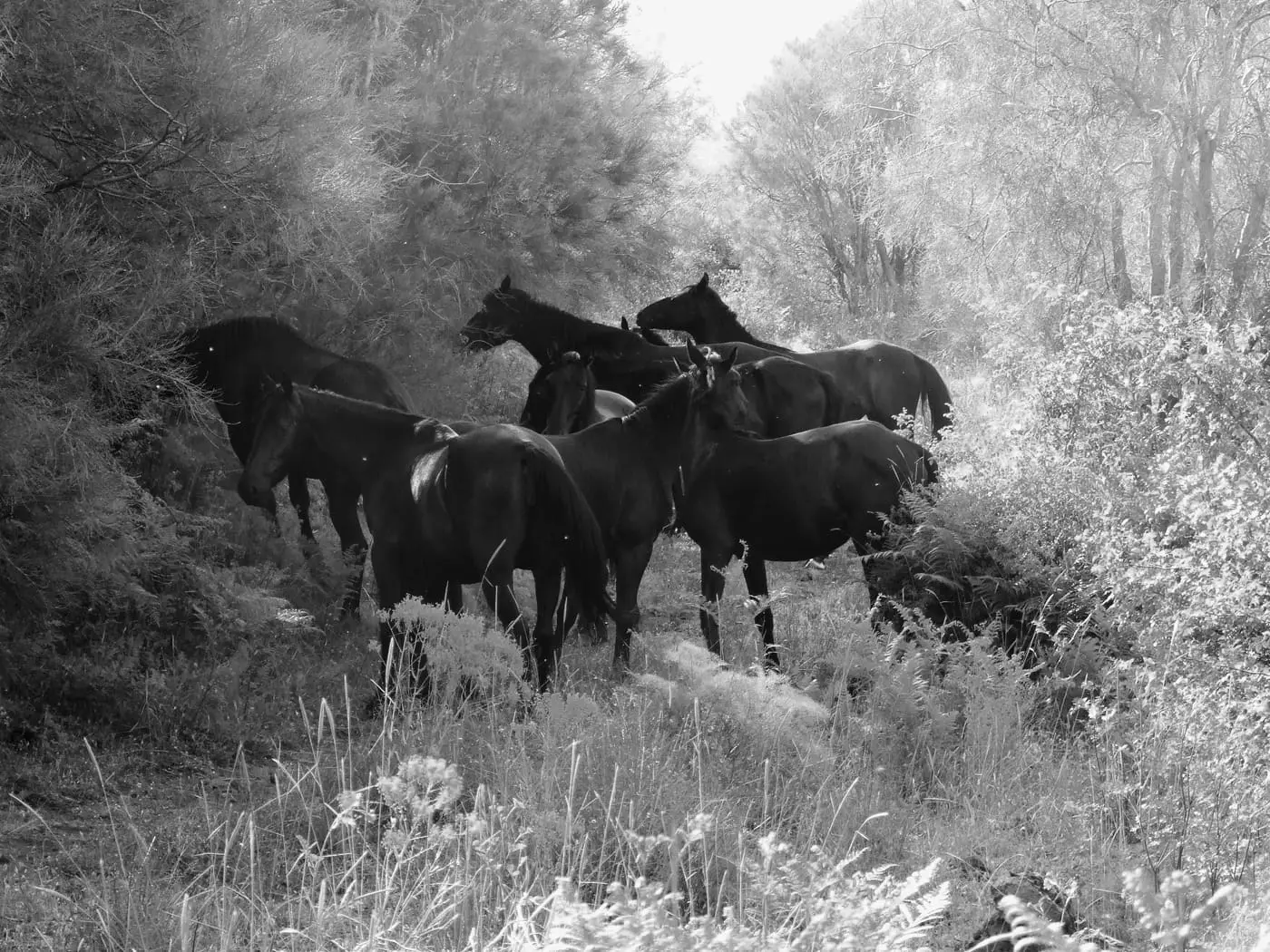
- Location: Nebrodi mountains, Messina province, about 111km / 1h35 by car from Catania
- Getting there: realistically a rental car — public transit runs via Messina and takes close to 5 hours
- Cost: free to walk the town; the Festa dei Giudei (Holy Week) is a free public event
- Best time: Holy Week (Wednesday-Friday before Easter) for the Festa dei Giudei; any season for the dialect and the horses
- Good for: genuine linguistic/cultural curiosity, not a conventional sightseeing stop
Drive an hour and a half from Catania into the Nebrodi mountains and you’ll reach a town where, if you tried out your best Sicilian on a local in the street, you might not be understood — and it isn’t because they don’t speak Italian. San Fratello is one of a handful of Sicilian “linguistic islands” where the everyday dialect isn’t Sicilian at all, but a variety descended from medieval settlers who came from the other end of Italy entirely. It’s one of the strangest, least-known corners of an island that doesn’t run short of unusual history.
Apollonia, then San Filadelfo, then San Fratello
The site has been inhabited since antiquity under the name Apollonia, but the town that exists today has a specific, datable birth: the early 12th century, when Adelaide del Vasto — regent of Sicily and wife of Roger I — repopulated the area with colonists from southern Piedmont and northern Liguria as part of the Norman crown’s broader strategy to resettle land emptied by war and suppress lingering Arab uprisings after the conquest of Sicily. The Castle of San Filadelfio, around which the new settlement grew, dates to 1116, and historians generally treat that year as the town’s real founding date. The medieval Latin name was Castrum S. Philadelphi — “the fortress of San Filadelfo” — later worn down through everyday speech into San Fratello.
Named after three brothers who never set foot here
The saint’s name behind the town belongs to a trio: Alfio, Filadelfo, and Cirino, three brothers martyred for their Christian faith around 253 AD, over 800 years before the town was founded and hundreds of kilometers away in Vaste, in Puglia. Their cult had already spread across Sicily by the time Norman-era settlers arrived, and the new fortress town took its name and its patron identity from them — one of many reminders that Sicilian place names often encode a religious geography that has nothing to do with local events.
A dialect that sounds nothing like Sicily
What makes San Fratello genuinely remarkable is that the Gallo-Italic dialect brought by those 12th-century colonists is still spoken here today, one of the best-preserved examples anywhere on the island. Linguists trace clear strands of Piedmontese, Ligurian, Lombard, Emilian, and even Provençal French in the way locals actually talk — a direct linguistic fingerprint of exactly who settled the town nine centuries ago, still audible in ordinary conversation rather than locked away in an academic paper. Roger I offered land and incentives specifically to attract Lombard and northern Italian settlers, and Adelaide’s own family ties to the Aleramici of Monferrato (a Piedmontese noble house) helped funnel migration toward towns like this one. San Fratello, San Piero Patti, and a small handful of other Nebrodi and Sicilian towns are essentially living fossils of that 900-year-old repopulation policy — Gallo-Italic islands stranded in a sea of Sicilian.
The 1754 landslide
The medieval town didn’t survive fully intact. A major landslide destroyed much of it in 1754, forcing rebuilding — a common thread in Nebrodi towns, where the mountainous, often unstable terrain has repeatedly reshaped settlements over the centuries. What stands today is largely the result of that 18th-century rebuild layered onto the surviving Norman-era street pattern.
The Festa dei Giudei: Sicily’s strangest Holy Week tradition
If you’re going to plan a trip around one thing here, make it this. On the Wednesday, Thursday, and Friday of Holy Week, San Fratello holds the Festa dei Giudei (“Festival of the Judeans”), a spontaneous, semi-chaotic street tradition of probable medieval origin unlike anything else in Sicily’s Easter calendar. Participants dress in red-and-yellow embroidered costumes, cover their faces with red hoods painted with exaggerated features and a protruding leather tongue, and top the outfit with a helmet crowned in horsehair. Bands of them move through the streets playing trumpets and dragging chains, weaving in and out of the town’s religious processions in a deliberate, uneasy mix of the sacred and the profane — traditionally understood as representing the soldiers who led Christ to Calvary, though the raw theatrical energy of the thing reads as older and stranger than a simple morality play. Nothing else in Sicily looks quite like it, and it’s passed down inside specific San Fratello families rather than staged for tourism.
The Sanfratellano: a horse breed that only exists because of this town
The other thing San Fratello gave Sicily is a name for one of its rarest animals: the Sanfratellano horse, a hardy, semi-wild breed that still roams parts of the Nebrodi highlands much as it has for generations, distinct enough from other Italian breeds that conservation groups track its numbers closely. You’re more likely to spot a small herd moving through the beech forests around the park than to see one up close in town — the breed genuinely lives semi-feral, not in paddocks — but its name is a direct, permanent link back to this specific town, the same way Sanfratellano cheese-makers and shepherds across the wider Nebrodi still trace their livestock traditions to these mountains.
Getting there
There’s no realistic public transport option: the train and bus route via Messina takes close to five hours to cover a distance a car does in about 90 minutes. Driving from Catania, budget roughly 111km and 1 hour 35 minutes, mostly via the A20 motorway toward Sant’Agata di Militello before climbing inland into the mountains. If you’re already exploring the Nebrodi — Lago Biviere, Floresta, the Sanfratellano horses in their natural habitat — San Fratello slots naturally into the same trip rather than justifying a dedicated drive on its own, unless your dates line up with Holy Week, in which case it’s worth planning the whole trip around.
See San Fratello alongside the rest of the Nebrodi on our interactive Sicily map.