The Nebrodi: Sicily's Most Beautiful Unknown Mountain Region
 Daniele Bellia · 4 min read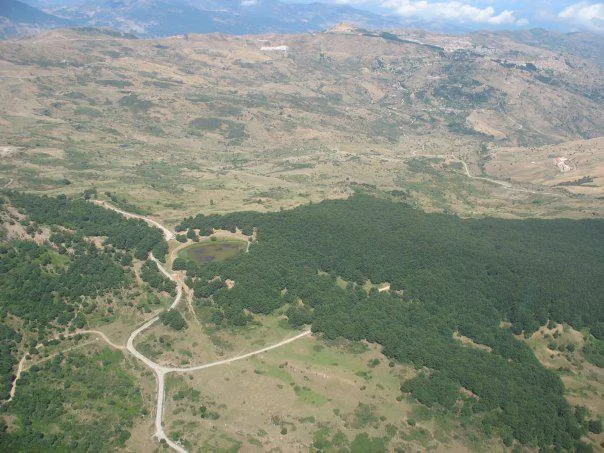
Almost every visitor to Sicily moves between the same three points: the coast, Etna, maybe Taormina. What almost nobody sees is what lies in between — and that’s a shame, because that’s where the Parco dei Nebrodi is, Sicily’s largest protected area at nearly 88,000 hectares, spanning the provinces of Messina, Catania, and Enna. No volcano, no beach, no Instagram queue — just beech forests, a mountain lake, and livestock breeds that exist nowhere else.
Why almost nobody comes here
The Nebrodi don’t have one single “landmark” you can put on a postcard — no Etna crater, no ancient theater. That’s exactly why tour operators skip it, and exactly why it’s worth the trip: you’ll mostly meet locals here, not tour buses.
Lago Biviere di Cesarò
At 1,278 meters above sea level sits Lago Biviere, Sicily’s most significant high-altitude wetland at around 18 hectares, tucked inside the Sollazzo Verde beech forest. Right next to it is the Nebrodi’s highest peak, Monte Soro, at 1,847 meters — often snow-capped in winter, which surprises a lot of Sicily visitors.
Animals you won’t find anywhere else
The Nebrodi are home to two Sicilian livestock breeds that have all but disappeared elsewhere: the Sanfratellano horse, named after the town of San Fratello, living semi-wild in the mountains, and the Nero dei Nebrodi (Black Pig of the Nebrodi), an ancient breed whose roots are said to trace back to Greek and Carthaginian times. You’re more likely to see either of them here than another tourist. Add wildcats, porcupines, foxes, and, if you’re lucky, birds of prey circling above the beech forests.
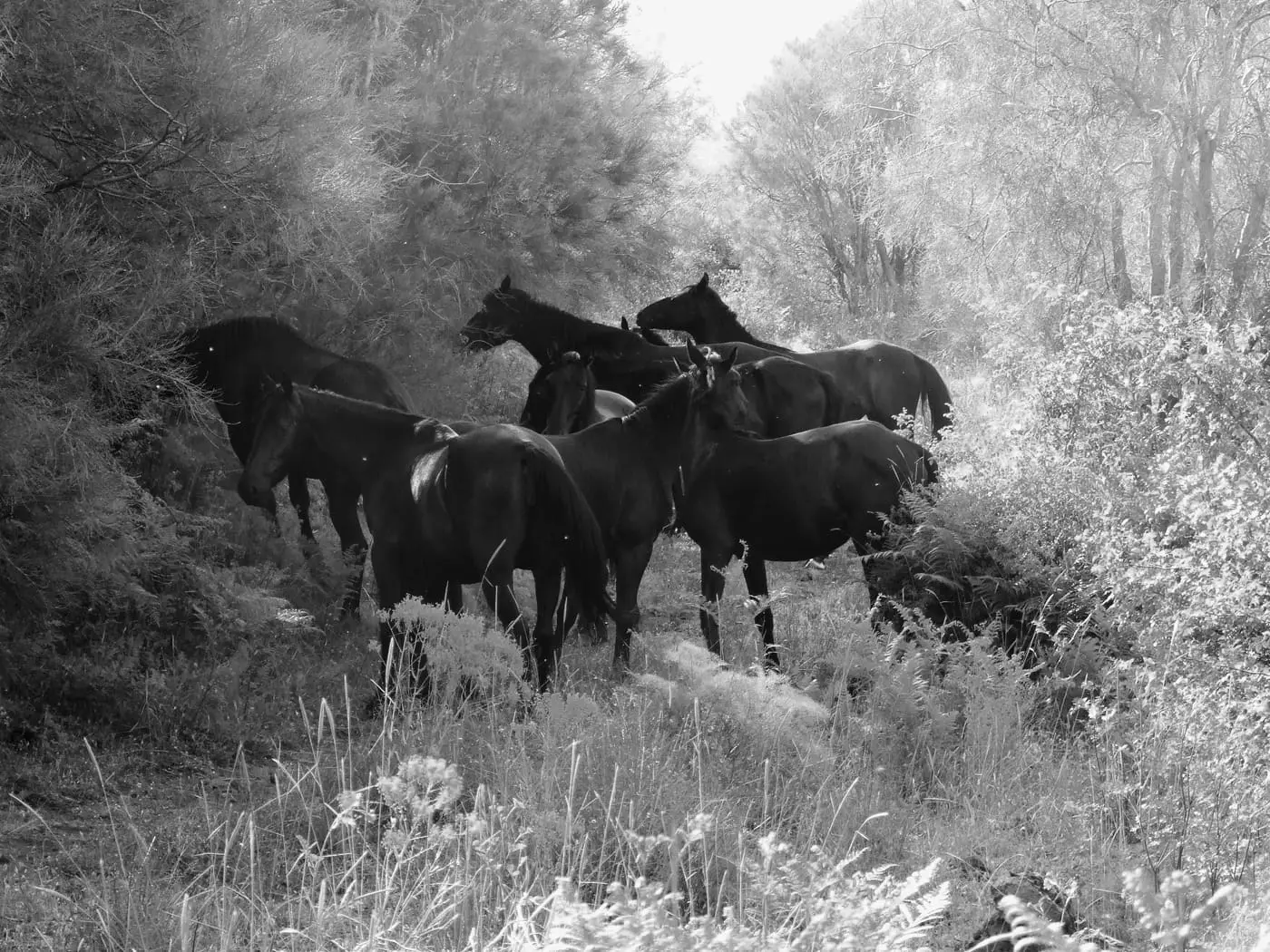 Photo: Salvo Cannizzaro, via Wikimedia Commons (CC BY-SA 3.0)
A small aside, because it trips people up: the extremely rare Sicilian fir (Abies nebrodensis), which takes its name from the Nebrodi, doesn’t actually grow here — it survives only in the neighboring Madonie mountains, with just around 30 mature trees left, making it one of the rarest conifers on Earth.
San Fratello: the village where nobody understands Sicilian
Even if you speak fluent Sicilian, you won’t understand a word in San Fratello — the town speaks a Gallo-Italic dialect descended from Piedmontese, Ligurian, and Lombard settlers brought here by Count Roger after the Norman conquest in the 11th–12th century. Thanks to the town’s isolated mountain position, this “Sicilian language island” has survived to this day, alongside a handful of other Nebrodi villages like Novara di Sicilia. The town also lends its name to the Sanfratellano horse.
Floresta: the highest village in Sicily
At 1,275 meters sits Floresta, the highest municipality on the entire island — it genuinely gets snow in winter, which upends a lot of Sicily stereotypes. The town is best known for Provola di Floresta, a pear-shaped aged provola cheese — unlike most Sicilian provola, which is eaten fresh, this one ages in damp caves and develops a much stronger flavor.
Eating in the mountains
Nebrodi cuisine is shepherd’s food, a world away from the Sicilian recipes of the coast: alongside Provola dei Nebrodi (DOP) and products from the black pig (salami, ham, sausage), the forests fill up with porcini mushrooms every autumn — foraging here is a genuine local tradition, not a tourist gimmick. Visit in September or October and you’ll often find hand-written menus in the mountain villages listing “funghi porcini” as the dish of the day.
Mistretta – the town at the edge of the park
Mistretta, a hilltop town on the park’s northern edge, is one of the best starting points to get a feel for the region without venturing deep onto unpaved mountain roads.
Getting there: what actually works
From Catania, Cesarò — one of the park’s main gateway towns — is about 65km / roughly an hour’s drive away. There’s even a direct bus (Isea Autolinee, Monday to Saturday, about three times a day, roughly 1 hour 40 minutes) from the bus stop in Cesarò to the “Ospedale” station in Catania. Honestly, though: the bus gets you to the park’s doorstep — actually exploring the lakes, Monte Soro, and the trails beyond really requires a car or a guided tour, since public transit stops there. Sturdy shoes and a jacket definitely belong on the packing list for this region.
Best time to visit
Spring (wildflowers) and early autumn (beech forest foliage) are the most beautiful seasons. In the height of summer, it’s noticeably cooler up here than on the coast — a good reason to come on a brutal August day when Catania becomes unbearable.
There’s barely any classic hotels up here — an agriturismo with its own farm and a view over the forest is the real way to stay a night.
See Lago Biviere, Cesarò, San Fratello and Floresta plotted relative to the coast on our interactive Sicily map.