Sfincione Palermitano: The Street Food Pizza Only Palermo Makes
 Daniele Bellia · 3 min read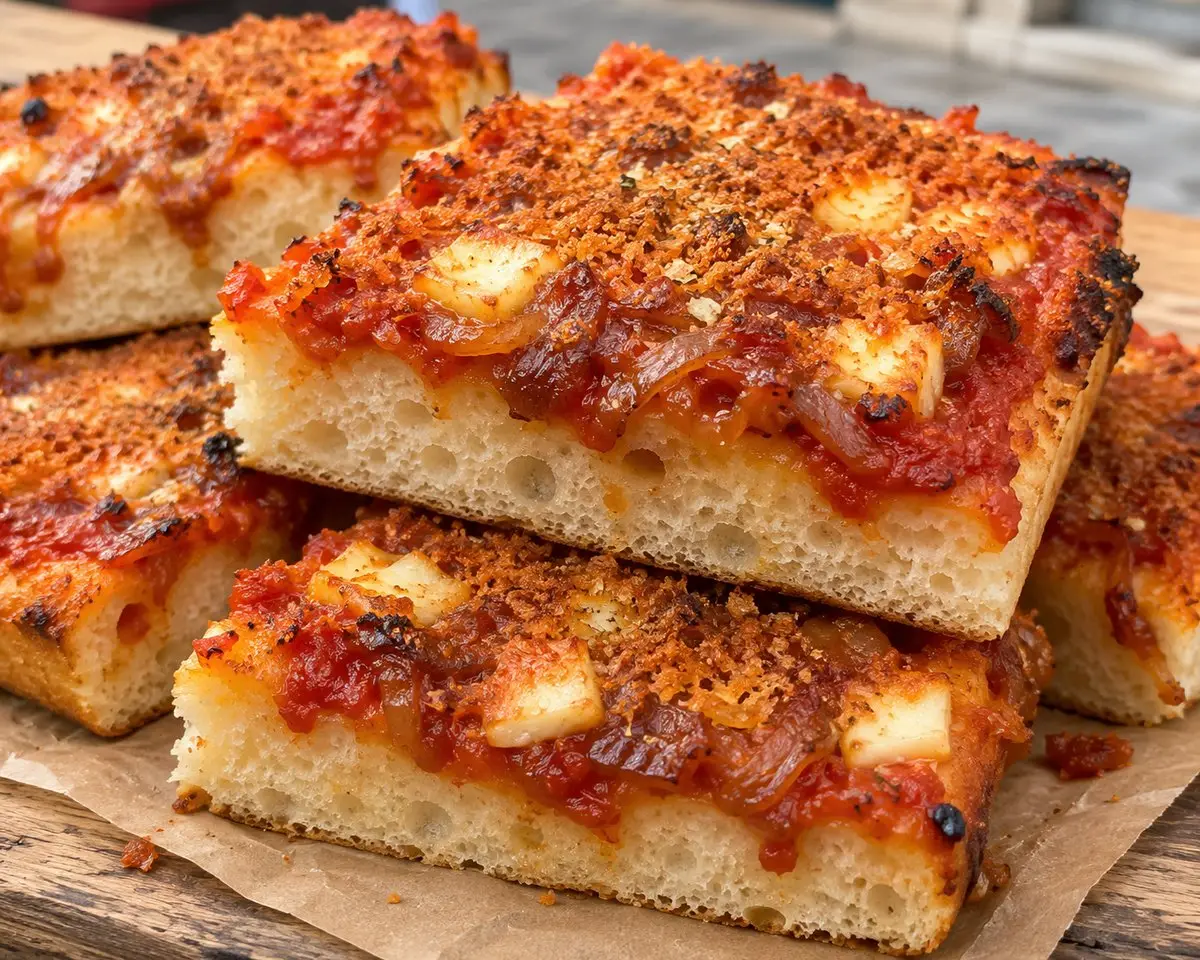
Ingredients
Tourists who land in Palermo expecting pizza usually end up disappointed by sfincione, and that’s entirely their own fault for expecting pizza. Sfincione isn’t a Palermo spin on pizza — it’s its own dish, and if you order it thinking you’ll get something thin and crispy, you’re going to be confused by the thick, spongy square that shows up instead. This is what actually gets sold from street carts and market stalls across the city, especially around Christmas and New Year’s, when sfincione stands multiply on every corner.
Why the dough is the whole point
The base of sfincione is closer to a focaccia or a thick bread than anything resembling pizza dough. It’s meant to be soft, airy, and noticeably thick — a few centimeters, not the paper-thin base you’d get in Naples. That’s exactly why you shouldn’t try to roll or stretch it thin: press it into the tray and let it fill the space, dimpling the surface with your fingers the way you would for focaccia, not stretching it out the way you would for a Neapolitan pizza.
The onions are not optional
Most non-Sicilian recipes for sfincione treat the onions as a minor ingredient somewhere in a tomato sauce. In Palermo, the slow-cooked onions are arguably the more important half of the topping — cooked low and slow until they turn properly golden and sweet, not just softened. Rush this step and you lose the depth that separates real sfincione from a lazy onion-tomato pizza. Twenty minutes minimum, stirring occasionally, patience required.
The breadcrumb top: not a garnish
The layer of oiled breadcrumbs on top isn’t decorative — it’s what gives sfincione its texture contrast, a crisp, slightly crunchy surface over the soft dough and juicy topping underneath. Skip it, or use too little, and you end up with something that’s texturally flat. Don’t be shy with the breadcrumbs.
What about the anchovies?
Traditional versions include a few anchovy fillets tucked under the cheese, which melt into the sauce and add a savory depth you won’t necessarily taste as “fish” — more like an umami boost. That said, plenty of home versions and even some street vendors skip them entirely, so leaving them out doesn’t make this any less authentic. If you want the vegetarian version, just leave them out; nothing else in the recipe needs adjusting.
Serving and storing
Sfincione is street food, not restaurant food, and it’s meant to be eaten casually — cut into thick squares, wrapped in paper, eaten standing up or walking. It’s just as good, arguably better, at room temperature the next day, which is part of why it works so well as market food in the first place. Keep leftovers covered at room temperature for a day, or in the fridge for up to three, and reheat briefly in the oven rather than the microwave if you want the breadcrumb top to stay crisp instead of turning soft.
More on Palermo on our interactive Sicily map.
FAQ
Is sfincione the same as pizza?
Not really. The dough is thicker and spongier, closer to bread than pizza crust, and the cheese goes underneath the breadcrumbs rather than melted on top in a visible layer. It's its own thing, not a variation of pizza.
Is it vegetarian?
Yes, if you skip the anchovies — plenty of home cooks and even some Palermo street vendors sell it without them. Everything else in the recipe is already vegetarian.
Can I make the dough ahead of time?
Yes, and it actually improves with a slow rise — shape it, cover it, and let it rise overnight in the fridge instead of at room temperature for a couple of hours.
How is it traditionally eaten?
Warm or at room temperature, cut into thick squares, classically bought wrapped in paper from a street vendor rather than served in a restaurant. It's a snack or light lunch, not a formal meal.