Pasta alla Norma – the Original from Catania
 Daniele Bellia · 3 min read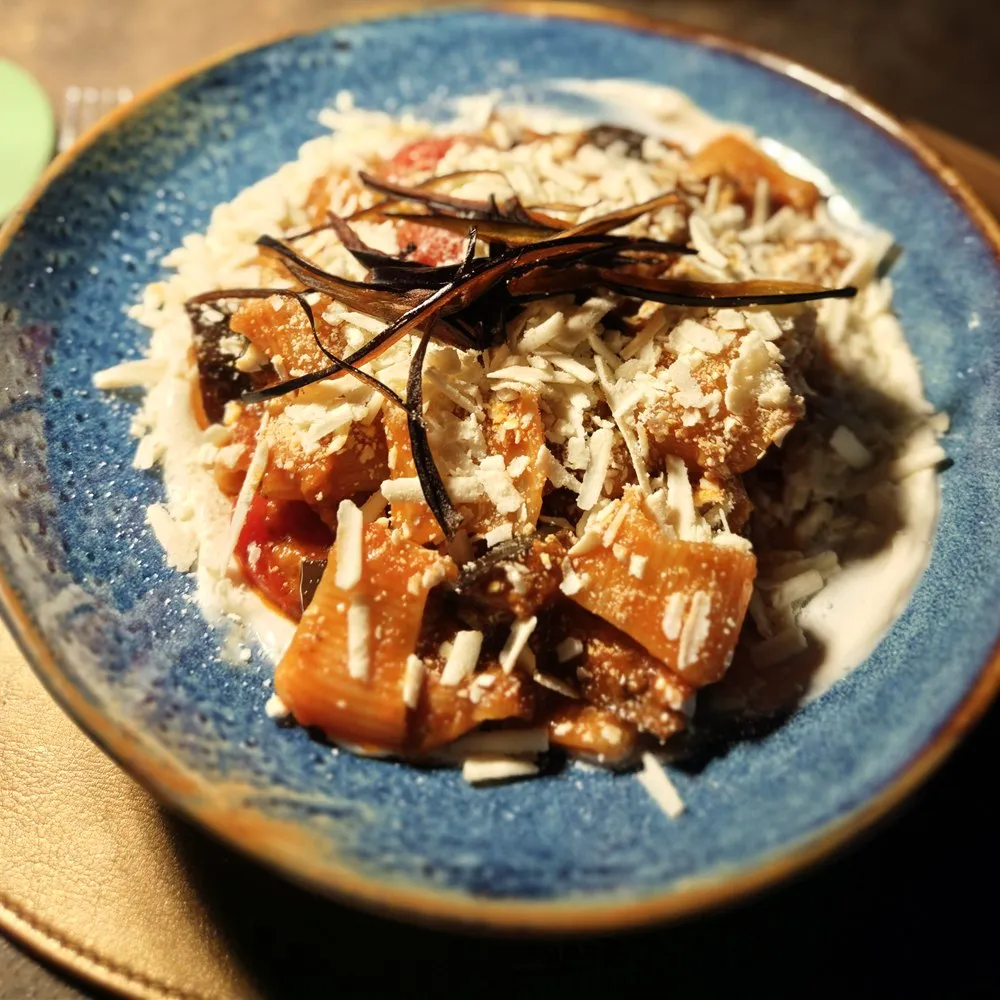
Ingredients
Pasta alla Norma is my absolute favorite dish — the one that tastes like home to me. It was invented in 19th-century Catania and named after “Norma,” the opera by Catania-born composer Vincenzo Bellini, which premiered at La Scala in Milan on December 26, 1831. As the story goes, the writer Nino Martoglio took one bite and exclaimed in Sicilian, “Chista è ’na vera Norma!” — “This is a real Norma!” — meaning the dish was a masterpiece just like the opera. Whether the anecdote is historically accurate is debated among food historians, but it’s still the story told in Catania today. What a lot of people outside Sicily don’t realize: the original recipe is surprisingly simple, and that simplicity is exactly what makes it so easy to get wrong.
A side note that matters to me personally: Pasta alla Norma is naturally vegetarian — no meat, no fish, simply because that’s how the original is composed. No substitutions, no adapting required.
Choosing the right eggplant
In Catania, the preferred variety is the long, purple “violetta lunga” eggplant rather than the round kind. More important than the variety, though, is freshness: a good eggplant feels firm, has glossy skin, and a green — not shriveled — stem. If you end up with particularly bitter eggplants (more common in spring than in high summer), you can salt the slices for 20–30 minutes, pat off the liquid that comes out, and fry them after — not traditionally required, but a reliable fix if you’re unsure about quality.
Method
The eggplant: Cut into slices or cubes and fry in plenty of olive oil until golden brown — don’t just “sauté” it in a pan, actually deep-fry it. That’s the point where most non-Sicilian versions go wrong. Drain on paper towels. If you want to cut down on the oil, you can roast it in the oven instead, but honestly, at that point it doesn’t really taste like Norma anymore.
The sauce: Sauté the garlic briefly in olive oil, add the tomatoes, season with salt, and let it simmer for 15–20 minutes until you have a simple sauce that isn’t too thick. No onion, no elaborate spices — the sauce should stay understated so the eggplant stays in the spotlight.
Assembling it: Cook the pasta al dente and toss it with the tomato sauce. Now comes the most important part: the fried eggplant and grated ricotta salata get added directly on the individual plate, not mixed in while it’s still in the pan. That way the eggplant stays crisp down to the last bite instead of going soggy, and the ricotta stays dry and sharp instead of melting into the sauce. Top with fresh basil.
The most common mistake outside Sicily
Order Pasta alla Norma in Germany and you’ll often get a version with mozzarella or parmesan instead of ricotta salata. That’s not just a variation — it’s a different dish. Ricotta salata is dry, firm, and sharply salty, the exact opposite of creamy mozzarella, and that contrast against the slightly sweet tomato sauce and oily eggplant is the entire point of the recipe. Without ricotta salata, it just tastes like “pasta with eggplant,” not Norma.
Second common mistake: eggplant that gets softened in the pan together with the sauce instead of fried separately. The result is mushy instead of full of contrast — and that bite contrast between crispy eggplant and soft pasta is exactly what makes the dish work.
What to drink with it
The classic pairing is a dry Sicilian red — a Nero d’Avola, or for something more refined, an Etna Rosso from the volcano’s slopes. Both have enough acidity to hold up against the sweetness of the tomato sauce and the oiliness of the eggplant without getting overpowered by the ricotta salata.
More on Catania on our interactive Sicily map.
FAQ
Can I use canned tomatoes instead of fresh?
Yes, without a problem — canned peeled tomatoes are often more reliable than unripe, out-of-season fresh ones.
What if I can't find ricotta salata?
It's available online or at Italian delis. In a pinch, a very dry, salty pecorino works, but the result tastes noticeably different.
What's the traditional pasta shape?
In Catania it's traditionally "maccheroni di casa" — thick, hollow, hand-rolled pasta. Store-bought rigatoni or maccheroni are the closest widely available alternative.
Can I prep this ahead?
You can fry the eggplant in the morning and keep it at room temperature, and make the sauce ahead too. Assemble only right before serving, or the eggplant goes soft.