Lemon Granita – the Real Sicilian Summer Classic
 Daniele Bellia · 3 min read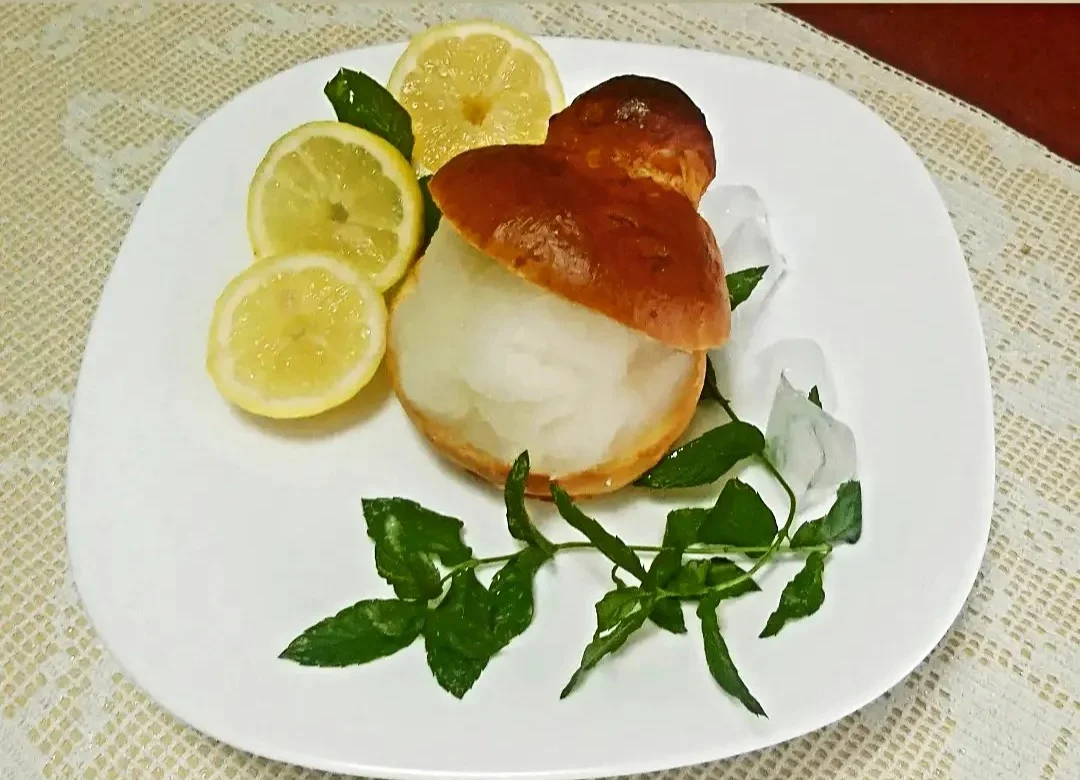
Ingredients
Granita is the first thing I miss whenever I’ve been away from Sicily too long. Not gelato, not sorbet — granita is its own thing. And it’s not just frozen lemonade poured into a baking dish and scraped with a fork every couple of hours either — that gives you coarse water-ice, the kind you’d find in northern Italy or at a kiosk, not the creamy-icy texture Sicily is actually known for. The difference comes down to technique.
Where it comes from
The origins go back to Arab rule over Sicily (827–1091): Arabs brought the idea of “sharbat,” a drink made of snow, fruit juice, and rosewater. Sicilians back then mixed snow from Mount Etna with lemon juice for a simple refreshment. In winter, so-called “nivaroli” (snow men) collected snow from Etna and other mountains and stored it in caves to sell in summer — an early cold chain. It wasn’t until the 16th century that the technique of mixing snow with sea salt to reach lower temperatures emerged (the so-called “pozzetto,” a wooden vat with a zinc bucket turned by hand crank) — the direct ancestor of how it’s made today.
The part most recipes get wrong
Real Sicilian granita is creamy and grainy at the same time — not hard, roughly scraped ice. The trick: while freezing, the mixture isn’t just broken up with a fork every so often, it gets briefly blended with an immersion blender every 30–45 minutes. That works air into it and stops large ice crystals from forming — a bit like churning gelato in an ice cream maker (“mantecare”), just without fat or a machine. That repeated blending is exactly what separates real Sicilian granita from the plain water-ice you often get elsewhere in Italy. Scrape it with a fork once every couple of hours instead, and you’ll end up with something coarse and hard — not the original.
Method
The syrup: Bring the water, sugar, a pinch of salt, and the lemon zest to a boil in a pot and simmer for 5–8 minutes — this makes the syrup slightly thicker, not just dissolved sugar water. Remove the zest, let the syrup cool completely (fastest by setting the pot in cold water).
The mixture: Stir the lemon juice into the cooled syrup.
Freezing with blending: Pour into a shallow dish and place in the freezer. Every 30–45 minutes, blend briefly with an immersion blender — 5–6 times total over about 3 hours. After the last blend, the granita is ready: creamy-grainy, not frozen solid.
With brioche col tuppo
In Sicily, granita is classically eaten for breakfast, with a brioche col tuppo — named after the small round “knot” (tuppo) on top, which recalls the traditional hairstyle of Sicilian women. The brioche gets split open and filled with granita, just like in the photo above — you spoon it straight out of the brioche or dip pieces into it. It’s not a side, it’s part of the ritual.
Regional variants
Lemon is the classic, but far from the only version. In Catania, almond granita (alla mandorla) is at least as common, in Messina mulberry (gelso) and coffee are typical, and around Noto the almond granita is legendary thanks to the region’s especially aromatic almonds. The basic principle — cooked syrup, regular blending — stays the same across all of them.
More on Noto in our Caffè Sicilia article and on our interactive Sicily map.
FAQ
Can I make it ahead of time?
Only to a point — without further blending, it turns into a solid block in the freezer after a few hours. Best made fresh and eaten within a few hours.
Can I skip the immersion blender?
A fork works in a pinch, but you'll need to do it more often (every 20–30 minutes) and more vigorously — the result will still be a bit coarser than with a blender.
What lemons should I use?
If you can get them, Sicilian lemons (from around Syracuse, for instance) are more aromatic and less acidic than many standard supermarket varieties. Regular organic lemons work fine too.