Pantelleria: The Complete Guide for a First Visit
 Daniele Bellia · 6 min read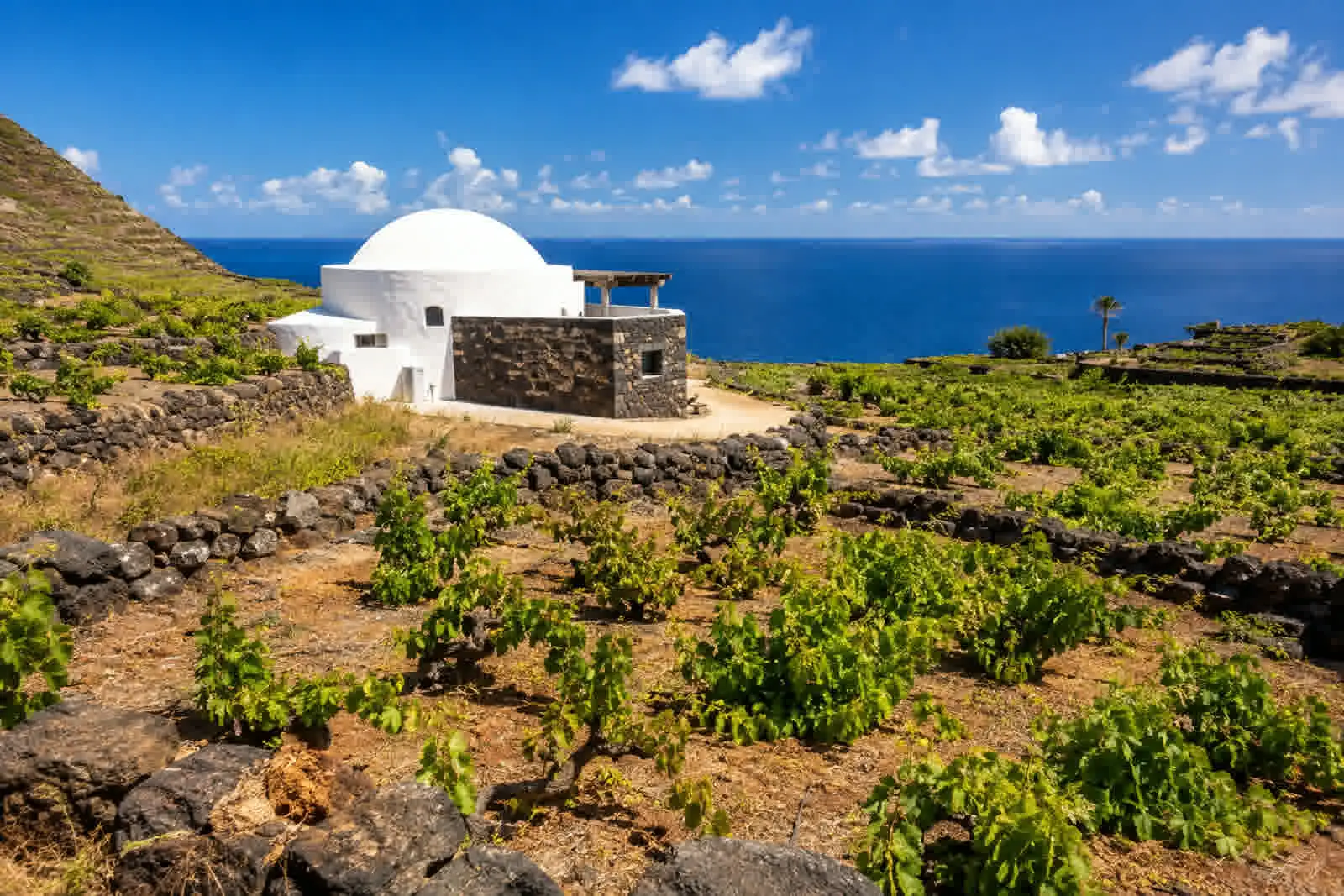
- Location: volcanic island roughly 100km southwest of Sicily, closer to Tunisia than to Trapani
- Getting there: daily flights from Trapani and Palermo, weekly from Catania; ferry or seasonal hydrofoil from Trapani
- Cost: hydrofoil from about €41-43, overnight ferry from about €46 (foot passenger); car supplement from about €158
- Best season: June-September for swimming, May and late September-October for fewer crowds and the Zibibbo grape harvest
- Good for: a multi-day stay, not a day trip — getting here alone takes a real chunk of a day
Pantelleria doesn’t look or feel like the rest of Sicily, and that’s the whole point of going. It’s black volcanic rock instead of golden limestone, domed white houses instead of Baroque balconies, and a wind that never really stops — which is exactly why the island grows some of Italy’s best capers and makes one of its most distinctive dessert wines. This is everything worth knowing before a first trip: the architecture, the crater lake, the 3,500-year-old tombs almost nobody visits, and the getting-there logistics that catch people out.
The dammuso: architecture built to survive the wind
The dammuso is Pantelleria’s defining building, and once you’ve seen a few, you’ll recognize the shape everywhere on the island: thick lava-stone walls, often over a meter deep, topped with a distinctive white domed roof. The design dates back to the island’s Arab period, and every part of it solves a real problem — the mass of the walls keeps interiors cool through the summer heat and insulated in winter, and the dome does double duty as a rainwater collector, channeling water into cisterns below, since Pantelleria has no rivers or reliable natural springs of its own. This isn’t a style choice that survived because it looks good; it’s a direct engineering response to an island with intense sun, almost no fresh water, and wind strong enough to reshape how people build.
Zibibbo and capers: the wind is the whole story
Pantelleria’s two signature products both exist because of the wind, not despite it. The Zibibbo grape — the name comes from the Arabic zabib, meaning dried grapes — is grown in a training method called alberello pantesco: low, head-trained bush vines kept close to the ground, in shallow basin-shaped depressions that shelter the plant from the near-constant wind. In November 2014, this specific cultivation practice became UNESCO Intangible Cultural Heritage — the first agricultural practice anywhere to receive that recognition. The grapes are laid out to dry in the sun and wind, concentrating their sugars, and the result is Passito di Pantelleria, the island’s sweet dessert wine. Capers follow a similar logic: harvested by hand as small, tightly closed buds, picked repeatedly through the summer as new buds form, and it’s the same wind and volcanic soil that make Pantelleria’s capers noticeably more intense than the mass-produced version most people have tried.
Specchio di Venere: swimming in a volcanic crater
The Specchio di Venere (“Mirror of Venus”) is a crater lake in the island’s northeast, about 7-8km from the town center — 12 to 15 minutes by car or scooter. It sits in the caldera of an old volcano, and the water itself is genuinely unusual: warm, salty, and fed by thermal springs that run 40-50°C in spots, occasionally hotter close to the vents themselves. On the lake’s south-southwest shore, natural mud rich in sulfur, potassium and sodium collects on the bank — free to use, not a spa treatment you book, which is rare for a mud bath this well-known. The lake is fully swimmable, and the water color genuinely does read as an almost Caribbean turquoise against the dark volcanic rock around it. There’s parking near the site, but very little shade, so this is a morning or late-afternoon visit, not a midday one.
Sesi di Pantelleria: 3,500-year-old tombs almost nobody visits
On the island’s northwest coast, about 30 meters above the sea, sits the Mursia archaeological park — a Bronze Age settlement and necropolis dated to roughly 1800-1450 BC, when an estimated 300 people lived here behind a defensive wall some 200 meters long, 7-8 meters high, and about 10 meters thick at the base. The tombs themselves, known as sesi, are what make this site genuinely unique in the Mediterranean: truncated-cone burial mounds, the largest standing over 5 meters tall and containing twelve separate burial chambers connected by twelve corridors. This predates the dammusi by roughly three thousand years, and it’s an open, exposed coastal site — bring water and sun protection, and expect to have much of it to yourself, since most visitors come to Pantelleria for the lake and the wine, not the archaeology.
Getting there, and the one thing to plan around
Pantelleria connects to Sicily by air and sea, not by a quick hop either way. By air, there are daily flights from both Trapani and Palermo, and weekly service from Catania — the flight itself is short, roughly 30-40 minutes, and for most first-time visitors this is the realistic option. By sea from Trapani, Siremar runs a year-round overnight ferry (departing around 23:00, arriving 6:30 the next morning, with a return sailing at 10:30 arriving back at 16:00), while Liberty Lines runs a faster, seasonal passenger hydrofoil taking roughly 2 to 2.5 hours. Expect to pay from around €41-43 for the hydrofoil or €46 for the overnight ferry as a foot passenger, with a car supplement starting around €158 if you’re bringing a vehicle. Given the time either route takes, this genuinely isn’t a day-trip island — budget it as its own multi-day stop, the same advice that applies to Lampedusa further south.
When to go, and why the wind matters for planning
June through September is when the island is warmest and most swimmable, but two shoulder windows are worth knowing about specifically: May and early June bring good weather with far fewer visitors, and late September into October brings the vendemmia — the Zibibbo grape harvest — along with still-pleasant temperatures. The wind itself splits by season: the maestrale, blowing from the northwest, is most common in the colder months (roughly October to March) at around 25 knots average, while the scirocco, from the southeast, dominates the warmer months (May to September) and blows harder, often 25-35 knots — strong enough that it’s genuinely good news for sailing and windsurfing, and genuinely worth planning around for anyone else. Whichever wind is blowing on a given day, the practical move locals use is simple: pick a cove on the sheltered side of the island rather than fighting the wind on the exposed one.
My honest verdict
Pantelleria rewards people who come for a specific reason — the wine, the dammusi, the diving, the quiet — more than people looking for a beach holiday with easy logistics. There’s real friction getting here and real wind to plan around once you arrive, and neither of those things go away. What you get in exchange is an island that looks and feels genuinely different from anywhere else Sicily has to offer, with a lake, an archaeological site, and a food and wine culture that all exist specifically because of a climate most destinations would consider a drawback.
More on the area in the Trapani & West Coast region guide, or see Pantelleria’s points plotted on the interactive Sicily map.