Morgantina: The Ancient City Behind Two of the Getty's Biggest Scandals
 Daniele Bellia · 6 min read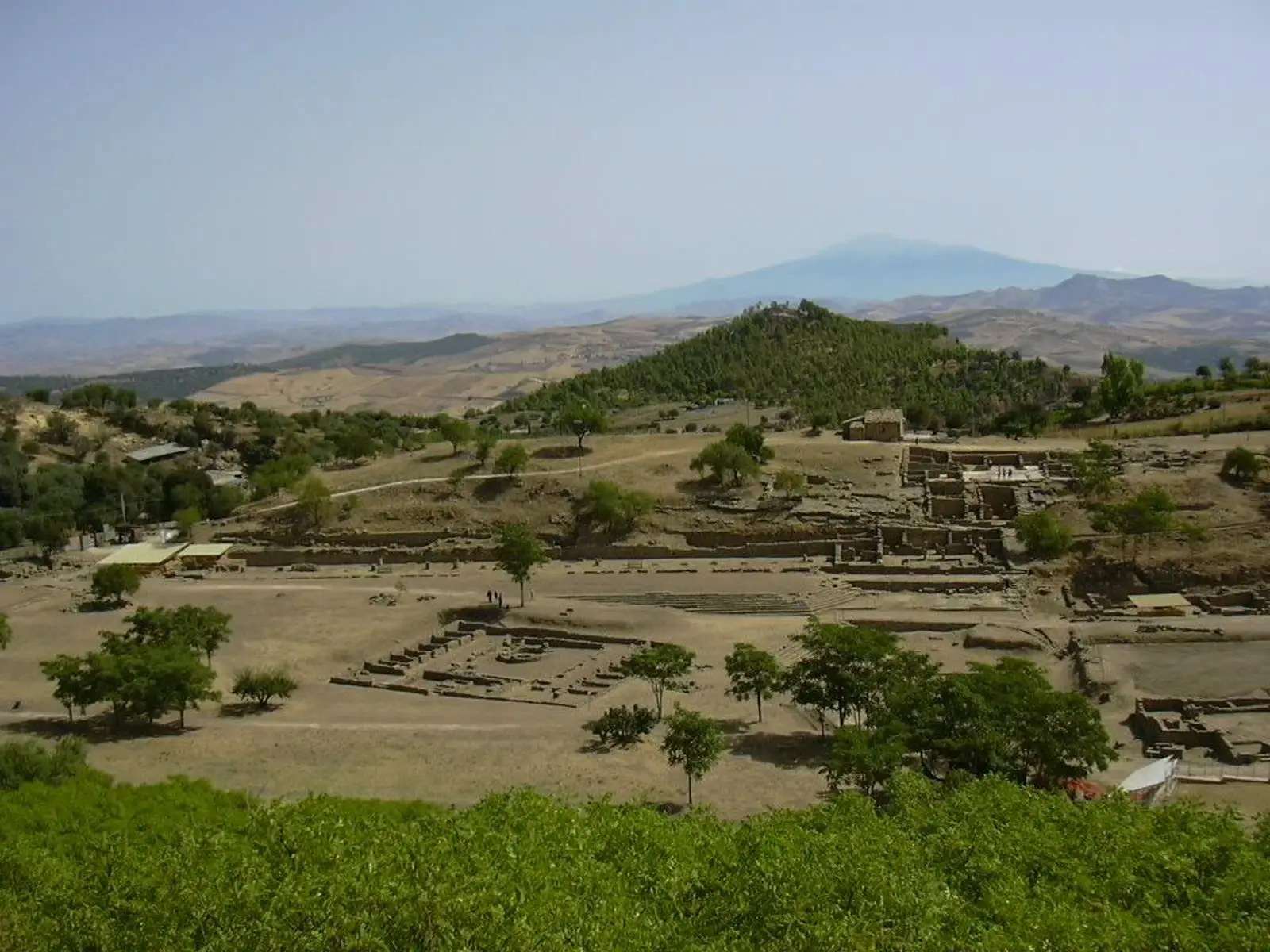
- Location: hills near Aidone, about 15km / 20 minutes’ drive from Piazza Armerina
- Getting there: realistically a rental car — no public transit reaches the site
- Cost: around €6-8 for the site; the Aidone museum is a separate ticket, cumulative options usually available
- Time needed: 1.5-2 hours for the site, another hour for the Aidone museum
- Good for: pairing with Villa Romana del Casale as a two-site archaeology day
Most visitors who make it to Piazza Armerina come for one thing: the Roman mosaics at Villa Romana del Casale. Fifteen minutes further into the hills sits a site with a far stranger recent history — a Greek-Sicel city whose two most famous objects were both looted, both ended up in major American museums, and both became landmark cases in the international fight over stolen antiquities before Italy finally got them back. The ruins themselves are quieter and less visited than the villa, which is exactly the point.
A city built twice, by two different peoples
Morgantina’s story starts around 1000 BC with the Sicels, Sicily’s indigenous pre-Greek population, who settled the Cittadella hill. In 560 BC, Chalcidian Greek colonists arrived and built their own city alongside the existing settlement — an unusually direct pairing of native and colonial Sicily in one place. It didn’t last peacefully: in 459 BC, the Sicel leader Douketios, trying to push back against Greek control of the island’s interior, destroyed the city by fire. The Greeks rebuilt it almost immediately, a short distance away on the Serra Orlando ridge, laid out on a strict rectangular grid in the Greek city-planning style of the day — houses of roughly equal size, a real departure from how the destroyed city had grown organically.
What’s actually still standing
The rebuilt city peaked in the 3rd century BC as a genuinely sophisticated Hellenistic town: a monumental agora (the public square and civic heart of any Greek city), a theater, a bouleuterion (council chamber), and thermal baths that rank among the earliest known public bathhouses anywhere in the Hellenistic world — predating the more famous Roman bathing culture that came later. Walking the site today means walking a real street grid, not just isolated ruins: houses of varying size and wealth line the plateia (main street), giving a more genuine sense of how an ordinary Hellenistic town actually functioned than the temple-focused sites Sicily is better known for.
Morgantina’s decline came fast once Rome took over Sicily. The city backed Carthage during the Second Punic War, and after Rome’s victory it was handed over to Rome’s own soldiers as a punishment garrison — a death sentence for a functioning city. By the 1st century AD it was effectively abandoned, which is precisely why so much of the Hellenistic-era layout survived undisturbed: nobody built over it later.
The Venus of Morgantina: a two-meter goddess, a Getty scandal, and a 2011 homecoming
The single most famous object ever found here isn’t at Morgantina anymore — for decades, it wasn’t even in Sicily. The so-called Venus of Morgantina, a two-meter limestone-and-marble cult statue carved between 425 and 400 BC, likely by a sculptor trained under Phidias (the same workshop tradition behind the Parthenon sculptures), was illegally excavated from the site in 1978 and disappeared into the international antiquities black market. The Getty Museum in Los Angeles acquired it in 1988 through a series of transactions that later drew heavy scrutiny. It took Italy over two decades of legal and diplomatic pressure — part of a broader campaign that reshaped how museums worldwide handle antiquities of uncertain origin — before the Getty agreed to return it. The statue came home to Sicily in 2011 and now stands in the Aidone museum, finally back within sight of the hill it was pulled from.
The Morgantina Treasure: silverware buried to hide from Rome
The Venus wasn’t the only major looted find. The so-called Morgantina Treasure — sixteen pieces of Hellenistic silverware with gilded detail, dating to the 3rd century BC — tells an even more specific story: whoever owned it buried it in 211 BC, the exact year Roman forces were closing in on the city during the Second Punic War, almost certainly to keep it out of Roman hands. It sat underground for over two thousand years until it, too, was illegally excavated around 1978 and sold to the Metropolitan Museum of Art in New York in 1981-82. Following the same wave of pressure that returned the Venus, the treasure went back to Italy in 2010 and now sits alongside it in Aidone — reunited with the city it was buried to protect, in the same decade the Venus finally made it home too.
The Aidone museum: where the real prizes actually are
The Museo Archeologico di Aidone, housed in a former Capuchin monastery about 2km from the excavation site, is not an optional add-on — it’s where the Venus, the silver treasure, and the acroliths (marble head-and-limb fragments) of the goddesses Demeter and Kore are actually displayed. Seeing the empty foundations at the site first and the objects that once stood in them afterward genuinely changes how the ruins read; skipping the museum means missing the entire point of the looting-and-return story that makes this site more than just another set of Greek foundations.
Visiting the site itself
Morgantina is self-guided — no compulsory tour, no timed entry, just an entrance ticket (typically €6-8, with reduced and combined options depending on the season) and a site to walk at your own pace. Wear real shoes and bring water and sun protection: there’s little shade, and the ground is uneven excavated terrain. Hours shift seasonally, generally opening around 9am and running until a few hours before sunset in winter, longer in summer — worth checking current times before you go, as Sicilian archaeological park hours change without much notice.
Getting there
There’s no practical public transport option — Morgantina sits in genuinely rural hill country, about 15km and a 20-minute drive from Piazza Armerina, with the modern town of Aidone about 2km from the site itself. A rental car is the realistic way to see it; combine it with Villa Romana del Casale for a full day of ancient Sicily, since the two sites sit close enough together to pair naturally, mosaics in the morning and Greek foundations in the afternoon (or the reverse, depending on when the light works better for photos at each).
See Morgantina plotted against Villa Romana del Casale and the rest of the region on our interactive Sicily map.