Villa Romana del Casale: The Honest Guide to the Mosaics of Piazza Armerina
 Daniele Bellia · 7 min read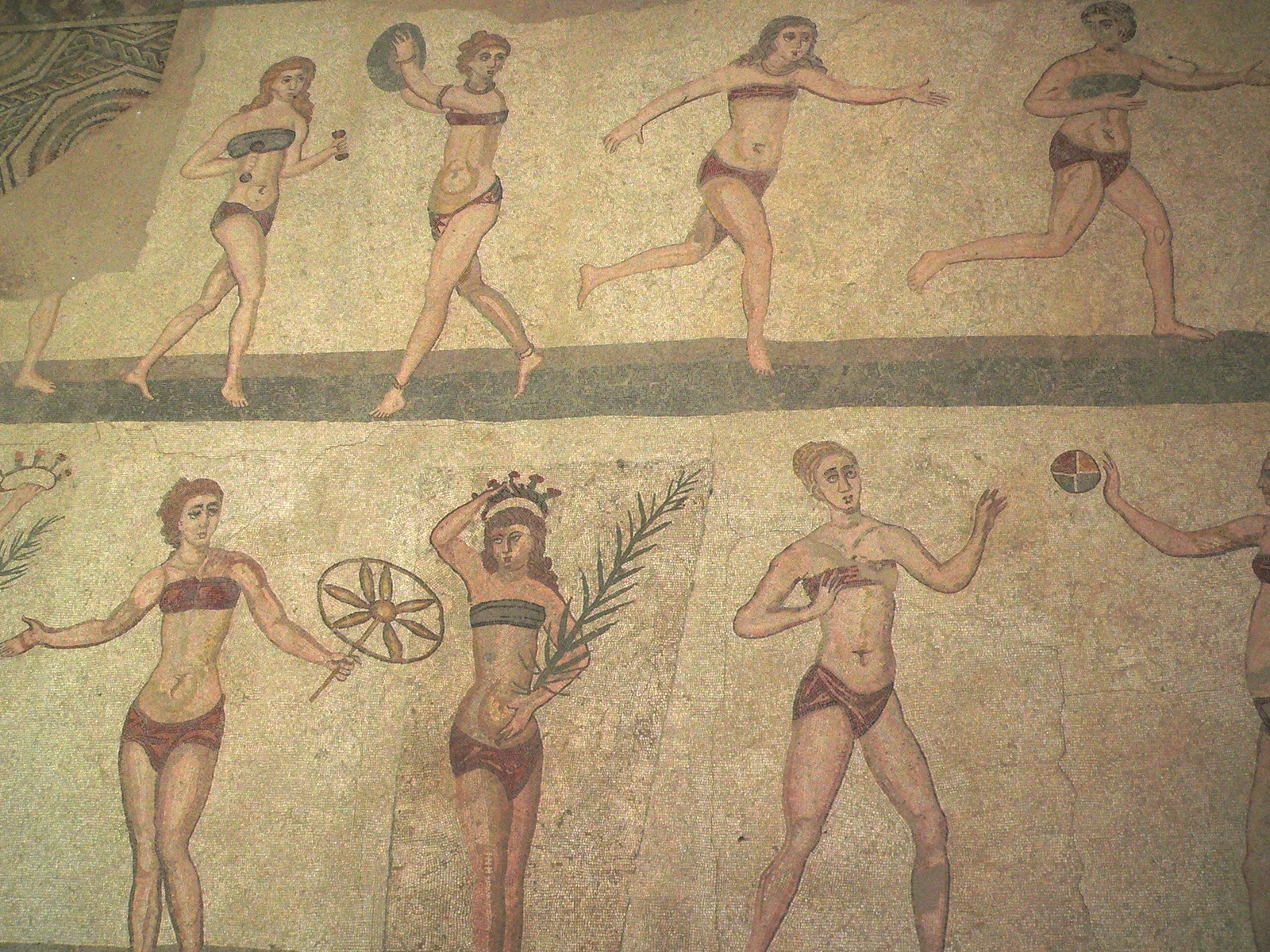
When people ask me what the most impressive ancient site in Sicily is, I almost never say “Villa Romana del Casale” first — most visitors have heard of the Valle dei Templi in Agrigento, hardly anyone has heard of this villa buried in the Sicilian interior. That’s a shame, because it holds the largest, best-preserved collection of Roman mosaics anywhere in the world, over 3,500 square meters of them, a UNESCO World Heritage site since 1997. The catch: it’s not on the coast, it’s not on the rail network, it sits in the hills near Piazza Armerina, deep in the province of Enna. Seeing it takes actual planning — that’s exactly what this guide is for.
A villa built for an emperor?
The complex was likely built between the late 3rd and early 4th century AD, during the era of the Tetrarchy. Who actually lived here has never been conclusively settled — exactly the point where a lot of guidebooks get overconfident. The name most often cited is Marcus Aurelius Valerius Maximianus, Diocletian’s co-emperor who governed the Western Empire: ivy motifs, the sheer size of the basilica, an imperial vantage point in the Circus Maximus mosaic, and Tetrarchic military insignia at the entrance all support the theory. Other scholars point instead to his son Maxentius, or to a high-ranking senator who dealt in exotic animals for the Roman games — the villa’s hunting mosaics would fit that profession well. None of it is proven. So if you read a placard stating “Emperor Maximian” as settled fact, you’re getting the most popular theory, not a confirmed one.
How a landslide saved the mosaics
The real story starts after the villa’s own end. In the 12th century, a landslide from nearby Monte Mangone buried large parts of the complex under as much as ten meters of mud. What sounds like a disaster is actually why the site survived so well: under that mud, the mosaics spent roughly 700 years shielded from rain, wind, frost, and from the stone-robbing that stripped so many other ancient Sicilian sites over the centuries. The first mosaic fragments surfaced in the early 19th century, but the villa wasn’t properly excavated until 1950–1960, under archaeologist Gino Vinicio Gentili. The current protective roof — timber and translucent panels over the main rooms — dates from a major restoration completed in 2012.
The “Bikini Girls” and the Great Hunt corridor
The single most famous image at the villa is the so-called Sala delle Dieci Ragazze, the “Room of the Ten Girls” — known internationally as the “Bikini Girls” mosaic. Ten young women in athletic clothing that looks remarkably like a modern bikini are shown competing: two running, one lifting hand weights, one about to throw a discus, two playing with a ball, and in the center a winner holding a palm branch, placing a rose wreath on her own head. The image is so iconic it tends to get viewed in isolation — but the villa’s real showpiece is the Corridor of the Great Hunt (Corridorio della Grande Caccia), over 60 meters long, one of the longest surviving mosaic floors from antiquity. It depicts the capture of exotic animals — elephants, tigers, rhinoceros, ostriches — somewhere between North Africa and India, almost certainly destined for the beast hunts staged in Roman amphitheaters. Don’t skip the Hall of Orpheus either, its floor showing the mythical musician surrounded by wild animals, or the Great Basilica with its once-marble floor.
Why you walk on raised walkways — and what that means for photos
One detail that catches people off guard: you never actually set foot in the villa’s rooms. Elevated wooden and metal walkways run across the entire site, so you look down onto the mosaic floors from above. That protects the floors from wear, but it has a side effect barely any brochure mentions: the roof structure casts shade, the light is often diffuse, and from an overhead angle, mosaic details look flatter in your own photos than the polished shots you see online (many taken with drones or special permits). A zoom lens, or at minimum your phone’s zoom, helps you actually pick out details like the faces of the “Bikini Girls.”
Opening hours and prices for 2026
The villa is open daily year-round, with seasonal hours: late March to late October, 9:00 am–7:00 pm; winter (late October to late March), 9:00 am–5:00 pm; last entry one hour before closing in both cases. Admission is €14 (reduced €7), and EU citizens under 18 enter free. An audio guide is available through the official website and often on-site; if you’d rather have a person than a headset, local guides are usually available at the entrance for bookings of roughly 60 to 90 minutes — in my experience, worth it here more than at most other Sicilian archaeological sites, since a lot about the villa doesn’t explain itself.
How much time to budget — and the timing trick
Realistically, plan for 1.5 to 2.5 hours for the full walkway circuit, including short stops at the viewing points. What guidebooks consistently leave out: the villa sits exposed on a hilltop, the roof structure traps heat in summer, and between roughly noon and 3 pm it gets noticeably stuffy under the plastic canopy — especially on days with tour bus groups. Early morning right after opening, or late afternoon from around 4 pm, are both more comfortable and significantly less crowded.
Getting there from Catania: honestly, it’s a hassle without a car
Unlike the Valle dei Templi in Agrigento or the coastal destinations around Catania, there’s no convenient direct connection here. There’s no rail link at all — the nearest stations are too far away to be practical for this route. By long-distance bus, Etna Trasporti runs several direct departures daily from Catania to Piazza Armerina, taking about 1 hour 30 minutes, from roughly €7–9. From there, a local shuttle runs between April 1 and October 30 from Piazza Generale Cascino out to the villa (about 20 minutes, €1.50 one-way), saving you the roughly 250-meter walk to the ticket office. Important: outside that window, in the winter half of the year, the shuttle doesn’t run, leaving only a taxi or a walk from town. By rental car, the drive from Catania takes about 1 hour 20 to 1 hour 30 minutes, and you’re not tied to a timetable — honestly the only genuinely relaxed option for this destination. A day trip from Catania is doable, but it’s not a quick hop: if you’re working this into your Sicily trip cost planning, budget 2.5 to 3 hours of pure driving time round-trip.
What guidebooks get wrong
The most common myth: that you can swing by the villa “on the way” to Agrigento. On a map it looks like a minor detour; in reality, the drive from Catania alone takes an hour and a half, and Piazza Armerina isn’t actually on the direct route between the two cities. If you want to combine both sites in a single day, only attempt it with your own car and a very early start. The second myth concerns the mosaics themselves: you’ll often read that they’re “completely original” — in fact, damaged sections were restored and partially reconstructed during the 20th century, something art historians still debate. That doesn’t diminish the site’s importance, but it’s worth knowing the difference between “untouched” and “exceptionally well preserved and carefully restored.”
Best time to visit
Spring and early autumn are ideal: mild weather, fewer tour groups than in peak summer. In July and August, the hilltop setting near Piazza Armerina (roughly 700 meters above sea level) is noticeably cooler than the coast around Catania, but the midday heat trapped under the roof stays uncomfortable regardless — a good reason to start early. If you’re already renting a car for Agrigento, the two sites pair well over two or three days rather than cramming both into one very long day.