Erice: Check the Forecast Before You Go, or You'll See Nothing
 Daniele Bellia · 5 min read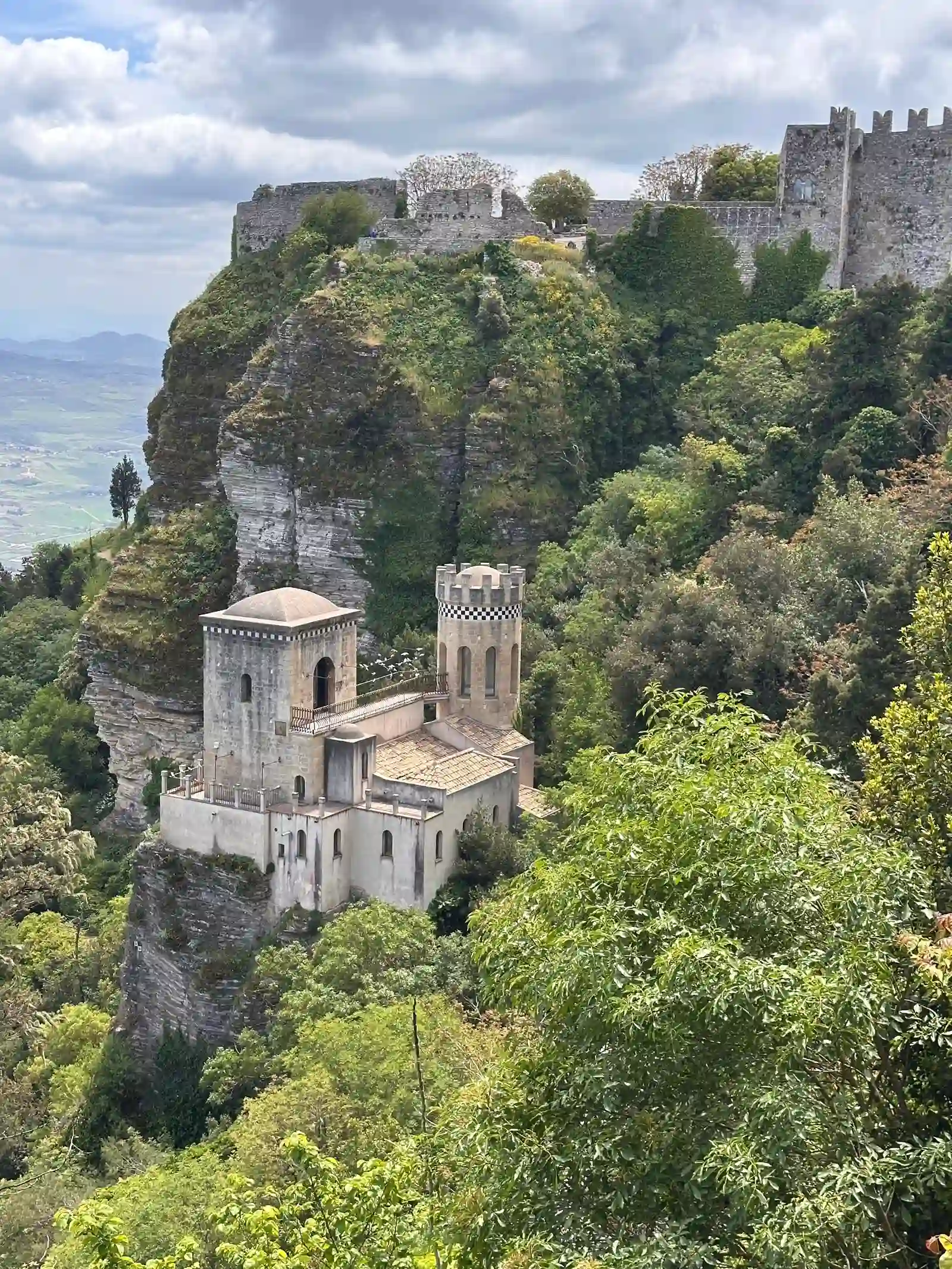
Erice sits 751 metres up, and the entire reason to go is the view over the salt pans and the Egadi Islands. The problem is that Erice is genuinely famous for fogging over with no warning at all — you can leave Trapani in bright sun and arrive at the top to find the whole town wrapped in cloud, castle included. Check the forecast for Erice specifically, not just Trapani below, before you commit to the trip up.
What makes Erice worth the climb?
The town itself is medieval through and through — narrow cobblestone streets, stone courtyards, and an atmosphere that stays noticeably cool even in August while Trapani bakes on the coast below. At the top sits the Castello di Venere, a Norman-era castle built directly on the site of an ancient temple to Venus Erycina, one of the most important religious sites in the ancient Mediterranean. What you’re standing on has been considered special for roughly 3,000 years before anyone added castle walls to it.
On a clear day, the view stretches out over Trapani’s salt pans, the Egadi Islands, and — genuinely, on the clearest days — as far as Tunisia. On a foggy day, you’ll see grey mist a few metres in front of you. There’s no middle ground with this view, which is exactly why the forecast check matters more here than almost anywhere else in Sicily.
The two viewpoints worth finding
Erice has more than one lookout, and they face different directions, so it’s worth doing both rather than stopping at whichever one you hit first. The Giardino del Balio, the public garden below the Torri del Balio, has a belvedere facing south: Trapani, the salt pans, the Egadi Islands, the Stagnone lagoon, and the Marsala coastline all laid out below, with Tunisia visible on the clearest days. The Quartiere Spagnolo, a half-ruined former barracks on a dramatic rock platform on the opposite side of town, faces the other way — toward Monte Cofano and the coves running up toward San Vito Lo Capo. Ten minutes apart on foot, and genuinely two different views, not the same photo twice.
Getting up: the cable car
The Funivia di Erice runs from the valley station in Trapani up to Erice, with cabins departing continuously, roughly one every minute or so once running — no need to wait for a scheduled slot. A round trip costs €15, a one-way ticket €9, with a reduced round-trip rate of €4 for children and Trapani-province residents.
The detail most people miss: the cable car is closed on Monday mornings year-round, reopening at 2pm — if you’re planning a Monday visit, don’t show up expecting an early start. It also shuts down completely for annual maintenance from around 3 November to 4 December. Outside of that, hours shift a fair bit by season — long summer nights running past midnight on weekends, shorter winter hours — so check funiviaerice.it for the exact schedule on your date rather than assuming.
If you’d rather not do the cable car both ways, walking down is a genuinely good option — the descent is scenic and far easier than the climb. Just take the cable car up at minimum; walking up in summer heat with the payoff being a possible fog-out is not a great trade.
What the Erice Pass actually covers
The Erice Pass costs €15 and covers entry to the Castello di Venere, the Torretta Pepoli, and the current exhibition space — it’s a separate ticket from the cable car, not a combined one, so budget for both if you’re doing the full visit. Give yourself a half-day for Erice altogether: the town, the castle grounds, and a proper look at the view (weather permitting) aren’t a rushed 90-minute stop.
Where to eat
For a proper sit-down meal, Monte San Giuliano is the pick — tables set in the garden-terrace of a medieval palazzo, reached through a small internal courtyard with an old well, with the dining terrace looking out over the sea and a good spot to catch sunset if your timing lines up. It’s listed in the Michelin Guide, not economical, but the seafood starters and the swordfish and eggplant pasta are what people come back for. Book ahead in summer — the terrace is small, and it’s not a secret.
The pastry stop worth planning around
Erice’s other claim to fame, alongside the fog, is Maria Grammatico’s pasticceria and its genovesi — crescent-shaped pastries filled with lemon-scented custard cream, made with almonds from Avola. Grammatico learned the recipes from the cloistered nuns of Erice’s Convent of San Carlo as a girl, and her shop has since become well known well beyond Sicily. It’s an easy, worthwhile stop to build into the same half-day as the castle, not a separate trip.
When to go
Spring and autumn mornings tend to give the most reliable clear views before afternoon haze or cloud rolls in, though this genuinely varies day to day — there’s no season that guarantees it. Check the forecast the morning of, not the week before, and treat a clear-sky day as the actual trigger for going up rather than whatever day happens to fit your itinerary.
My honest verdict
Erice on a clear day, looking down over the salt pans with the Egadi Islands sitting in the water beyond them, is one of the best views in western Sicily. Erice in fog is a cool, atmospheric medieval town with genuinely excellent pastries and absolutely no view — still worth an hour, but not what you climbed 751 metres for. The whole difference between those two versions of the trip is a five-minute forecast check before you get in the car.
More on the area in the Trapani region guide.