Mount Etna in Winter: Snow, Closures, Right Gear
 Daniele Bellia · 7 min read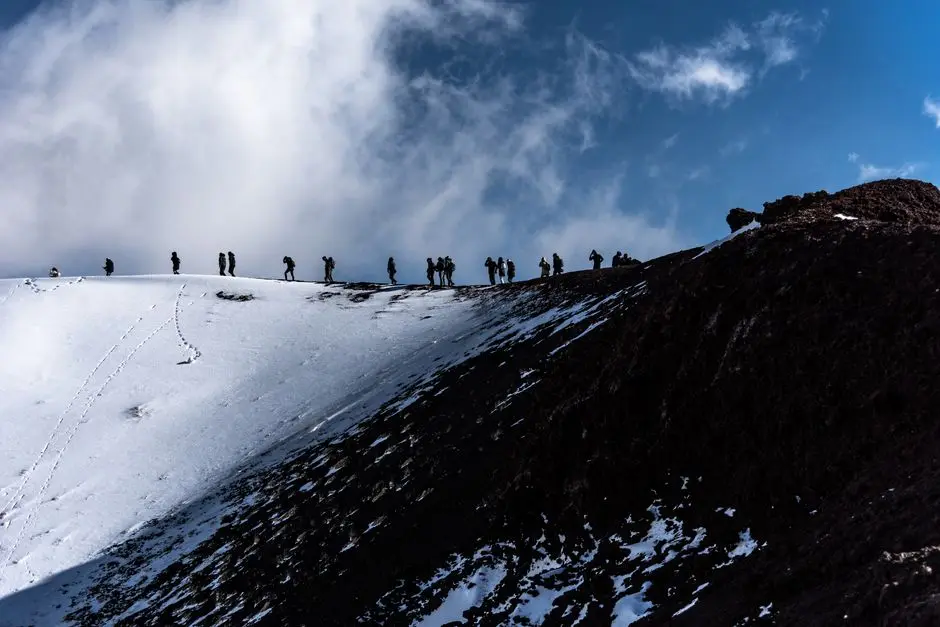
Most people who ask me whether you can even visit Etna in winter have a mental image that just doesn’t compute: volcano and snow. But that’s exactly the point. In winter, Etna isn’t some scaled-down summer version with a bit of extra chill — it’s a completely different mountain, with its own rules, its own hazards, and yes, ski slopes on an active volcano. That’s not travel-brochure exaggeration, it’s simply the reality from December through March above 1,900 meters.
How much snow actually falls on Etna?
The ski season on Etna typically runs from December into March. How much snow actually accumulates varies a lot from year to year, but when it comes, it comes properly: on the south side near Rifugio Sapienza, the ski area reaches up to around 2,604 meters, while on the north side at Piano Provenzana, the area is even bigger, with up to 10 km of slopes. All told, Etna Nationalpark offers a network of roughly 17 km of slopes served by 9 lifts, spread across the two ski areas, Etna Sud (Nicolosi) and Etna Nord (Piano Provenzana).
Here’s something many people don’t realize: which lifts are actually running changes from year to year, depending not just on snowfall but also on volcanic activity and the state of the lift infrastructure after recent eruptions. In the 2025/26 season, for instance, at times only the lifts on the north side at Piano Provenzana were operating, since the ski areas have to adapt operations to current conditions. In other words: never rely on what a blog post (this one included) said last year — the best way to check the current status of lifts and slopes is via the webcams of the respective ski areas shortly before you go, which show live conditions on the north, south, and east slopes.
One detail that surprises a lot of people: even when the slopes down below are closed due to insufficient snow, the cable car from Rifugio Sapienza still runs — it’s now a gondola lift used by both tourists and skiers, taking you from the Rifugio Sapienza plaza up to about 2,500 meters in roughly 15 minutes, year-round, since outside ski season it carries hikers up toward the craters.
Where exactly can the road get closed?
This is the part most winter visitors underestimate. It’s not just a matter of “there might be some snow” — these are real, short-notice road closures that can throw your whole day’s plan out the window. The most affected stretch is the road up from Nicolosi to Rifugio Sapienza — in heavy snowfall, icing, or strong wind, this route gets closed, sometimes for a few hours, sometimes for the whole day. It’s not just a winter thing either — our guide to Etna closed by rain covers the same problem in other seasons. The same can happen on the north side, on the road up to Piano Provenzana via Linguaglossa.
The tricky part: the temperature down in Catania or Nicolosi tells you nothing about conditions up top. At nearly 2,000 meters, the temperature can easily be ten degrees lower than in Catania and Nicolosi, and the weather up there can flip in an instant — you set off in sunshine by the sea and arrive up top in cloud with a cold wind blowing. In practice, that means you could be having breakfast in a light sweater in Catania and, two hours later, be standing at the bottom of a closed road because a snowstorm is passing through up top that you had no idea about down below.
My practical advice, which I give everyone heading up in winter: check a weather site with a focus on the Rifugio Sapienza area in the morning — there are specialized meteo sites with a dedicated page just for that zone — and take a look at the live webcam from the plaza before you set off. It costs you two minutes and saves you an hour of hairpin bends for nothing, if dense fog or a closure is on the cards up top.
Gear: what you actually need
Let me clear up the most common misconception here: no, you don’t need to lug ski gear up Etna in winter if you’re not planning to ski. But you do need considerably more than what you’d wear for a winter day in Catania.
For anyone who just wants to go up and walk around (craters, views, touching the snow): Layering isn’t just a cliché here — it’s genuinely the right strategy, ideally with technical clothing: a windproof or rain jacket for wind and sudden showers is a must, as are sturdy, ideally waterproof shoes (our Sicily packing list has the full rundown). Sneakers don’t cut it on the icy ground at the plaza — I’ve seen it too many times, people slipping on the slick surface because they showed up in trainers. Gloves and a hat aren’t a luxury either; in the wind at 1,900 meters, they’re simply necessary.
For anyone wanting to reach the craters (not just the upper station): Above a certain altitude — currently around 2,900 meters, from where the hike to the summit craters begins — you can only continue with certified volcano guides, usually by 4x4 followed by a guided hike toward the summit craters. That’s not bureaucratic fussiness, it’s simply about safety: Etna is active, and there are fissures and gas vents that you won’t spot without local knowledge. In winter, there’s often an added stretch by snowcat up top — a spectacular solution when snow blankets the volcano and makes the regular route impassable. That’s a standard part of many guided winter excursions, not some extra adventure you’d have to arrange yourself.
For anyone driving up: In Italy, as a general rule, between November 15 and April 15, you’re required to have either winter tires fitted or snow chains on board, though the exact dates can vary by province. On Sicilian mountain roads like the Madonie passes or the Etna slopes, it’s also worth carrying gloves and a blanket, plus a flashlight and an emergency kit, since help can take longer to arrive here than in the city. If you’re renting a car for a winter trip to Etna, actively ask the rental company whether winter tires are fitted — this is by no means automatic with Sicilian rental companies, since most of their cars are set up year-round for coastal driving (more on the booking process in our car rental guide).
What I really tell first-time visitors in winter
Build in a buffer day if Etna matters to you. Weather-related closures happen, and if you’ve only allotted a single day for the volcano and that happens to be the day of a snowstorm, tough luck. If you’ve got two possible days built into your itinerary, you can flexibly pick the better one.
And if, in the end, you can’t get up there at all because the road is closed: that’s annoying, but common enough on Etna in winter that nobody here is really surprised by it. The mountain decides, not the schedule — and that’s even truer in winter than at any other time of year.
One practical argument for going up with a guide in winter rather than driving yourself: a guided hike that includes the cable car (affiliate link — booking through it costs you nothing extra and helps support this site) means someone else is judging the conditions and the closures on the day, and you’re not the one deciding whether that last stretch of road is still driveable in a rental car with summer tyres.
Check current conditions on our Etna live webcam before you head up, and see the rest of the Catania & Etna region on our interactive Sicily map.