Panarea: Sicily's Glossiest Island Is Also a Live Volcano
 Daniele Bellia · 5 min read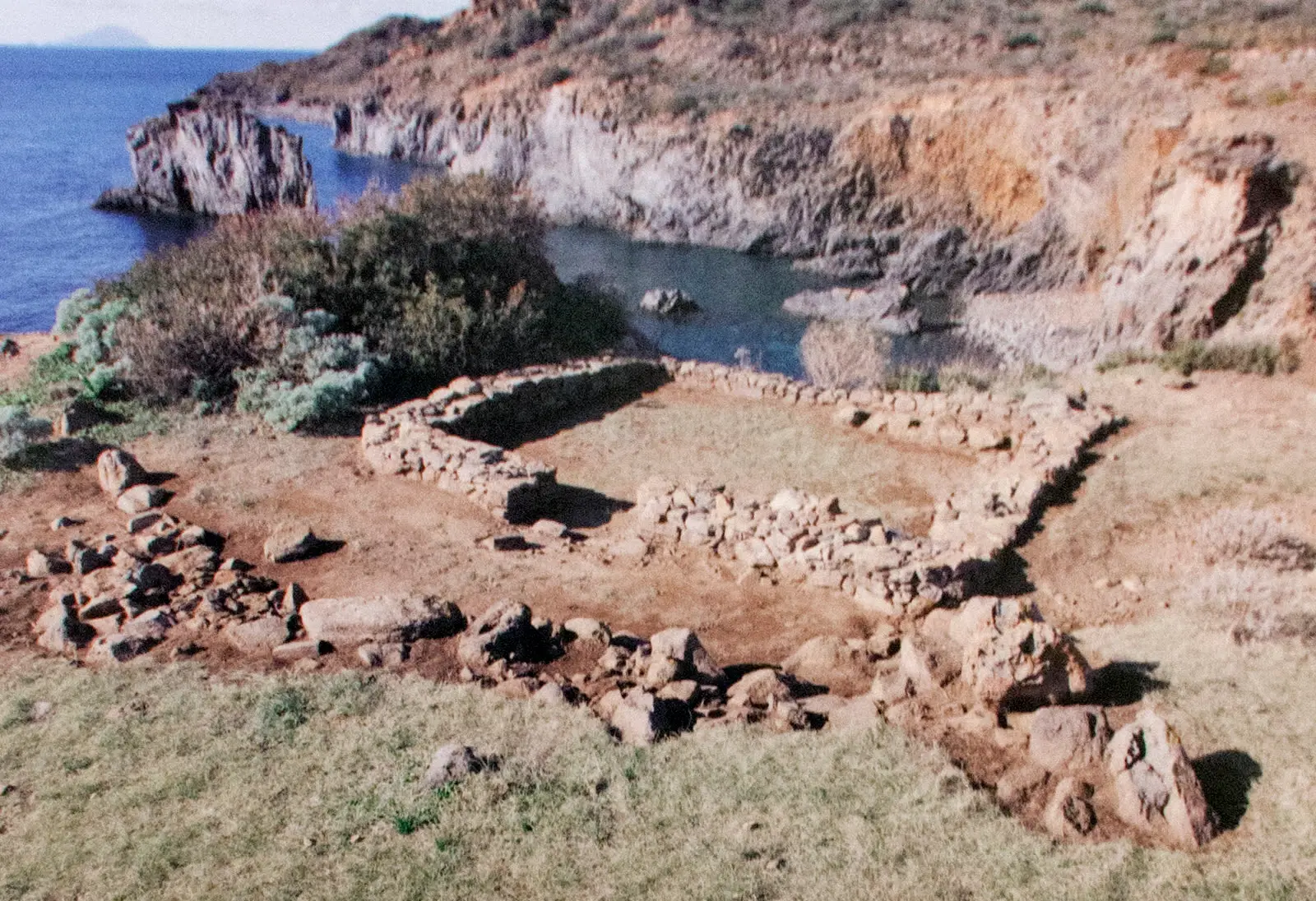
- Location: smallest of the inhabited Aeolian Islands, reachable by hydrofoil from Milazzo
- Getting there: Liberty Lines hydrofoil from Milazzo, ~1h55 direct, from around €16-30 one way depending on ticket type
- Getting around: no cars for non-residents (July 1-Sept 15); walking and electric golf-cart taxis (~€3/person) only
- Cost: the island’s reputation as Sicily’s most expensive — expect summer prices well above Lipari or Salina
- Good for: a day trip or a splurge overnight, not a budget base for the wider Aeolian Islands
Panarea gets sold as the Aeolian Islands’ answer to Capri or Mykonos — the smallest inhabited island in the archipelago, the one where the yachts anchor and the Aperol Spritz costs more than anywhere else in Sicily. All of that is true. What the glamour coverage usually skips is that Panarea is also sitting on a genuinely active volcanic system, with a Bronze Age village on its clifftop that’s older than most of the ruins tourists cross the island to see elsewhere in Sicily.
How a fishing island became Italy’s summer address
Panarea’s transformation into Sicily’s most fashionable island didn’t happen overnight. Adventurous travelers started discovering it in the late 1950s, drawn by the same isolation and simplicity that once made it unremarkable. Word spread slowly through the 1960s and ’70s, and by the end of that decade the island’s tourist boom had fully arrived — yachts, minor celebrities, and prices to match. Today the pattern is well established: whitewashed houses climbing narrow lanes, boutiques that would look at home in Portofino, and a summer population that dramatically outnumbers the roughly 280 people who actually live here year-round.
A village that’s 3,400 years older than the glamour
Walk about 30 minutes south of San Pietro, the island’s only real town, and the fashionable version of Panarea drops away completely. The Punta Milazzese prehistoric village sits on a headland dated to the 14th-13th century BC — 22 oval stone huts and one rectangular structure, likely a communal meeting or ritual space, belonging to a Bronze Age culture that takes its name, the “Milazzese culture,” directly from this site. Excavations turned up pottery of Mycenaean origin, real evidence that this small island sat on a genuine Mediterranean trade route more than three thousand years ago, long before anyone had a reason to call Panarea fashionable. The setting alone justifies the walk: the huts sit right above Cala Junco, an amphitheater-shaped cove of turquoise water framed by dramatic rock formations, arguably the single best view on the island.
The volcano nobody mentions in the yacht photos
Panarea is officially classified as a potentially active volcano, and the proof is easy to see if you know where to look: in the stretch of sea between Panarea and its satellite islets — Basiluzzo, Lisca Bianca, Bottaro, and Dattilo — sits one of the Mediterranean’s most extensive submarine hydrothermal fields. Gas bubbles rise continuously from the seafloor around Lisca Bianca and Bottaro, a phenomenon documented since Greek and Roman antiquity, and the field had a genuinely spectacular spike in activity in autumn 2002. Basiluzzo itself, the largest of the satellite islets about 4km northeast of the main island, is a rhyolitic lava dome that formed roughly 50,000 years ago. Boat excursions out to see the submarine fumaroles up close are a real, bookable activity here — a completely different side of Panarea than the harbor full of tenders and yacht crew.
Getting around: no cars, genuinely
From July 1 to September 15, motor vehicles are banned for anyone who isn’t a resident — and even outside that window, there simply isn’t much road to drive on. Panarea has no real streets, only mule tracks and narrow pedestrian lanes between the whitewashed houses. Movement happens on foot or by electric golf cart, which double as informal taxis from the port for about €3 a person. The entire inhabited stretch of the island can be crossed on foot in around 20 minutes, which tells you most of what you need to know about how compact this place actually is despite its outsized reputation.
What it actually costs
Panarea earns its reputation as the most expensive Aeolian island honestly. Summer accommodation regularly runs into the hundreds of euros a night, a simple Aperol Spritz can cost noticeably more here than the same drink on Lipari or Salina, and restaurant prices generally track the yacht crowd rather than the budget-conscious island-hopper. None of that makes it a bad trip — it makes it a deliberate one. Most visitors treat Panarea as a day trip from Lipari or Milazzo rather than a base for exploring the wider archipelago, saving the overnight splurge for a special occasion rather than the whole holiday. If that special occasion is this trip, it’s worth seeing the actual numbers before deciding.
Getting there
Liberty Lines runs direct hydrofoils from Milazzo to Panarea in about 1 hour 55 minutes, with slower options (around 2h30) for services that stop at the other islands en route; a Siremar ferry with vehicle capacity takes considerably longer, around 4h35, though there’s little reason to bring a car given the driving ban above. One-way hydrofoil fares run roughly €16 to €30 depending on route and season. If you’d rather see Panarea and Stromboli together in one outing instead of arranging your own island-hopping schedule, this night boat trip departs directly from Milazzo and covers both (affiliate link — booking through it costs you nothing extra and helps support this site).
More on the Aeolian Islands, and see Panarea alongside Lipari, Salina, and Stromboli on our interactive Sicily map.