Catania on Sunday: What's Open, What's Closed?
 Daniele Bellia · 5 min read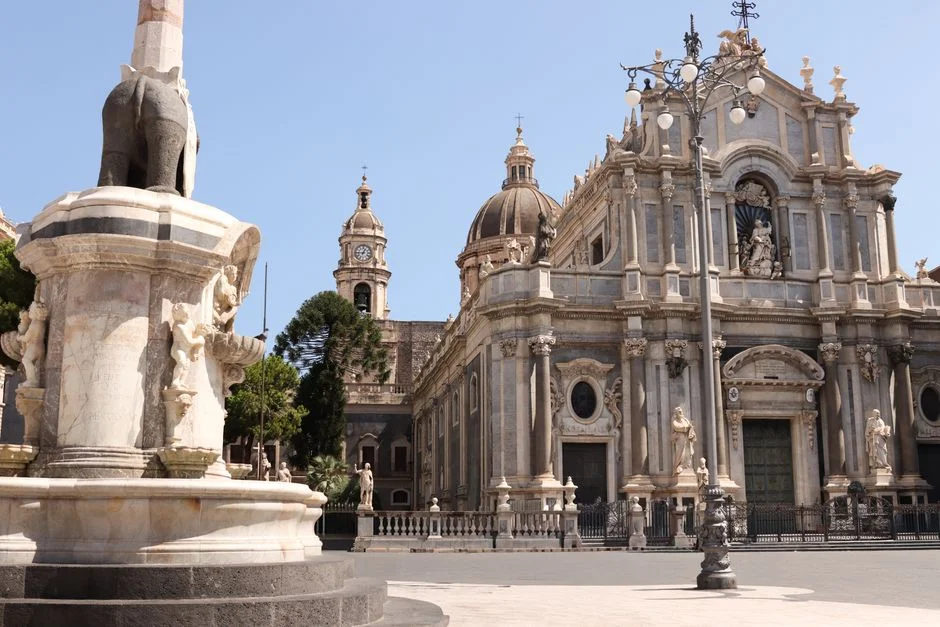
If you end up scheduling your Catania trip so that Sunday is your only full day, panic tends to set in sooner or later: is anything even open? The short answer: partly yes, but not necessarily what you’d expect. And of course, the one thing every guidebook lists as a must-see is guaranteed to be closed. Here’s the real situation — no guesswork.
The fish market: closed on Sundays, no exceptions
This is where most tourists get caught out. La Pescheria is open Monday to Saturday, 7am to 2pm, and closed on Sundays and public holidays. That applies year-round, even during peak season — yes, La Pescheria really is closed every single Sunday, even in high tourist season . If your only free morning in Catania happens to fall on a Sunday, you won’t get to see the fish stalls, the haggling, or hear the market’s trademark shouting.
What a lot of people don’t realize: the city’s other big market, the Fera ’o Luni on Piazza Carlo Alberto, is also closed on Sundays — despite its name suggesting otherwise (it roughly translates to “Monday market”) — the Fera ’o Luni actually runs every day except Sunday, name notwithstanding .
If you’re determined to get some market atmosphere and Sunday is all you’ve got: the empty Piazza Alonzo di Benedetto is still worth a detour at 9am — empty market stalls, the Amenano Fountain, Porta Carlo V, a fifteen-minute stroll through the old town . Not a market, but at least the backdrop, minus the usual crowds.
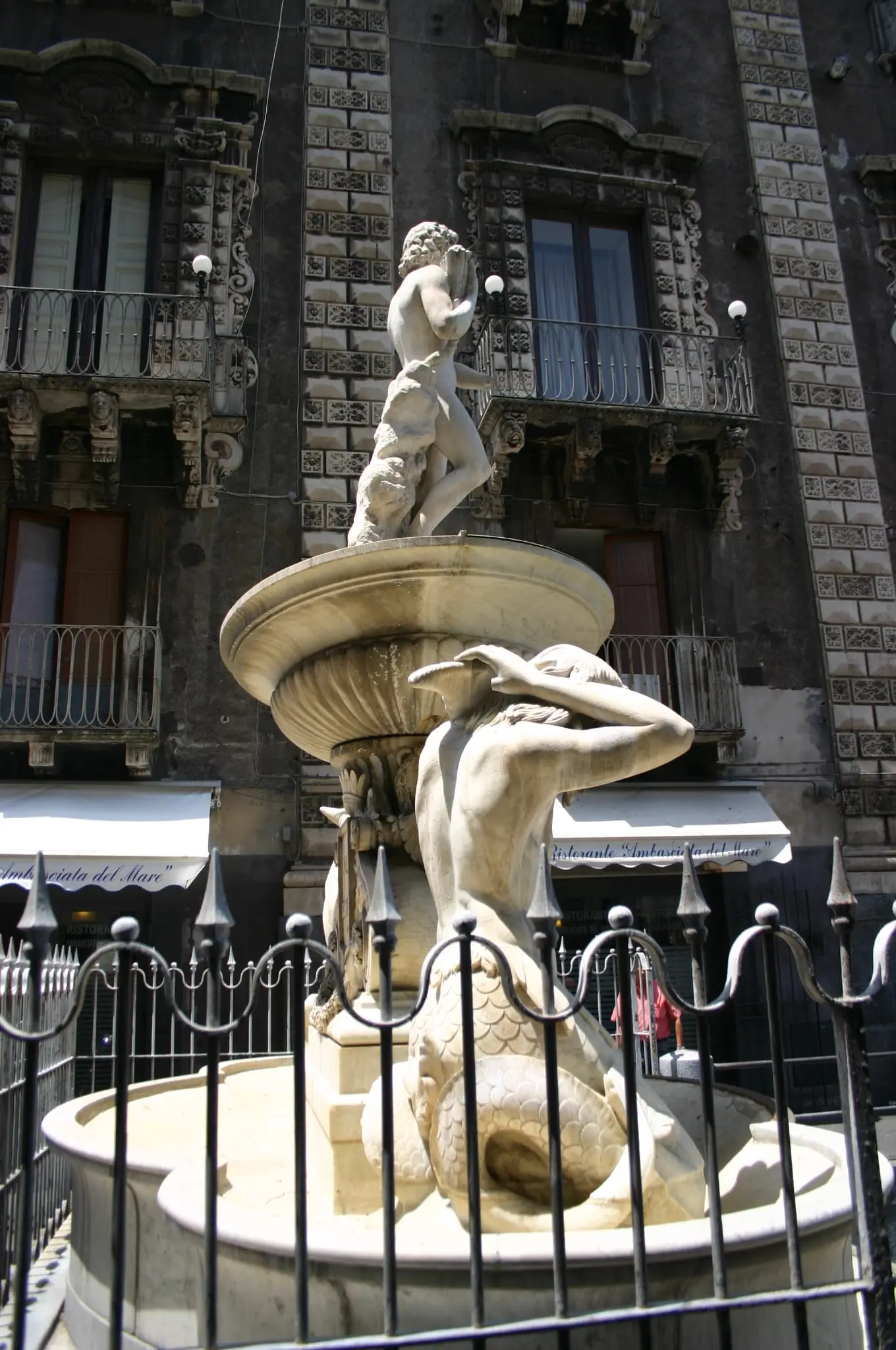 Photo: Giovanni Dall'Orto, via Wikimedia Commons If you want to experience the real Pescheria, you'll need to push your visit to Monday morning — it's actually quieter then than on Saturdays anyway. If you have more than just Sunday, our [Catania & Etna weekend plan](/blog/catania-aetna-in-48h-ohne-mietwagen-der-plan/) shows how to fit the market in on another day.
Supermarkets: entirely depends on the branch
There’s no blanket rule here, and this is the point a lot of blogs oversimplify. Some branches only open for a few hours on Sunday, others are open pretty much all day. A real-world example: one Lidl branch in the city center only opens from 9am to 1pm on Sundays, while another branch near the harbor keeps the same hours on Sundays as on weekdays. So don’t rely on either “supermarkets are closed on Sundays” or “supermarkets are always open on Sundays” — neither is accurate as a general rule. If you absolutely need something on a Sunday, google the specific branch near your accommodation rather than the chain in general.
A bit of background on why this is so inconsistent: a few years back, the Sicilian regional government scrapped the mandatory Sunday afternoon closing for retail, so now each shop decides for itself how long to stay open on Sundays.
Restaurants and bars: the opposite of the rest of Italy
Unlike shops, the restaurant scene in Catania is actually busier on Sundays, not quieter. Sunday is traditionally family lunch day — the “pranzo della domenica” — and many trattorias and restaurants are packed at lunchtime, sometimes fully booked with families settling in for the whole afternoon. If you want to eat somewhere on a whim on Sunday afternoon, book ahead, especially at more traditional places away from the purely touristy areas — for what a meal in Catania actually costs, see our budget check.
What’s more likely to be closed: places geared toward business lunches or office crowds (near government buildings, law firms), simply because there’s no work-related foot traffic on Sundays. But that mostly affects low-key spots off the tourist trail, not the well-known addresses around Via Etnea or Piazza Duomo.
Bars and cafés serving breakfast are open almost without exception on Sundays — the Sicilian Sunday morning ritual of a cornetto and espresso at the counter is untouched by any opening-hours debate.
Churches: open, but on their own schedule
Sant’Agata Cathedral (whose February festival is one of the biggest events in our festivals calendar) and the other major churches in the center are open on Sundays, but primarily for Mass, not for sightseeing visits with photo stops mid-service. If you want to look around as a tourist, it’s better to plan your visit for the gaps between Masses rather than in the middle of one — partly out of respect, and partly because you can’t really wander around freely during the service anyway. If you need exact Mass times, they’re posted at the church itself and vary depending on the church calendar, so it’s worth a quick check once you’re there.
Small shops in the center: a mixed picture
For independent small shops — boutiques, bookstores, delis outside the chains — Sunday is traditionally a half-day or full day off, especially when the owner is running the counter themselves without staff. This is actually the real reason the typical Sicilian family reserves Sunday for eating together rather than shopping: it’s the day off, and not just invisible to tourists, but also to the people who’d otherwise be standing behind the counter. Bigger chains and franchise stores along Via Etnea, on the other hand, tend to stick to continuous opening hours, since they run on staff shifts.
What this means for planning your Sunday
If Sunday in Catania is the only day you’ve got: drop the market visit from your plans entirely, or make peace with the empty backdrop minus the market buzz. Book ahead for lunch if you want to eat at a well-known restaurant — not because it’s closed, but because that’s exactly why it’s packed. For shopping, don’t rely on blanket rules — check the specific branch. And for visiting churches: early morning or late afternoon, outside Mass times, is a lot more relaxed than trying to slip in during the middle of a service.
Sunday in Catania simply runs on a different rhythm than the rest of the week — not worse, just governed by the city’s own rules rather than the tourist calendar’s.
One thing that does run on Sundays, and fills the gap the closed market leaves: guided tours of the Benedictine monastery run seven days a week, with an extra weekend slot in the afternoon.
Looking for something else to fill a quiet Catania Sunday? Our interactive Sicily map has every nearby beach, viewpoint and hidden gem plotted, filterable by what’s actually open — or see the full Catania & Etna region guide.