The Capuchin Catacombs: Palermo's 8,000 Mummies, and the Girl Who Still Looks Asleep
 Daniele Bellia · 5 min read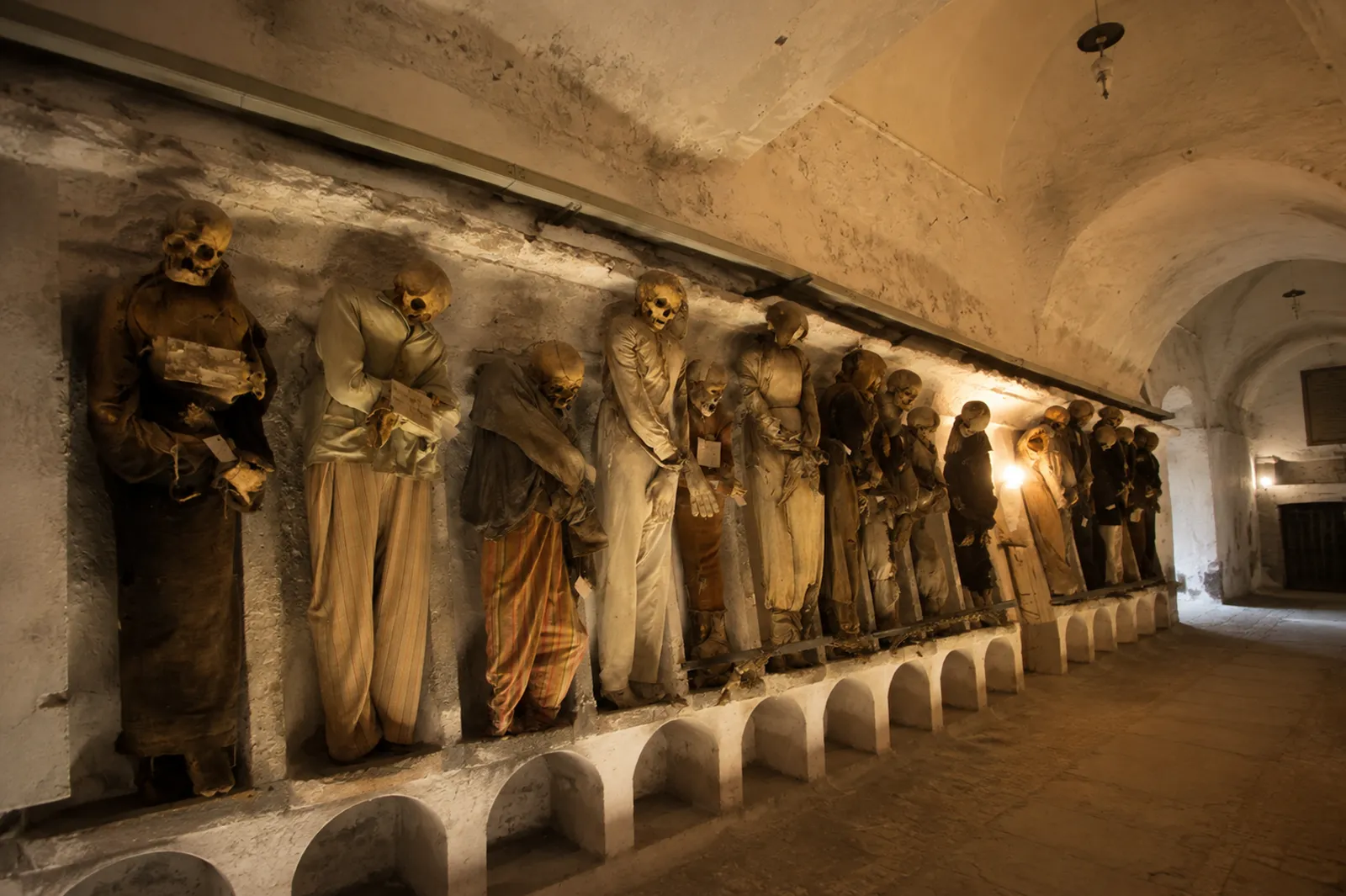
- 📍 Location: Piazza Cappuccini, Palermo, beneath a working Capuchin convent
- 🎫 Cost: €5 adults, €3 reduced
- 🕐 Hours: split into two slots — mornings 9am-12:30pm, afternoons 3-5:30pm, closed midday
- 📷 Photography: not permitted anywhere inside, no exceptions
- 👨👩👧 Good for kids: no — genuinely unsettling for young children or anyone squeamish
This is not a novelty stop. Beneath a still-functioning Capuchin convent in Palermo lie roughly 8,000 mummified bodies, arranged in corridors by who they were in life — monks, priests, doctors, lawyers, unmarried women, children — some of them intact enough to still recognize as individual people rather than historical objects. It started with one monk in 1599 and grew, over three centuries, into one of the most complete records of a single city’s dead anywhere in the world.
How it started: an accident that became a status symbol
By the late 1500s, the Capuchin friars’ original cemetery had run out of space. When they excavated a new crypt to expand it, they found that bodies exhumed from the old burial ground had mummified naturally — the dry, chemically particular air moving through Palermo’s underground limestone had done the preserving on its own. The friars took this as a sign. In 1599, they buried the first monk, Silvestro da Gubbio, upright in a wall niche, deliberately using the same preservation process. He’d had a reputation for holiness in life, and the friars understood, even then, that a well-preserved holy man would draw pilgrims to the site.
What happened next wasn’t really planned: word spread, and being interred at the Capuchin catacombs became a genuine status marker for Palermo’s elite. Wealthy families paid for the privilege, specifying in their wills how they wanted to be dressed and displayed. What began as one monk’s accidental preservation grew, over roughly 300 years, into around 8,000 mummified bodies — making these catacombs one of the largest and most complete collections of preserved human remains anywhere on earth.
The corridors: organized by who you were in life
The catacombs aren’t one undifferentiated mass grave — they’re laid out in distinct corridors, each historically reserved for a specific group: monks and priests, professionals (doctors, lawyers, notable tradesmen), women, and a separate section for children and unmarried virgins. Bodies were typically displayed standing or reclining in niches along the walls, dressed in the clothing appropriate to their status and profession — a doctor in his professional dress, a woman in the fashion of her era. Walking the corridors in sequence is, in a very literal sense, walking through a cross-section of who actually lived in 18th and 19th-century Palermo.
Rosalia Lombardo: the last, and most famous
The single most well-known mummy here isn’t a monk or a nobleman — it’s a two-year-old girl. Rosalia Lombardo died in 1920, among the last bodies ever added to the catacombs before burials effectively stopped, and her preservation is startlingly different from everything around her: rather than the visibly aged, skeletal appearance of the older mummies, she looks almost like she’s sleeping. That’s earned her the nickname “Sleeping Beauty,” and she’s kept separately, in a small glass-covered coffin in her own chapel at the end of the main corridor.
Her preservation is credited to embalmer Alfredo Salafia, who used a specific combination — formalin to kill bacteria, alcohol to dry the tissue, glycerin to prevent over-drying, salicylic acid against fungal growth, and zinc salts to give the body lasting rigidity. The exact formula was lost for decades after his death and only rediscovered later in his own papers, which is part of why her case is still studied by conservators today, not just visited by tourists.
Visiting: what to actually expect
No photography or video is allowed anywhere inside, and it’s enforced — this isn’t a place designed for content, and treating it that way would miss the point entirely. Expect narrow underground corridors, close quarters, and a genuinely heavy atmosphere; this isn’t staged for shock value, it’s simply what several thousand real deceased people, displayed as they and their families intended, actually looks like. Give it real attention rather than rushing through — most visitors report it stays with them longer than almost anything else they see in Palermo.
Getting there and practical tips
- Check the split hours before you go — mornings 9am-12:30pm, afternoons 3-5:30pm, with a midday closure in between that catches people off guard.
- Buy the ticket ahead if you’re arriving near a closing time — admission with a phone audio guide (affiliate link — booking through it costs you nothing extra and helps support this site) costs about the same as the door ticket and saves standing in the queue during the narrow afternoon window. There are no signs explaining the corridors inside, so the audio commentary is doing real work here.
- Budget a genuine hour, not a quick walk-through — the corridors are longer than photos suggest, and this isn’t a site to rush.
- Not recommended for young children — this is a personal judgment call, but it’s worth thinking through before bringing kids along.
- Combine it with something lighter afterward — many visitors pair this with a walk through nearby Piazza Indipendenza or the Norman Palace grounds to decompress rather than going straight from here into another dense historical stop.
More on the area in the Palermo region guide, and see the Catacombe dei Cappuccini on our interactive Sicily map.