Castelbuono: the Real Gateway to the Madonie Mountains
 Daniele Bellia · 4 min read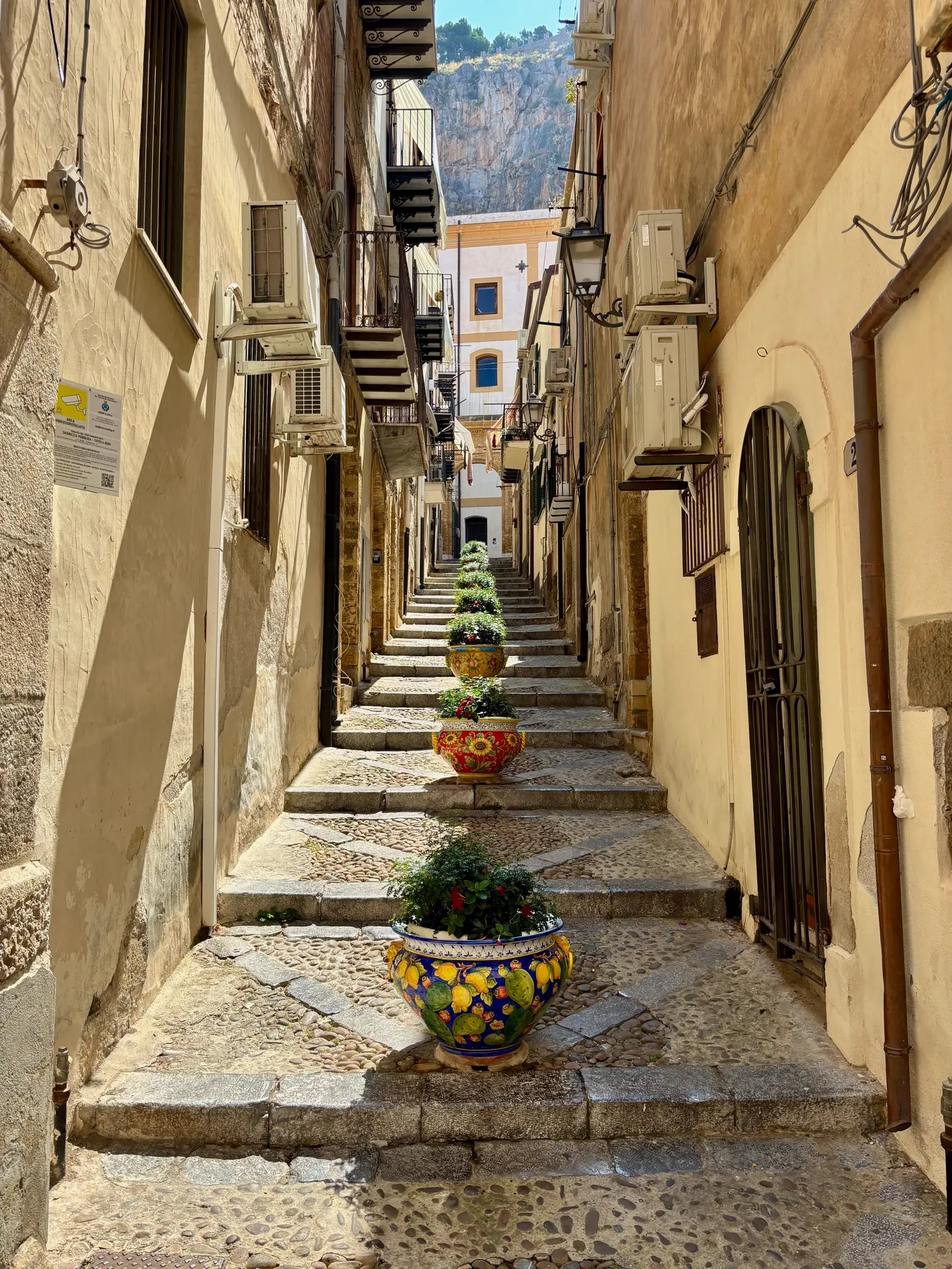
Most people driving along the Tyrrhenian coast see the Madonie mountains only as a green backdrop behind Cefalù. Castelbuono is where you actually turn inland and go find out what’s up there — a medieval town built around a real castle, with a food tradition so specific it barely exists anywhere else in Italy anymore.
- 📍 Location: Madonie mountains, about 25 minutes inland from Cefalù
- 🏰 Ventimiglia Castle: Tue–Sun 9:00–14:00 & 14:30–20:00 (later closing in summer), closed Monday
- ⏱️ Time needed: half a day for the castle and old town; a full day if you're hiking into the park
- 🚗 Car recommended: useful for the park itself; the town is reachable by bus without one
- 🌡️ Best season: spring and autumn for hiking, any time for the old town
Ventimiglia Castle: not a ruin, a real museum
The Castello dei Ventimiglia sits right in the center of town, built in 1316 by Count Francesco I Ventimiglia on the site of an earlier fortification on the San Pietro hill. Unlike a lot of Sicilian castles that are essentially empty shells you walk through and photograph, this one actually has something inside: it now houses the town’s Civic Museum, split into archaeological, urban-planning, sacred art, and modern/contemporary art sections. It’s also a working venue for exhibitions, so what you see can genuinely change between visits.
It’s open Tuesday to Sunday, 9:00am–2:00pm and 2:30–8:00pm (with later summer hours), closed Mondays — worth checking ahead, since a Monday drive up here for the castle specifically would be a wasted trip. Entry has a small fee; exact pricing isn’t published consistently, so it’s worth a quick call to the museum before you go if that matters to your plan.
Manna: the “white gold” nobody talks about
This is the detail that makes Castelbuono genuinely different from every other pretty hill town in Sicily. Between here and the neighboring town of Pollina, from July to September, harvesters still tap manna ash trees (Fraxinus ornus) the old way: careful incisions in the bark, with fine threads stretched below to catch the sap as it crystallizes in the sun into pale, stalactite-like drops locals call “cannoli.”
It’s not a gimmick for tourists — it’s an actual agricultural tradition that’s essentially died out everywhere else in southern Italy and survives here on roughly 250 hectares, down from what used to be thousands across northwestern Sicily. It shows up in local pastries and sweets, and Madonie manna has Slow Food Presidio recognition specifically because so few people still know how to harvest it properly. If you see it on a menu or in a shop window, it’s worth trying — this isn’t something you’ll find in Palermo or Catania.
The old town itself
Castelbuono is also home to Fiasconaro, one of the best-known panettone and pastry makers in Sicily — the kind of place where a “quick stop for a pastry” easily turns into twenty minutes of deciding what to bring home. Beyond that, the town is simply worth wandering: narrow stepped lanes, hand-painted ceramic planters on the stairs, and none of the cruise-crowd energy of Cefalù fifteen minutes away on the coast.
The actual reason to come: the Madonie park
Castelbuono isn’t just a stop, it’s the practical starting point for hiking in the Parco delle Madonie, Sicily’s second-largest protected area after Etna. The park covers dense beech and oak forest, some of the island’s highest peaks outside Etna, and trails that see a fraction of the foot traffic of anything on the coast. If a day in the old town leaves you wanting more, this is where you come back with proper shoes and a full day to spend.
Getting there without a car
SAIS runs buses from Cefalù to Castelbuono, roughly 18 minutes, with departures from around 7:35am and the last bus back from Castelbuono at 4:40pm — check current times before you go, since rural routes like this change without much notice. The bus drops you near the post office, about a 1km walk up into the old town and to the castle. Fine for a half-day visit; if you want to actually get into the park itself, a car (or a guided hiking tour) is the realistic option. The other way around the last-bus problem is simply to stay — Castelbuono has small hotels and B&Bs in and around the old town, and it’s a considerably cheaper base for the Madonie than Cefalù on the coast.
My honest verdict
Castelbuono won’t out-photograph Cefalù’s beach and cathedral combo, and it doesn’t try to. What it offers instead is a real working town with a real castle you can actually go inside, a food tradition you won’t find explained anywhere else, and direct access to hiking that most Sicily itineraries skip entirely. If your trip is starting to feel like one coastal town after another, this is the inland detour that breaks the pattern.
More on the area in the Cefalù region guide, and see Castelbuono plotted on our interactive Sicily map.