What Does a Day in Catania Really Cost?
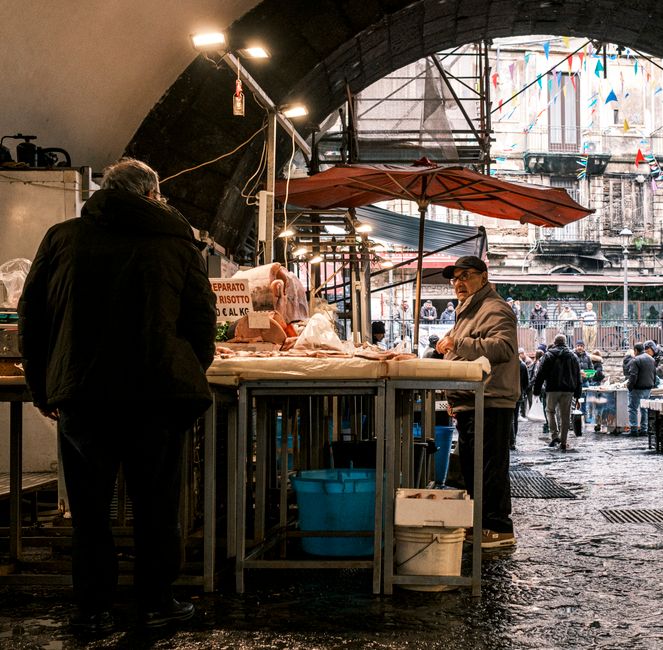
Every time friends from Germany ask me what a day in Catania costs, I tell them: it depends on whether you eat like a tourist or like a Catanese. The difference is bigger than you’d think—and it usually comes down not to where you go, but to whether you know what to ask for. For this article I didn’t pull numbers out of thin air; I dug up current prices so you can actually plan ahead instead of getting caught off guard.
The bus in Catania: what an AMTS ticket really costs
Let’s start with something most people underestimate: local public transport. AMTS, Catania’s city bus operator, raised its prices in 2025. Since April 8, 2025, bus tickets in Catania cost more—the 90-minute ticket went up from one euro to 1.40 euros. After 13 years of stable prices, this is the first increase, and plenty of locals still haven’t gotten used to it.
If you’re staying several days and plan to use buses or the metro a lot, there’s also an integrated monthly pass, though it’s really aimed at residents: the “MetroBus City” pass costs 35 euros a month and covers the FCE metro plus all AMTS lines except Alibus and 524S. For short-term visitors it’s barely worth it, since it’s tied to a personal ID card. For a normal day of sightseeing, a single ticket is all you need—budget 1.40 euros per ride, and ideally buy several at once from a tabaccheria rather than from the driver.
An Etna day trip: the real numbers, not the marketing prices
This is where it gets interesting, because a lot of blogs only mention the priciest option (a guided tour with transport from Catania for 60-90 euros) and either skip the public transport alternative or get the price wrong.
By public bus to Rifugio Sapienza: AST runs the only public bus line that actually goes all the way up to where the cable car starts. Departure is daily at 8:15 am from Piazza Giovanni XXIII in Catania, with the return from Etna at 4:30 pm, and the round-trip ticket costs around 6.60 euros and can be bought directly on the bus. This is by far the cheapest way to get up there—but you’re locked into those two fixed departure times, since there are no buses in between.
Cable car from Rifugio Sapienza: If you want to go higher, you’ll need the cable car on top of that. The self-guided round trip by cable car costs 52 euros for adults, 30 euros for children aged 5 to 10. If you also want a guided tour with a 4x4 vehicle up near the crater, you’ll pay noticeably more—a package with cable car, 4x4, and a guided hike runs 80 euros for adults (95 euros in winter with a snowcat instead of a 4x4), 50 euros for children aged 5 to 10.
So let’s add it up honestly: bus (6.60 €) + cable car alone (about 52 €) = roughly 59 euros for a day at the volcano if you go it alone and hike from the upper station instead of taking the 4x4 up toward the craters. That’s considerably cheaper than any booked tour from Catania with hotel transfer—but keep in mind that weather and volcanic activity can restrict access to the upper areas at any time.
Alternative: the Circumetnea railway If you don’t want to climb Etna but instead see it from all around, the historic narrow-gauge Circumetnea railway is a straightforward, budget-friendly option. The top fare for a single ride is 7.90 euros, and a day pass costs 15 euros. It’s not a summit experience, but a leisurely train ride through vineyards and lava fields—cheaper than any bus tour, though noticeably slower too.
Eating in Catania: what locals actually pay
This is where the gap between tourist reality and everyday reality shows up most clearly. An arancino—it’s masculine here, “arancino,” not “arancina” like in Palermo—is the benchmark product that instantly tells you a place’s price level.
At a classic rosticceria, an arancino al ragù costs between 2 and 3 euros, and if you’re paying 5 or 6 euros for one somewhere, you’ve landed in a spot set up for tourists, not a place where Catanesi actually shop. For comparison: a horsemeat panino runs around 4 euros, and a full street-food lunch of arancino, cipollina, and a drink comes to about 5 euros for most locals.
The breakfast ritual here isn’t what you’d expect coming from Germany: granita with brioche, not cappuccino with a croissant. Many Catanesi consider early morning the best time for it, when fresh catch arrives at the fish market and the brioche is still warm, with mulberry or lemon as the classic flavors. A granita with brioche typically costs between 3 and 5 euros, depending on the place and location—a bit more on Via Etnea than on a side street.
For a proper lunch at a trattoria—pasta alla Norma, a second course, and water—budget realistically for 15 to 20 euros per person, provided you eat where office workers actually go for lunch, not just where tourists show up guidebook in hand.
A realistic day plan, numbers included
A day with an Etna trip and normal meals, no luxury but no penny-pinching either:
- Bus to Etna round trip: 6.60 €
- Cable car (self-guided): about 52 €
- Street-food lunch on the go or at the Rifugio: 8-10 €
- Granita with brioche in the morning: 4 €
- Dinner at a normal trattoria in Catania: 18-20 €
- One or two bus rides around town: about 3 €
That adds up to roughly 92 to 96 euros per person for a full day including the volcano trip. Without the Etna day—just city, food, and local transport—you’re realistically looking at 30 to 35 euros per person. That’s simply everyday life in Catania, not some special traveler markup.
What these numbers really tell you
The biggest expense isn’t food—it’s Etna, and specifically the cable car. If you want to save money without skipping the volcano, be honest with yourself: is the hike from the cable car’s upper station enough, or does it have to be the guided 4x4 tour? That decision alone makes a 20 to 30 euro difference per person by the end of the day. With food, on the other hand, the difference usually isn’t about budget at all—it’s about location: walk one block away from Via Etnea and prices drop noticeably, without any drop in quality.