Catania & Etna in 48h Without a Car
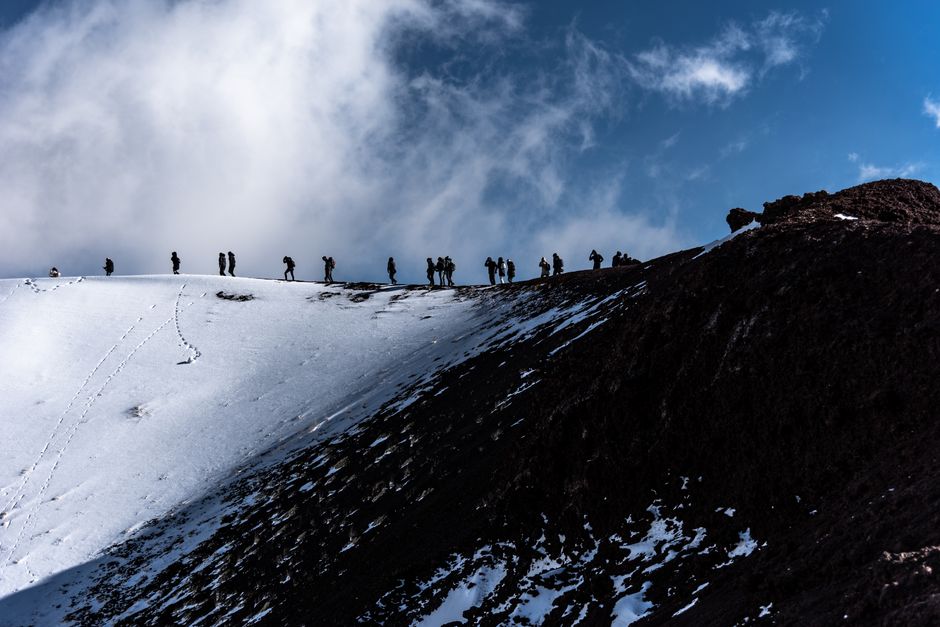
Let’s get the truth out of the way before anyone gets their hopes up: spending a weekend in Catania and on Etna without a rental car is doable — but it’s not a carefree stroll with extra freedom. It’s a plan built around exactly two hard deadlines per day, where a bus leaves and doesn’t wait. Keep those two times in your head and you’ll sail through. Miss them, and you’re either stuck in Nicolosi or paying for a taxi. Here’s the plan, exactly as I’d follow it myself if I had friends visiting from abroad with zero interest in driving through downtown Catania.
Friday evening: arrive and get your bearings
Fontanarossa Airport is barely six miles from the city center, so there’s really no need to stress over a taxi. The Alibus runs every 25 minutes, from 4:40 am to 12:30 am, and the ride into the center takes around 20 minutes, stopping at Piazza Borsellino and the main train station. The ticket costs €4 and is valid for 90 minutes, also covering other AMT lines in the city.
If you land in the evening, don’t try to squeeze anything else into Friday. A plate of pasta, a stroll down Via Etnea toward Piazza Duomo, and that’s it. The real reason this whole itinerary works comes the next morning: the Etna bus.
Saturday: Etna day – and why the clock is everything
This is the heart of the whole weekend, and most blogs gloss over it far too vaguely. There is exactly one public bus connection per day from Catania to Rifugio Sapienza, the starting point for the cable car. No second chance, no “the next one’s in an hour.”
7:45 am – Be at the stop, not at 8:10. The bus fills up fast, especially in summer and on weekends — if you’re not there by 7:45 am, you’re waiting until the next day, because there’s no second departure. The stop is Piazza Giovanni XXIII, right in front of the main train station, on the east side of the square.
8:15 am – Departure. The ride to Rifugio Sapienza takes about two hours, arriving around 10:15 am. You buy your ticket from the driver on board. A ticket costs roughly €6.60 and is bought directly from the driver — cash, ideally exact change. There’s no booking or reserving online.
10:15 am–4:30 pm – Time up on the mountain. This part you have to plan yourself:
- If you only want to see the Silvestri Craters (the smaller, extinct craters at about 1,900 m), you don’t need the cable car for that — they’re reachable on foot from Rifugio Sapienza, free of charge, in about ten minutes.
- If you want to go higher, take the cable car (Funivia dell’Etna) up to 2,500 meters. Prices shift by season; for 2025, the round-trip fare for adults was around €50, with additional jeep transport to higher zones depending on the package.
- Wind is the factor nobody warns you about: if it’s too strong, the cable car shuts down and replacement jeeps take over instead — slower, bumpier, but usually the same price.
A word on clothing: down in Catania it can easily hit 25°C, but up at Rifugio Sapienza it’s noticeably colder and windy. Pack a jacket even in peak summer — if you don’t have one, you can rent or buy one at the stalls near the bus parking lot in a pinch.
4:30 pm – Return departure from Rifugio Sapienza. This is the second hard deadline of the day. The return bus leaves at 4:30 pm and gets you back to Catania around 6:30 pm. Miss this bus and there’s no public transport alternative left — just a taxi, or an unplanned night on the mountain.
Saturday evening in Catania: tired legs, but time for a late dinner. After a day above 1,900 meters, everything tastes better.
Sunday: the alternative to the Etna bus – Circumetnea instead of the summit
For day two, a second attempt at Etna doesn’t make sense (remember, the bus only runs once, as noted above). Instead, go for a completely different view of the volcano: from below, by rail, on tracks that loop almost all the way around the mountain.
One important note upfront, which a lot of older travel reports get wrong: since June 1, 2024, train service on the section between Catania Borgo and Paternò has been suspended. So if you want to ride the Circumetnea (FCE) on Sunday, you currently need a replacement bus to reach the actual starting station first — though this keeps changing depending on construction progress, so it’s worth checking the day before at Catania Borgo station or online for the current status.
The plan, assuming the connection is running: head toward Randazzo, the medieval town on the northern side of the volcano, built from black lava stone. Randazzo is the most common stop along the line, sits at 765 meters, and its medieval center of black basalt is a five-minute walk from the station — plenty of time for a good hour between trains. Along the way, the landscape looks completely different from the southern side: pistachio groves near Bronte, old lava flows, vineyards further north.
The catch: train service currently only runs Monday through Saturday — no trains on Sundays. For a strict Saturday-Sunday weekend, where Saturday is already claimed by the Etna bus, the Circumetnea mostly isn’t practical — it’s better suited to a third day, or a weekday trip.
For a weekend that really is just Saturday and Sunday, the more honest alternative is this: Sunday belongs to the city itself. That’s no consolation prize — Catania on foot is denser and more interesting than most short-stay visitors realize when they’re eager to move on.
Sunday as a walking day: what actually works
Without a car, Catania is already the more relaxed choice among Sicilian cities, since the historic center is compact and flat. All of Catania’s tourist attractions are easily reachable on foot, so you don’t need public transport within the city at all.
For slightly longer stretches — say, toward the train station, the waterfront promenade, or the Circumetnea starting point at Borgo station — there’s the metro. The metro has just one line with nine stops, but it’s especially handy for getting from the station into the old town or to the promenade, and a 90-minute ticket costs just €1. City buses, on the other hand, are more of a last resort: within the city, walking or the metro is the better bet, since local buses are often late or simply don’t show — unlike the intercity coaches, which run far more reliably.
Use Sunday for whatever you didn’t get to on Saturday because of the early bus start: wander unhurried through the lanes around Piazza Duomo, catch La Pescheria (the fish market) in late morning while it’s still in full swing, and head back to the airport at a leisurely pace in the afternoon — again via the Alibus, same line as your first evening.
The sore spot: why this plan isn’t a worry-free package
Let’s be honest: a weekend without a rental car means submitting completely to the AST bus schedule. There’s no option to spontaneously stay an extra hour up on the mountain, no chance to simply hop on the next bus if you’re running late, and no way to combine the Etna summit and the Circumetnea in a single day — the time windows just don’t line up. But if you know that going in and accept it, you still get to experience one of Europe’s most spectacular natural sights — just on a schedule, not on a whim. And honestly, with a mental spreadsheet running — 7:45 am bus, 4:30 pm back — the weekend still ends up more relaxed than most tightly packed group tours waiting at the harbor for cruise passengers.